
Le Petit Prince
8.68 / 10 2.6M ratings
- Language
- French
- Published
- 1943
- Publisher
- Harcourt, Brace & World.
- Pages
- 96
- ISBN
- 9780152438180
A pilot, stranded in the vast Sahara Desert, encounters a small boy who asks him to draw a sheep. This unexpected meeting introduces the pilot to the Little Prince, a traveler from a distant asteroid no larger than a house. As the pilot works to repair his plane, the Little Prince shares tales of his journey across the universe, recounting his encounters with various peculiar adults on different planets and his deep affection for a unique rose on his home world.
Through their conversations, the story explores themes of loneliness, friendship, love, and loss, reflecting on the nature of human relationships and the difference between childlike perception and adult preoccupations. It invites readers to consider what is truly essential in life, often invisible to the eye, and the enduring value of imagination. This fable offers a meditation on life's fundamental truths.
Through their conversations, the story explores themes of loneliness, friendship, love, and loss, reflecting on the nature of human relationships and the difference between childlike perception and adult preoccupations. It invites readers to consider what is truly essential in life, often invisible to the eye, and the enduring value of imagination. This fable offers a meditation on life's fundamental truths.
Subjects
- Comics & Graphic Novels
- General
- Reference
- Literature & Fiction
- Genre Fiction
- Europe
- Subjects
- Literary
- France
- Self-Help
- Action & Adventure
- Fantasy
- Science Fiction & Fantasy
- Historical
- Self Service
- Anthologies
- Arborist Merchandising Root
- Children's Books
- Activity Books
- Growing Up & Facts of Life
- Education & Teaching
- Schools & Teaching
- Body, Mind & Spirit
- Romance
- New Age
- CHILDREN'S FICTION
- Animals
- Coming of Age
- Family Life
- Contemporary
- Friendship
- Relationships
- FICTION_GENERAL
- Study & Teaching
- Education Theory
- Science Fiction
- Personal Transformation
- Philosophy
- Specialty Boutique
- New, Used & Rental Textbooks
- Foreign Language Study & Reference
- Fiction
- Juvenile Fiction
- Fantasy & Magic
- Classics
- Short Stories
- Education
- Geography & Cultures
- Humorous
- Love
- Literary Collections
- Fiction, general
- Princes
- Children's fiction
- Adventure and adventurers, fiction
- Juvenile fiction
- Conduct of life
- Adaptations
- Holidays & Celebrations
- Antiques & Collectibles
- Linguistics
- Modern fiction
- Romans, nouvelles, etc. pour la jeunesse
- Media Tie-In
- Adventure
- Words, Language & Grammar
- Fiction - General
- Foreign Language Study
- Social Themes
- Adolescence & Coming of Age
- People & Places
- European
- Juvenile Nonfiction
- Emotions & Feelings
- FRIENDSHIP_FICTION
- Self-Esteem & Self-Reliance
- Bullying
- Language Arts & Disciplines
- Inspiration & Personal Growth
- Games & Activities
- PHILOSOPHY
- Family
- Concepts
- Literary Criticism
- Drama
- 20th Century
- Young Adult Fiction
- Fairy Tales & Folklore
- Young Adult Nonfiction
- Health & Daily Living
- Love & Romance
- Spanish
- Royalty
- French
- Depression
- World Literature
- FANTASY FICTION
- Girls & Women
- Fairy Tales, Folk Tales, Legends & Mythology
- Bilingual Education
- Readers
- Fantasy fiction
- Romans, nouvelles
- Imagination & Play
- Survival Stories
- Physical & Emotional Abuse
- Anglais (Langue)
- Suicide
- New Experience
- Friendship, fiction
- Literary collections
- Pregnancy
- Italian language
- Dating & Sex
- Language readers
- Legends
- FAIRY TALES
- Boys & Men
- Coloring Books
- Senses & Sensation
- YOUNG ADULT FICTION
- Toy and movable books
- CONTINENTAL EUROPEAN FICTION (FICTIONAL WORKS BY ONE AUTHOR)
- Books
- Visionary & Metaphysical
- Violence
- Space Exploration
- Daily Activities
- Spanish & Portuguese
- Runaways
- Strangers
- Children's & Young Adult Literature
- Fairy tales
- Foxes
Other editions (237)


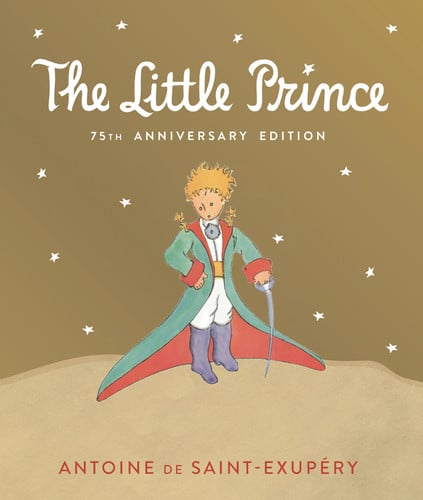
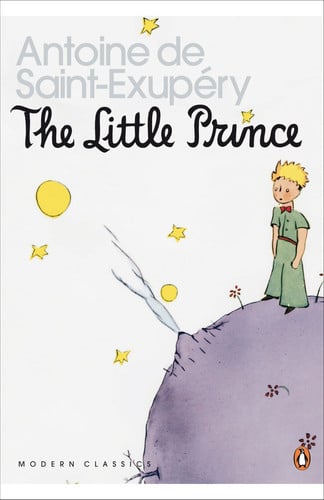
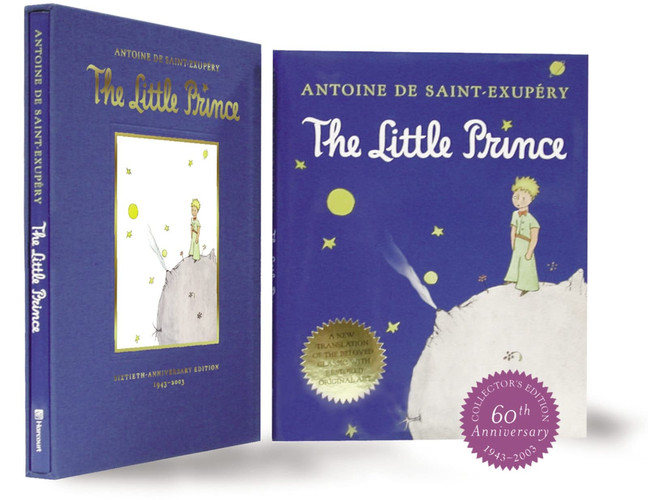
Listen to the summary Narrated summary
Once, when I was a boy, I drew a magnificent picture of a boa constrictor digesting an elephant. But the grown-ups, they could only see a hat. They told me to give up drawing and focus on geography and history, so I learned to talk of "reasonable" things with them, things of "consequence." I grew up and became a pilot, and it was in the vast, unforgiving expanse of the Sahara Desert, a thousand miles from any human habitation, that my plane broke down. It was there, amidst the silence and the sand, that I first met him.
He appeared as if from nowhere, a small, extraordinary person with golden hair, who looked at me with great seriousness. "Please," he said, "draw me a sheep." I was astonished, stranded and alone, yet this child asked for a sheep. I drew him the boa constrictor with the elephant inside, and to my utter amazement, he saw it. "No, no! I don't want an elephant inside a boa constrictor," he declared. "What I need is a sheep." After several attempts, I drew a simple box, telling him the sheep he desired was inside. He gazed at it, satisfied, and said, "That is exactly the way I wanted him."
Over the next few days, as I struggled with my broken engine, the little prince began to tell me about his tiny home, an asteroid he called B-612, no bigger than a house, and about the single, unique rose he had left behind. She was a beautiful, but vain and demanding flower, whose thorns she claimed were for protection. He loved her deeply, but her coquettish ways and his own youthful misunderstanding led him to believe she was lying to him, and so he decided to leave. He told me of how he would spend his time pulling up baobab seedlings, lest they grow too large and split his small planet apart, and how he would move his chair to watch forty-three sunsets in a single day, finding beauty in the melancholy.
His journey took him across several asteroids, each inhabited by a single adult, each consumed by their own peculiar logic. There was a king who believed he ruled the stars but had no subjects, a conceited man who craved only applause, a drunkard who drank to forget his shame, a businessman who counted stars believing he owned them, and a lamplighter who endlessly extinguished and relit his lamp every minute, following an absurd order on his tiny, rapidly spinning planet. The little prince found them all quite strange, their concerns so far removed from the essential things of life.
He eventually landed on Earth, in the very desert where I found him. Here, he first met a snake, who spoke in riddles and hinted at a power to return him to where he came from. Later, he stumbled upon a garden full of roses, thousands of them, all just like his own. This sight filled him with despair, for his rose had made him believe she was unique in the entire universe. It was then he met the fox, a creature who patiently taught him the profound secret of "taming" – of establishing ties, of creating connections that make one being unique in the world. "It is only with the heart that one can see rightly; what is essential is invisible to the eye," the fox told him.
This lesson made him understand. His rose was indeed unique, not because of her appearance, but because of the time and love he had invested in her. He was responsible for her. As our water dwindled and my plane remained stubborn, we searched for a well, and found it. The water tasted sweet, not just because of our thirst, but because of the journey we had shared. He spoke of his longing to return to his planet, to his rose, and how the stars would forever hold his laughter for me.
On the eighth day of my breakdown, the little prince found his way back to the snake. He explained to me that the snake's bite would be like an old shell left behind, allowing him to return home, to his flower. I tried to stop him, but his determination was quiet and firm. He vanished as silently as he had arrived, leaving behind only the desert wind and the memory of his golden hair. I eventually repaired my plane and flew away, but the desert, the stars, and the memory of a small prince and his unique rose, they remain. And sometimes, when I look up at the night sky, I still wonder if his sheep has eaten his flower.
He appeared as if from nowhere, a small, extraordinary person with golden hair, who looked at me with great seriousness. "Please," he said, "draw me a sheep." I was astonished, stranded and alone, yet this child asked for a sheep. I drew him the boa constrictor with the elephant inside, and to my utter amazement, he saw it. "No, no! I don't want an elephant inside a boa constrictor," he declared. "What I need is a sheep." After several attempts, I drew a simple box, telling him the sheep he desired was inside. He gazed at it, satisfied, and said, "That is exactly the way I wanted him."
Over the next few days, as I struggled with my broken engine, the little prince began to tell me about his tiny home, an asteroid he called B-612, no bigger than a house, and about the single, unique rose he had left behind. She was a beautiful, but vain and demanding flower, whose thorns she claimed were for protection. He loved her deeply, but her coquettish ways and his own youthful misunderstanding led him to believe she was lying to him, and so he decided to leave. He told me of how he would spend his time pulling up baobab seedlings, lest they grow too large and split his small planet apart, and how he would move his chair to watch forty-three sunsets in a single day, finding beauty in the melancholy.
His journey took him across several asteroids, each inhabited by a single adult, each consumed by their own peculiar logic. There was a king who believed he ruled the stars but had no subjects, a conceited man who craved only applause, a drunkard who drank to forget his shame, a businessman who counted stars believing he owned them, and a lamplighter who endlessly extinguished and relit his lamp every minute, following an absurd order on his tiny, rapidly spinning planet. The little prince found them all quite strange, their concerns so far removed from the essential things of life.
He eventually landed on Earth, in the very desert where I found him. Here, he first met a snake, who spoke in riddles and hinted at a power to return him to where he came from. Later, he stumbled upon a garden full of roses, thousands of them, all just like his own. This sight filled him with despair, for his rose had made him believe she was unique in the entire universe. It was then he met the fox, a creature who patiently taught him the profound secret of "taming" – of establishing ties, of creating connections that make one being unique in the world. "It is only with the heart that one can see rightly; what is essential is invisible to the eye," the fox told him.
This lesson made him understand. His rose was indeed unique, not because of her appearance, but because of the time and love he had invested in her. He was responsible for her. As our water dwindled and my plane remained stubborn, we searched for a well, and found it. The water tasted sweet, not just because of our thirst, but because of the journey we had shared. He spoke of his longing to return to his planet, to his rose, and how the stars would forever hold his laughter for me.
On the eighth day of my breakdown, the little prince found his way back to the snake. He explained to me that the snake's bite would be like an old shell left behind, allowing him to return home, to his flower. I tried to stop him, but his determination was quiet and firm. He vanished as silently as he had arrived, leaving behind only the desert wind and the memory of his golden hair. I eventually repaired my plane and flew away, but the desert, the stars, and the memory of a small prince and his unique rose, they remain. And sometimes, when I look up at the night sky, I still wonder if his sheep has eaten his flower.
What other readers say
Liked
Reviewers consistently praise this book for its lyrical and beautiful language, profound philosophical insights, and rich symbolism. Many describe it as a short yet powerful read that evokes a wide range of strong emotions, from wonder and nostalgia to sadness and joy. Readers appreciate its layered meanings, which often reveal new facets with each reread, making it a truly special and comforting experience. The book's central message about seeing with the heart and recognizing what is essential but invisible to the eye is frequently highlighted as deeply impactful. Its charming illustrations are also noted as an integral part of its appeal.
Disliked
While overwhelmingly positive, some reviews mention initial challenges, with a few finding the beginning somewhat raw or bland before the deeper meaning emerged. A small number of readers struggled to connect with the story, describing it as boring, whimsical, or nonsensical. One particularly critical review deemed the book terrible, citing a perceived lack of magic, absurd dialogues, and grammatical issues, suggesting it was more of a sketch than a complete work and even interpreting it as a message of hate disguised as innocence. Additionally, audiobook listeners sometimes found it distracting when the narration referred to illustrations not present in the audio format.
In short
Despite these varied reactions, the overwhelming consensus is that this is a unique, timeless, and extraordinary classic. It is widely recommended for readers of all ages, though many reviewers emphasize its particular resonance for adults. The book is lauded for its ability to challenge conventional adult perspectives, foster introspection, and encourage a reconnection with childlike wonder, imagination, and the simple, essential truths of life. Its emotionally impactful conclusion leaves a lasting impression, prompting readers to reflect on themes of friendship, love, loneliness, and the human condition, making it a valuable read for anyone seeking a profound and reflective literary experience.
No reviews yet. Be the first.