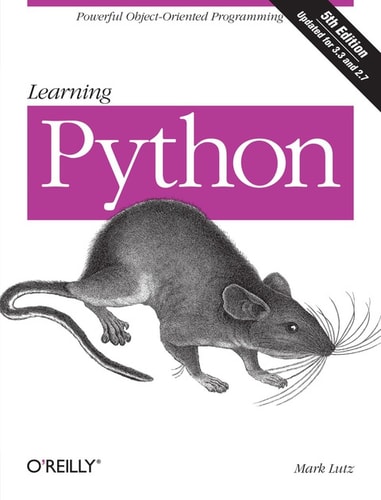
Positives The book is widely lauded as a remarkably comprehensive and detailed guide to Python, often described as a "definitive roadmap" or "bible" for learners. Reviewers praise its thorough and methodical approach, which builds understanding from the ground up, covering everything from built-in object types to object-oriented programming. Its clarity and readability are frequently highlighted, making complex concepts accessible. Many appreciate that it delves into the "whys and gotchas" of the language, fostering a deep, intuitive understanding rather than just syntax memorization. The book is also seen as excellent for hands-on learning, providing valuable coding examples, and is highly recommended for systematizing existing knowledge or serving as a robust refresher for those already familiar with Python. Engaging elements, such as the humorous Monty Python references, add a touch of entertainment.
Negatives Despite its strengths, the book receives considerable criticism, primarily concerning its immense length and verbosity, which many describe as a "slog" or "tedious." A frequent complaint is the excessive repetition of concepts and phrases, sometimes attributed to a lack of organization. Reviewers often find the book poorly structured for learning, with concepts introduced prematurely and then revisited much later, leading to frustration and a desire to skip ahead. This methodical pace, combined with a perceived lack of engaging exercises and overly simplistic examples, can make the reading experience dry and boring for many. Furthermore, some find it not ideal for absolute beginners due to its overwhelming detail and tendency to compare Python versions extensively, which can be confusing for newcomers. It is often noted that the book functions more as a language reference than an effective tutorial for initial learning.
Conclusion In conclusion, this book stands out as an exceptionally comprehensive resource for Python, capable of providing a deep and solid foundation in the language. However, its significant length, repetitive style, and detailed approach mean it demands considerable time and patience from its readers. It is best suited for individuals who are committed to gaining an exhaustive understanding of Python's core principles and structure, or for those with some prior programming experience looking to deepen their knowledge and fill in conceptual gaps. It serves well as a secondary resource for systematizing learned concepts. Conversely, it is generally not recommended for absolute beginners seeking a quick, interactive introduction to programming, or for experienced developers who prefer a more concise, fast-paced guide focused solely on practical application.