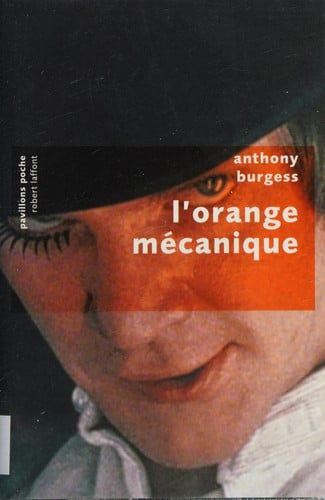
L'orange mécanique - Pavillons poche
8 / 10 793K ratings
- Language
- French
- Published
- 2010
- Publisher
- ROBERT LAFFONT
- Pages
- 322
- ISBN
- 9782221108499
In a near-future England, Alex and his droogs spend their nights indulging in drug-laced milk and "ultra-violence," a spree of theft, assault, and terror set to the soundtrack of classical music. As the charismatic and sociopathic narrator, Alex recounts his exploits in a unique slang called Nadsat. But when a brutal crime lands him in prison, he is offered a chance at freedom. He can volunteer for an experimental aversion therapy, a state-sponsored technique designed to cure him of his violent impulses.
This novel confronts the reader with a difficult question: Is it better to choose to be evil than to be forced into goodness? When the state can psychologically engineer a person's morality, what becomes of free will? The narrative forces an examination of the nature of humanity, the limits of societal control, and whether a man stripped of his ability to choose is truly a man at all. It is an exploration of the conflict between individual liberty and social order, one that remains as disturbing and relevant as when it was first written.
This novel confronts the reader with a difficult question: Is it better to choose to be evil than to be forced into goodness? When the state can psychologically engineer a person's morality, what becomes of free will? The narrative forces an examination of the nature of humanity, the limits of societal control, and whether a man stripped of his ability to choose is truly a man at all. It is an exploration of the conflict between individual liberty and social order, one that remains as disturbing and relevant as when it was first written.
Subjects
- Categories
- Literature & Fiction
- Genre Fiction
- Horror
- Mystery, Thriller & Suspense
- Thrillers & Suspense
- Subjects
- Literary
- Science Fiction & Fantasy
- Anthologies
- FICTION_SCIENCE FICTION_GENERAL
- Contemporary
- United States
- Humor
- Science Fiction
- Psychological
- Psychological Thrillers
- Specialty Boutique
- New, Used & Rental Textbooks
- Dramas & Plays
- Humor & Entertainment
- Self-Help & Psychology
- Fiction
- Classics
- Humor & Satire
- Humorous
- Cyberpunk
- Adventure stories
- Satire
- Humanities
- Modern fiction
- Audio Adult: Books On Tape
- Special Topics
- Thrillers
- European
- English, Irish, Scottish, Welsh
- Fiction, science fiction, general
- Drama
- Literature
- Bible
- Dystopian
- Social conditions
- Electronics
- Urban & Street Lit
- Theatre
- Criticism and interpretation
- British and irish fiction (fictional works by one author)
- Large type books
- English literature
- World Literature
- Rehabilitation
- Romans, nouvelles
- Canadian
- Science fiction
- Dark Humor
- Black Humor
- Ficción
- BRITISH AND IRISH FICTION (FICTIONAL WORKS BY ONE AUTHOR)
- Violence
- Drama texts: from c 1900 -
- Criminals
- Juvenile delinquency
- Science Fiction - General
Original edition
A Clockwork OrangeOriginally published in 1962 English Heinemann
Other editions (88)



Listen to the summary Narrated summary
It was me, Alex, and my three droogs - that is, my mates - Dim, Georgie, and Pete. We were at the Korova Milkbar, a real horrorshow place with its like plastic sculpts and milk vellocet, synthemesc, or drencrom, which is what we were lushing. The starry ptitsas on the wall seemed to watch us as we planned out our evening's bit of the old ultraviolence. Life was one big glorious razdraz, a chance to smash and bash and feel the real horrorshow thrill of it all. We were young, strong, and full of the glorious energy of youth, ready to make a little bit of the old in-out, in-out, and fill the night with screams.
Our nights were a symphony of violence, each act a carefully orchestrated movement in my own grand, personal opera. We'd give a good kicking to some drunky old veck staggering home, or break into a cottage, where the man of the house would get a good malenky beaking, and his lovely wife, she'd get the full treatment. Oh, it was like a beautiful dance, the fear in their glazzies, the sounds of their suffering, all set to the glorious music of Ludwig van Beethoven, my most dearest friend. One night, a bit of a sherricking, a real brawl with Billyboy's gang, turned sour. We broke into a stately home, and while my droogs were busy with their own greedy devotchka, I dealt with the lady of the house. But something went wrong, a real nasty surprise, and my droogs, those filthy traitorous bratchnies, left me to the rozzers.
The iron gates clanged shut, and I was in Staja, the State Jail, for a good long stretch. The days were long and grey, full of the dull routine of prison life, but I was a clever chellovek. I soon found my way to the prison chaplain, a kindly, if a bit gullible, old veck, and pretended to find God. I read the Holy Bible, not for its teachings, but for the bits of ultraviolence and sex, the real juicy bits. Then came the news of a new way out, a quick way to freedom: the Ludovico Technique. They called it a cure, a way to make bad men good. I volunteered, eager to escape the gray walls and the endless boredom, not knowing what real horrorshow awaited me.
The Ludovico Technique was no picnic, my brothers. Strapped to a chair, eyelids clamped open, I was forced to watch films of sickening ultraviolence and vile sex, while a drug made me feel like I was going to like vomit and pass out. The worst part, though, was the music. My beloved Beethoven, my glorious Ninth, was played over these films of horrorshow, linking the beauty I adored with the sickness I felt. Soon, the mere thought of violence, or even hearing my favorite classical tunes, sent me into fits of nausea and agony. They'd turned me into a mechanical toy, a clockwork orange, with goodness forced upon me, taking away my right to choose.
Released back into the world, I was a different chellovek. No longer capable of violence, I was utterly defenseless. My old droogs, Dim and Georgie, now rozzers themselves, gave me a proper beating. Then I ended up at the cottage of F. Alexander, a writer whose wife my old gang had brutalized. He took me in, not knowing who I was, seeing me as a political weapon against the very government that had "cured" me. But when I, like a fool, started humming "Singin' in the Rain," a tune from that terrible night, he knew. He tried to drive me to suicide, bombarding me with Beethoven, which now brought me nothing but pure physical agony.
I jumped, a long fall, and woke up in the hospital, broken but free from the conditioning. The government, eager to cover up their little experiment, showered me with apologies and promises of a good future, a good job. I was cured, all right, cured of the cure. The sickness was gone, and I could once again appreciate the glorious music, the beautiful sound of Beethoven. But something else had shifted inside me, a deeper change.
I saw Pete, my old droog, now a respectable married man with a loving wife. He had grown up, moved on from the ultraviolence, found a different path. And as I sat there, thinking of my own future, of getting married and having a malenky starry son of my own, a feeling came over me. The desire for the old ultraviolence, the smashing and the bashing, it was fading. The energy of youth, which once drove me to such horrorshow acts, now seemed to yearn for something different, something calmer, more mature. The phase was passing, like a sickness leaving the body, and I realized that perhaps, after all the horrorshow, I was finally ready to grow up.
Our nights were a symphony of violence, each act a carefully orchestrated movement in my own grand, personal opera. We'd give a good kicking to some drunky old veck staggering home, or break into a cottage, where the man of the house would get a good malenky beaking, and his lovely wife, she'd get the full treatment. Oh, it was like a beautiful dance, the fear in their glazzies, the sounds of their suffering, all set to the glorious music of Ludwig van Beethoven, my most dearest friend. One night, a bit of a sherricking, a real brawl with Billyboy's gang, turned sour. We broke into a stately home, and while my droogs were busy with their own greedy devotchka, I dealt with the lady of the house. But something went wrong, a real nasty surprise, and my droogs, those filthy traitorous bratchnies, left me to the rozzers.
The iron gates clanged shut, and I was in Staja, the State Jail, for a good long stretch. The days were long and grey, full of the dull routine of prison life, but I was a clever chellovek. I soon found my way to the prison chaplain, a kindly, if a bit gullible, old veck, and pretended to find God. I read the Holy Bible, not for its teachings, but for the bits of ultraviolence and sex, the real juicy bits. Then came the news of a new way out, a quick way to freedom: the Ludovico Technique. They called it a cure, a way to make bad men good. I volunteered, eager to escape the gray walls and the endless boredom, not knowing what real horrorshow awaited me.
The Ludovico Technique was no picnic, my brothers. Strapped to a chair, eyelids clamped open, I was forced to watch films of sickening ultraviolence and vile sex, while a drug made me feel like I was going to like vomit and pass out. The worst part, though, was the music. My beloved Beethoven, my glorious Ninth, was played over these films of horrorshow, linking the beauty I adored with the sickness I felt. Soon, the mere thought of violence, or even hearing my favorite classical tunes, sent me into fits of nausea and agony. They'd turned me into a mechanical toy, a clockwork orange, with goodness forced upon me, taking away my right to choose.
Released back into the world, I was a different chellovek. No longer capable of violence, I was utterly defenseless. My old droogs, Dim and Georgie, now rozzers themselves, gave me a proper beating. Then I ended up at the cottage of F. Alexander, a writer whose wife my old gang had brutalized. He took me in, not knowing who I was, seeing me as a political weapon against the very government that had "cured" me. But when I, like a fool, started humming "Singin' in the Rain," a tune from that terrible night, he knew. He tried to drive me to suicide, bombarding me with Beethoven, which now brought me nothing but pure physical agony.
I jumped, a long fall, and woke up in the hospital, broken but free from the conditioning. The government, eager to cover up their little experiment, showered me with apologies and promises of a good future, a good job. I was cured, all right, cured of the cure. The sickness was gone, and I could once again appreciate the glorious music, the beautiful sound of Beethoven. But something else had shifted inside me, a deeper change.
I saw Pete, my old droog, now a respectable married man with a loving wife. He had grown up, moved on from the ultraviolence, found a different path. And as I sat there, thinking of my own future, of getting married and having a malenky starry son of my own, a feeling came over me. The desire for the old ultraviolence, the smashing and the bashing, it was fading. The energy of youth, which once drove me to such horrorshow acts, now seemed to yearn for something different, something calmer, more mature. The phase was passing, like a sickness leaving the body, and I realized that perhaps, after all the horrorshow, I was finally ready to grow up.
What other readers say
Liked
The reviews consistently praise "A Clockwork Orange" as a brilliant and thought-provoking work, rich with profound philosophical and ethical questions about free will, morality, and the nature of good and evil. Many highlight the book's invented "Nadsat" slang as a remarkable artistic and linguistic achievement. While initially challenging, readers often find themselves quickly accustomed to its unique vocabulary and cadences, which are lauded for immersing them in the protagonist's world, adding a distinctive charm, and even subtly softening the impact of the narrative's more intense moments. The writing style itself is frequently described as lyrical, powerful, and haunting, creating an unforgettable reading experience that feels both original and eerily prescient in its social commentary.
Disliked
However, the book is not without its criticisms. A significant point of contention for many reviewers is the intensely disturbing and vivid depiction of violent acts, which some found difficult, sickening, or even gratuitous. The amorality of the main character and the nature of his actions are frequently cited as off-putting, making it a challenging read for those who prefer more conventionally enjoyable narratives. The Nadsat language, despite its eventual appreciation, often presents an initial barrier, leading to a slow start or even prompting some readers to abandon the book. Furthermore, some reviewers found the overall plot to be somewhat lacking or inconsistent, while others felt the book was overrated or less impactful than its reputation, especially when compared to its famous film adaptation. A specific point of division is the book's final chapter, which some believe undermines the narrative's overall force or believability, departing from the tone of earlier sections.
In short
Ultimately, "A Clockwork Orange" is widely regarded as a significant and powerful work of dystopian literature, earning labels such as "masterpiece" and "highly recommended" from many who appreciate its unique qualities. It particularly appeals to readers who are drawn to philosophical and ethical dilemmas, especially concerning free will, morality, and societal conditioning. Those who enjoy experimental literary styles, social commentary, and challenging narratives that provoke deep thought and discussion will likely find it rewarding. However, prospective readers should be prepared for its intense and often disturbing content, as well as the initial linguistic hurdle posed by its distinctive invented language.
No reviews yet. Be the first.