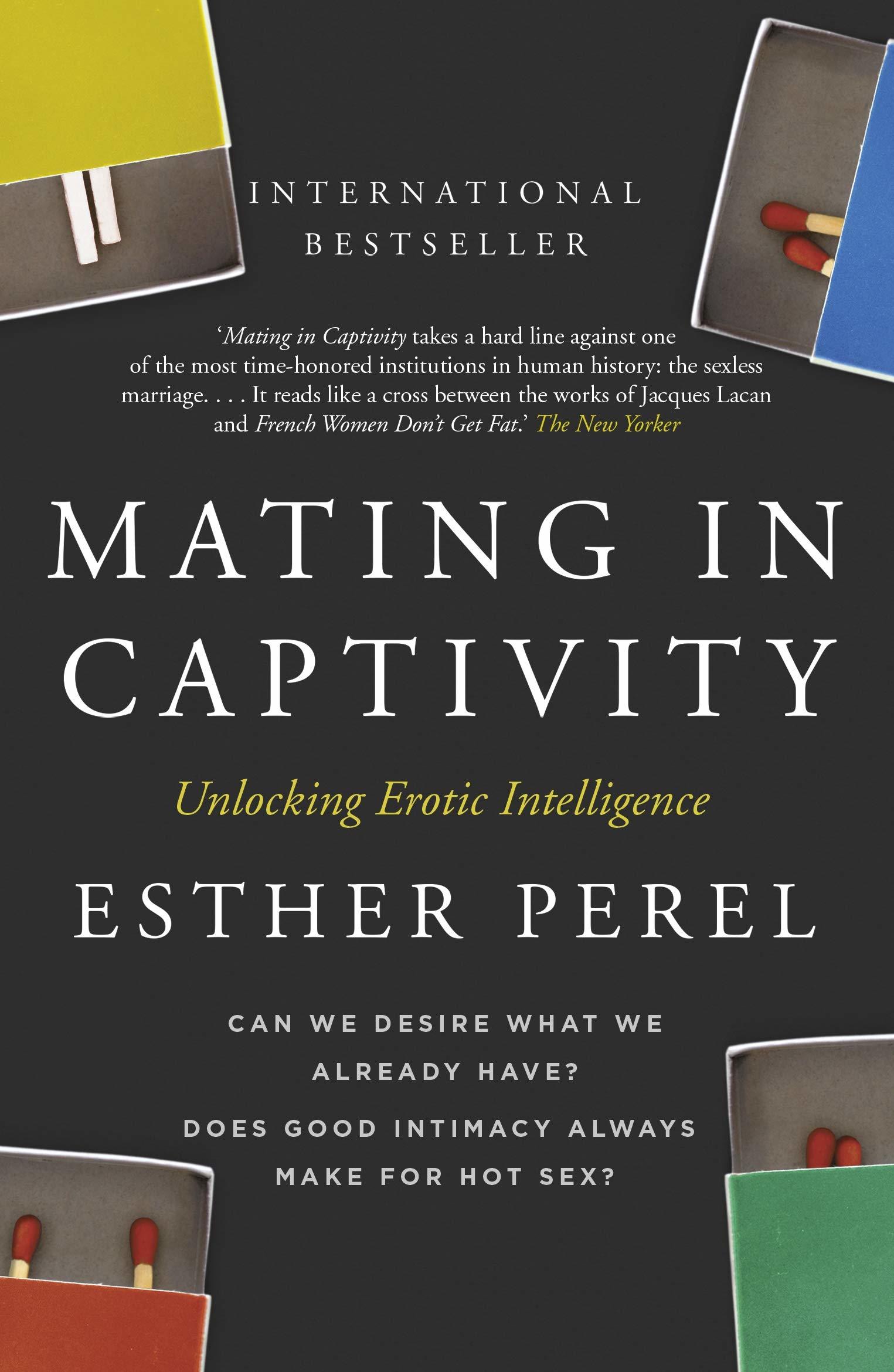
Mating in Captivity
Unlocking Erotic Intelligence
by Esther Perel
8.34 / 10 53K ratings
- Language
- English
- Published
- 2007
- Publisher
- Hodder & Stoughton
- Pages
- 244
- ISBN
- 9780340943755
Many couples experience the puzzling phenomenon of love deepening while passion wanes in long-term relationships. Esther Perel, a psychotherapist with over two decades of experience, investigates this paradox in Mating in Captivity, exploring the complexities of sustaining desire within committed partnerships.
The book examines the inherent tension between the desire for security, intimacy, and commitment, and the need for mystery, novelty, and independence that often fuels erotic desire. Perel challenges conventional wisdom, suggesting that the very qualities fostering stable love can sometimes inadvertently stifle sexual spark. Through case studies and psychological insights, she explains how individuals can cultivate "erotic intelligence" to maintain desire within domesticity, without sacrificing either connection or individuality. This exploration offers a fresh perspective on sustaining passion and intimacy, inviting readers to reconsider their understanding of love and lust in committed partnerships.
The book examines the inherent tension between the desire for security, intimacy, and commitment, and the need for mystery, novelty, and independence that often fuels erotic desire. Perel challenges conventional wisdom, suggesting that the very qualities fostering stable love can sometimes inadvertently stifle sexual spark. Through case studies and psychological insights, she explains how individuals can cultivate "erotic intelligence" to maintain desire within domesticity, without sacrificing either connection or individuality. This exploration offers a fresh perspective on sustaining passion and intimacy, inviting readers to reconsider their understanding of love and lust in committed partnerships.
Original edition
Mating in CaptivityOriginally published in 2006 English Harper
Other editions (85)



Listen to the summary Narrated summary
You stand at the precipice of a profound paradox: how can the very intimacy and security you crave in a long-term relationship coexist with the electric charge of desire? You have built a shared life, a sanctuary of comfort and familiarity, yet sometimes, amidst this beautiful domesticity, the erotic spark seems to dim, replaced by a sense of duty or a quiet resignation. This is the central tension of modern love, a struggle between the yearning for belonging and the thrill of adventure, for love thrives on closeness, but desire, on a certain distance.
Our contemporary ideals often set us up for this dilemma. We ask one person to be everything: our most trusted confidant, our best friend, our co-parent, and our passionate lover. This immense pressure can inadvertently suffocate the very passion we seek to nurture. When two people merge their lives so completely, when every corner of their existence is shared and known, the sense of "otherness" that fuels fascination and longing can dissipate. Desire needs to imagine, to wonder, to encounter the unexpected in the beloved, not merely to recognize the familiar.
To keep the erotic alive, you must cultivate a sense of separateness, of individual sovereignty within the relationship. It is in the space between two distinct individuals that desire can breathe and flourish. When you encounter your partner anew, perhaps seeing them through the eyes of a stranger, or observing them lost in their own world - a passion, a talent, a friendship that doesn't include you - that mystery can reignite a potent attraction. This isn't about emotional distance, but about respecting and celebrating the independent self that first captivated you.
Sometimes, the very values we uphold in our conscious lives - equality, fairness, open communication - can become an unwitting cage for erotic expression in the bedroom. Eroticism, at its core, is not always "politically correct." It can be playful, even aggressive, thrive on power dynamics, or embrace moments of delightful imbalance, as long as these explorations are consensual. To truly unlock erotic intelligence, you must sometimes be willing to suspend the rules of polite society and venture into the imaginative realms where desire finds its most uninhibited expression. It is a quest for pleasure through creative, curious, unselfconscious play.
The journey of parenthood, while deeply fulfilling, often demands a shift in focus that can leave the couple's erotic life neglected. The demands of nurturing children can overshadow the need to nurture the bond between partners, turning lovers into efficient co-managers of a household. Reclaiming eroticism in this phase requires intentionality, a conscious decision to prioritize the couple's connection and to find moments, however brief, to reconnect as lovers, not just as parents. Furthermore, the echoes of your own childhood experiences - how you learned about dependence and independence, safety and adventure - profoundly shape your capacity for eroticism as an adult.
Sexual fantasies are not betrayals of reality; rather, they are vital windows into your deepest erotic needs and desires, a secret garden where your imagination can roam free. Embracing and understanding these fantasies, without shame, can be a powerful tool to energize passion within your relationship. The notion of "spontaneous sex" is often a myth; true, committed eroticism frequently arises from anticipation, from the deliberate creation of longing and yearning, from the conscious decision to make space for desire.
Ultimately, reconciling the erotic and the domestic is not a problem to be solved once and for all, but an ongoing, dynamic dance. It demands a willingness to embrace the inherent contradictions of human desire, to tolerate uncertainty, and to let go of the illusion of absolute security. It calls for courage to step into the unknown spaces within yourself and with your partner, allowing for moments of "otherness" and mystery that keep the flame of passion burning brightly, even within the confines of a deeply loving and committed life.
Our contemporary ideals often set us up for this dilemma. We ask one person to be everything: our most trusted confidant, our best friend, our co-parent, and our passionate lover. This immense pressure can inadvertently suffocate the very passion we seek to nurture. When two people merge their lives so completely, when every corner of their existence is shared and known, the sense of "otherness" that fuels fascination and longing can dissipate. Desire needs to imagine, to wonder, to encounter the unexpected in the beloved, not merely to recognize the familiar.
To keep the erotic alive, you must cultivate a sense of separateness, of individual sovereignty within the relationship. It is in the space between two distinct individuals that desire can breathe and flourish. When you encounter your partner anew, perhaps seeing them through the eyes of a stranger, or observing them lost in their own world - a passion, a talent, a friendship that doesn't include you - that mystery can reignite a potent attraction. This isn't about emotional distance, but about respecting and celebrating the independent self that first captivated you.
Sometimes, the very values we uphold in our conscious lives - equality, fairness, open communication - can become an unwitting cage for erotic expression in the bedroom. Eroticism, at its core, is not always "politically correct." It can be playful, even aggressive, thrive on power dynamics, or embrace moments of delightful imbalance, as long as these explorations are consensual. To truly unlock erotic intelligence, you must sometimes be willing to suspend the rules of polite society and venture into the imaginative realms where desire finds its most uninhibited expression. It is a quest for pleasure through creative, curious, unselfconscious play.
The journey of parenthood, while deeply fulfilling, often demands a shift in focus that can leave the couple's erotic life neglected. The demands of nurturing children can overshadow the need to nurture the bond between partners, turning lovers into efficient co-managers of a household. Reclaiming eroticism in this phase requires intentionality, a conscious decision to prioritize the couple's connection and to find moments, however brief, to reconnect as lovers, not just as parents. Furthermore, the echoes of your own childhood experiences - how you learned about dependence and independence, safety and adventure - profoundly shape your capacity for eroticism as an adult.
Sexual fantasies are not betrayals of reality; rather, they are vital windows into your deepest erotic needs and desires, a secret garden where your imagination can roam free. Embracing and understanding these fantasies, without shame, can be a powerful tool to energize passion within your relationship. The notion of "spontaneous sex" is often a myth; true, committed eroticism frequently arises from anticipation, from the deliberate creation of longing and yearning, from the conscious decision to make space for desire.
Ultimately, reconciling the erotic and the domestic is not a problem to be solved once and for all, but an ongoing, dynamic dance. It demands a willingness to embrace the inherent contradictions of human desire, to tolerate uncertainty, and to let go of the illusion of absolute security. It calls for courage to step into the unknown spaces within yourself and with your partner, allowing for moments of "otherness" and mystery that keep the flame of passion burning brightly, even within the confines of a deeply loving and committed life.
What other readers say
Liked
This book is widely praised for its insightful and refreshing approach to the complexities of desire within long-term relationships. Many readers found it to be a thought-provoking exploration of the inherent paradox between the human need for security and intimacy, and the elusive nature of erotic passion. The author’s non-judgmental perspective on sexuality and various relationship dynamics, supported by anonymous client case studies, was particularly appreciated. Reviewers highlighted the book’s ability to challenge conventional wisdom, offering unique suggestions for fostering individuality and separateness to keep desire alive, ultimately providing hope that passion can be sustained and even deepened over time.
Disliked
However, the book also drew criticism, with some readers finding its central premise - that intimacy can diminish desire - to be counterintuitive or even detrimental to the pursuit of a healthy, connected partnership. A common point of contention was the perceived lack of practical, actionable advice, as the book relies heavily on anecdotal evidence rather than systematic research or step-by-step solutions. Certain controversial suggestions, such as those implying the utility of "safe" jealousy or open relationship dynamics, were deemed unhelpful or potentially damaging by those who prioritize traditional monogamy. Additionally, some reviewers found the writing style to be repetitive, overly flowery, or condescending, with an occasional perceived dismissiveness towards American cultural norms and an overemphasis on women's roles in relationship challenges.
In short
Overall, the book is considered a stimulating read that successfully prompts deeper reflection on love, sex, and commitment. It is best suited for individuals or couples in long-term relationships who approach the topic with an open mind, are willing to question societal norms, and are seeking to understand the nuanced dynamics that influence erotic vitality. Conversely, readers looking for straightforward, prescriptive advice, extensive empirical data, or a reaffirmation of traditional relationship structures may find it less satisfying, and some might benefit from consulting it alongside other perspectives on intimacy and desire.
No reviews yet. Be the first.