
Add to library
You don't have any lists yet. Create one in My Library.
Go to My LibraryAdd to library
You don't have any lists yet. Create one in My Library.
Go to My LibraryMaus opowieść ocalałego
- Language
- Polish
- Published in
- Publisher
- Prószyński i S-ka - Prószyński Media
- Pages
- 297
- ISBN
- 9788382340136
This Pulitzer Prize-winning graphic novel is more than a historical account; it is a profound exploration of memory, trauma, and the tangled bonds of family. Vladek's story of survival is woven into the author's own account of his tortured relationship with his father, revealing how the past echoes through generations. By documenting this personal testimony, the book offers a raw and unflinching look at the human cost of hatred and the enduring challenge of living in the shadow of catastrophe. It is a work that forever changed the perception of what a comic book could be.
Subjects
Original edition details
Other editions (44)

Maus I: A Survivor's Tale My Father Bleeds History
1986 • Knopf Doubleday Publishing Group
English

The Complete Maus A Survivor's Tale
1996 • Knopf Doubleday Publishing Group
English

Complete Maus
2003 • Penguin
English

The Complete Maus
2011 • Pantheon Books
English

Maus vertelling van een overlevende
2019 • Bezige Bij, De
Dutch
Other editions
Maus I: A Survivor's Tale My Father Bleeds History
1986 • Knopf Doubleday Publishing Group
English
The Complete Maus A Survivor's Tale
1996 • Knopf Doubleday Publishing Group
English
Complete Maus
2003 • Penguin
English
The Complete Maus
2011 • Pantheon Books
English
Maus vertelling van een overlevende
2019 • Bezige Bij, De
Dutch

Maus I A Survivor's Tale : My Father Bleeds History
1991 • Pantheon Books
English
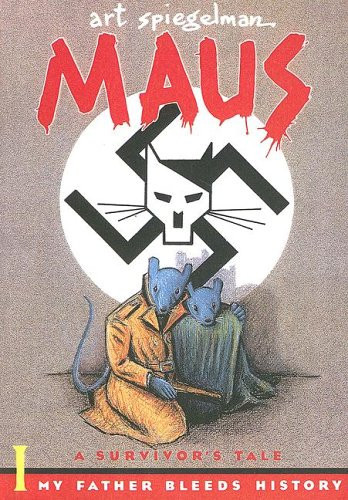
Maus A Survivor's Tale, Vol. 1: My Father Bleeds History
1986 • Turtleback
English

Maus: A Survivor's Tale Part I: My Father Bleeds History (Maus #01)
1986 • Perfection Learning Corporation
English

Maus die Geschichte eines Überlebenden
2008 • Fischer-Taschenbuch-Verlag
German

Maus I y II (Spanish Edition)
2015 • National Geographic Books
Spanish

Maus racconto di un sopravvissuto
2010 • Einaudi
Italian
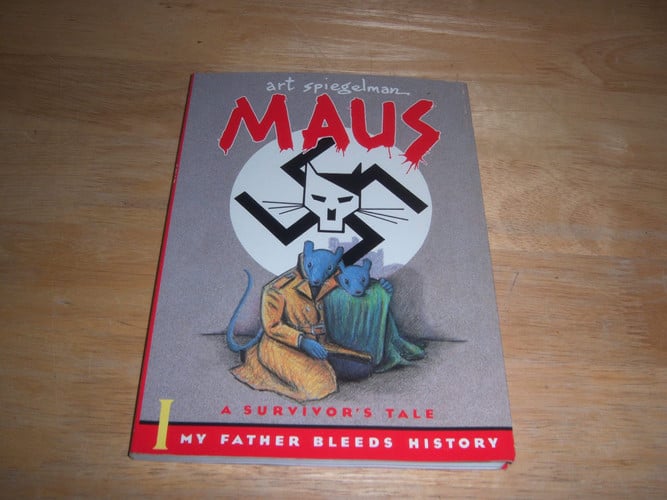
Maus A Survivor's Tale
1987 • Penguin Books
English

Maus a Survivors Tale My Father Bleeds History
2008 • Pantheon Books
English
Maus: a Survivor's Tale my father bleeds history. I
1986 • Pantheon Books
English
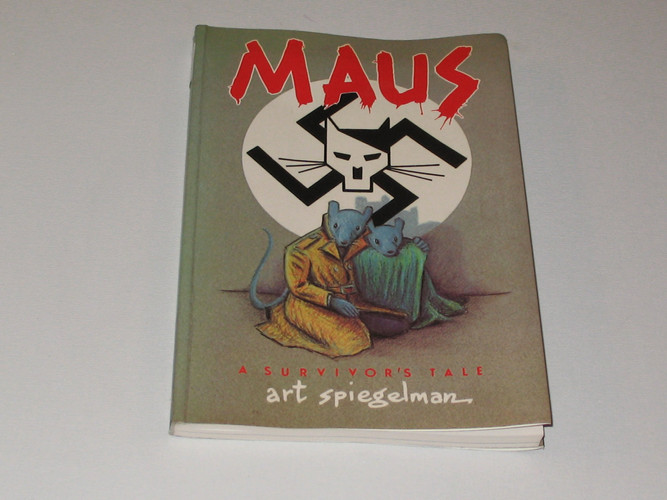
Maus A Survivor's Tale
1987 • Penguin
English

Maus I
2006 • Emecé Editores
Spanish

Mon père saigne l'histoire
1987 • Flammarion
French

Maus A Survivor's Tale
1986 • Pantheon Books
English

Maus I & II Paperback Box Set
2020 • Penguin Books Limited (UK)
English

Maus a história de um sobrevivente
2005 • Companhia das Letras
Portuguese

Maus un survivant raconte
1998 • Flammarion
French
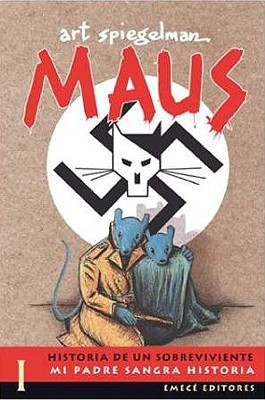
Maus - Historia de un Sobreviviente
2009 • Emecé México
Spanish

Maus un survivant raconte
1987 • Flammarion
French

The Complete Maus CD-ROM - A Survivor's Tale - Part I. My Father Bleeds History - Part II. From Maus
1999 • Voyageur Pub
English
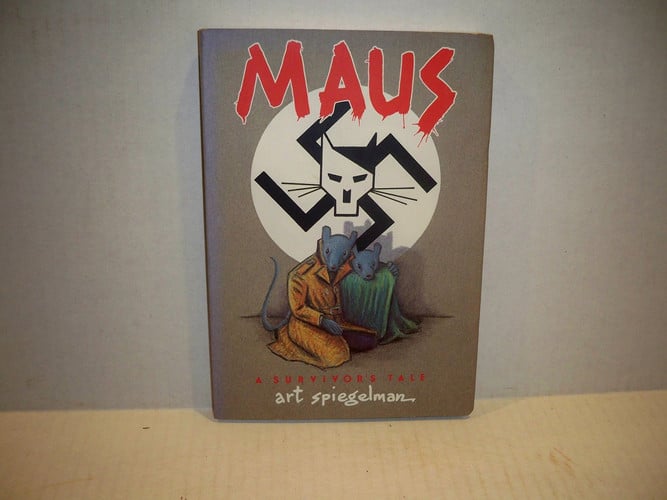
Maus a survivor's tale
1991 • Pantheon Books
English
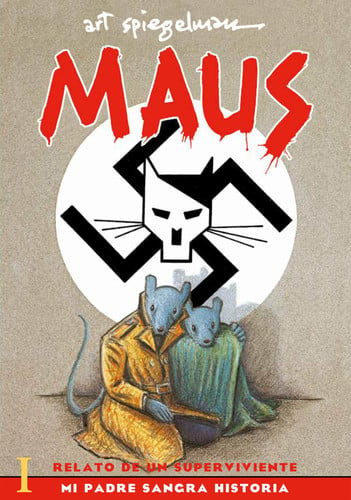
Maus I: Relato de un sobreviviente. Mi padre sangra historia / Maus I: A Survivo r's Tale: My Father Bleeds History
2022 • National Geographic Books
Spanish

Maus : historia completa
2017 • Rinoceronte Editora
Galician

Maus opowieść ocalałego
2016 • Prószyński Media
Polish
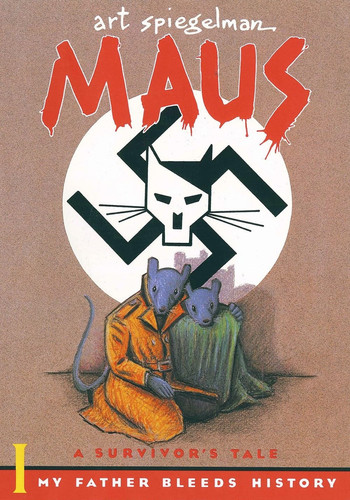
Maus A Survivor's Tale
1986 • Pantheon Books
English
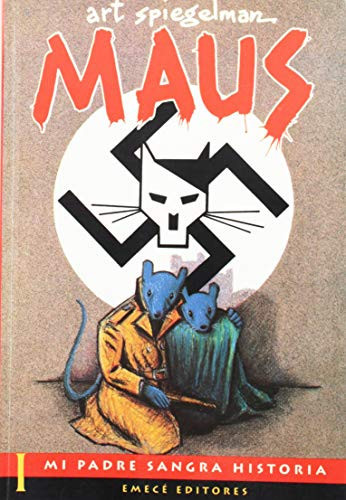
Maus I (Spanish Edition)
1994 • Emece Editores
Spanish

Maus, Vol. 1 My Father Bleeds History
2016 • Echo Point Books and Media
English
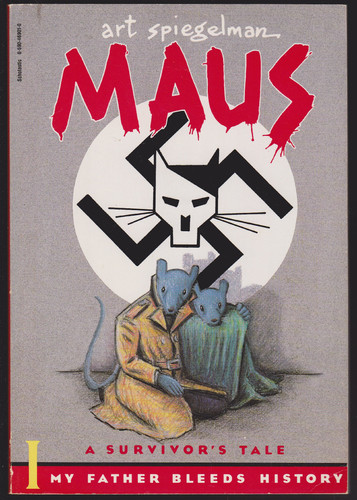
Maus: My father bleeds history
1986 • Scholastic/Pantheon, a division of Random House
English

Maus relat d'un supervivent
2006 • Inrevés
Catalan

Maus II A Survivor's Tale
1986 • Pantheon Books
English

Maus I My Father Bleeds History
1986 • Knopf Doubleday Publishing Group
English
My Father Bleeds History
1986 • Knopf Doubleday Publishing Group
English

Maus relato de un superviviente
2007 • Literatura Random House
Spanish
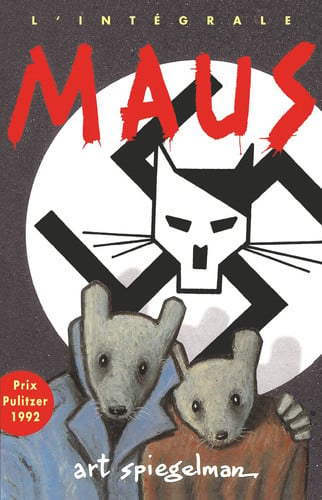
Maus: L'intégrale
2019 • FLAMMARION
French
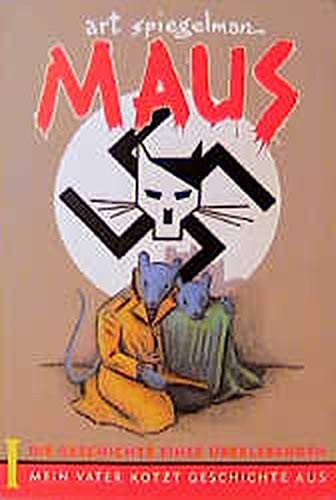
Maus Und hier begann mein Unglück
1993 • Rowohlt
German
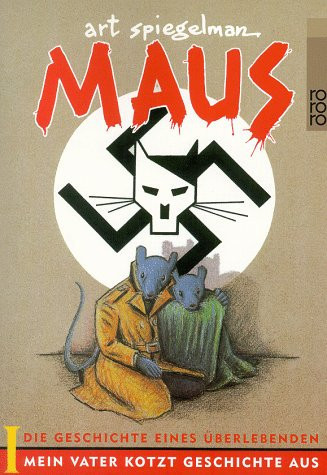
Mein Vater kotzt Geschichte aus
1999 • Rowohlt
German

Coffret 2 volumes : Mon père saigne l'histoire ; Et c'est là que mes ennuis ont commencé
2001 • Flammarion
French

Maus Hayatta Kalanin Öyküsü
2022 • Iletisim Yayinlari
Turkish

Maus opowieść ocalałego
2010 • Wydawnictwo Post
Polish

Maus un survivant raconte
2012 • Flammarion
French
The first shadows fall subtly. On a train trip back from a sanitarium where Anja is recovering from a deep depression after the birth of their first son, Richieu, they see the swastika for the first time, hanging starkly in the center of a town. Friends and neighbors whisper stories of what is happening across the border in Germany, tales of businesses seized and families disappearing. But these are distant horrors, things that happen to other people. Life, for a time, continues. Vladek builds a successful new factory, they settle into a comfortable life provided by Anja's family, and the anxieties of the world seem manageable, a storm on a far-off horizon.
Then the storm breaks. When the war begins, Vladek is called to the front lines as a Polish reservist. The fighting is brief and brutal. He kills a man he sees only as a tree in the distance, a faceless soldier running through the woods. Soon after, he is captured and becomes a prisoner of war. The conditions are freezing, the German guards cruel. The Jewish prisoners are given less food, thinner blankets, and forced to do the hardest labor. Yet even here, Vladek's will to survive asserts itself. He bathes in the icy river to stay clean, saves his meager bread, and prays. In a dream, a voice - his grandfather's - tells him he will be freed on the day of Parshas Truma, a specific date in the Jewish calendar.
Weeks later, on that very day, the Germans release him and other prisoners. But he is not returned to his home, which is now part of the Reich. Instead, he is dropped in the Polish Protectorate, a stranger in a strange land. Through cunning and a bit of luck, pretending to be a Pole to a train conductor, he sneaks across the guarded border and makes his way back to his family in Sosnowiec. He returns to a world transformed. His family's businesses are confiscated, their freedoms curtailed by curfews and rationing. A shadow economy of black market dealings emerges, and Vladek, ever the pragmatist, learns to navigate it, trading gold and cloth to secure food and a fragile sense of security for his family.
The walls of the world continue to shrink. All Jews are forced from their homes into a crowded ghetto in the old village of Srodula. Life becomes a grim series of registrations and selections. One day, four Jews are hanged in the street as an example, their bodies left swaying for a week. Vladek watches his father-in-law's parents, old and frail, taken away to a place no one can yet name but everyone fears. Faced with another roundup, Anja's sister Tosha makes a terrible choice. Rather than let the Germans take her children and little Richieu to the gas chambers, she gives them all poison. “My children won't go to their gas chambers!” she had vowed. “And I won't go either.”
Back in the present, the past is a constant, uninvited guest. Vladek bickers with his second wife, Mala, over money, saving scraps of string and complaining about wire hangers. He is a man who survived the unimaginable but cannot manage a peaceful day in his own home. Artie struggles to understand this man, so heroic in his stories and so infuriating in person. “I wish I got Mom's story while she was alive,” he tells his wife. “She was more sensitive.” He searches for the diaries Anja kept, notebooks that might hold the key to her side of the story, the part Vladek cannot or will not tell.
As the ghetto is liquidated, Vladek's foresight keeps him and Anja alive. He builds bunkers: a false wall in a coal bin, a crawlspace under a pile of shoes in an attic. They hide in silence as dogs and soldiers search for them, their survival dependent on a loose brick or a moment of German impatience. When the bunkers are no longer safe, they escape, becoming ghosts who move from one hiding place to another - a Polish woman's barn, a tiny, rat-infested cellar. They live on scraps of food bought with the last of their hidden jewelry, their existence a constant, terrifying whisper.
Hope arrives in the form of smugglers who promise safe passage to Hungary, a country that is still, for the moment, safe for Jews. Anja is terrified. “You're crazy! It's too dangerous!” she cries. But Vladek is insistent. “To die, it's easy,” he tells her, his voice firm. “But you have to struggle for life! Until the last moment, we must struggle together!” Trusting a letter that seems to confirm the route is safe, they hand over their last valuables. The smugglers lead them onto a train, and for a moment, as they pass through their old town, they feel a glimmer of freedom. Then the train stops. The Gestapo is waiting for them.
The journey ends at the gates of Auschwitz. Men are pushed to one side, women to the other. In the chaos and the shouting, Vladek sees Anja for the last time, a small figure being herded away. “And we couldn't know if ever we would see each other alive again,” he says, his voice trailing off. In the quiet of his father's house in Queens, years later, Artie asks again about Anja's diaries, the notebooks he so desperately needs. Vladek looks down. After Anja's suicide, he explains, he had a very bad day. “These papers had too many memories,” he says quietly. “So I burned them.” Artie stares at his father, the survivor, the storyteller, and can only manage one word: “Murderer.”
No discussions yet for this book.
Delete Discussion
Are you sure you want to delete this discussion? This action cannot be undone.
Rating Sources
Reviewers overwhelmingly praise this book as a deeply emotional and powerful experience, often described as an "experience" rather than just a "read." Many found it profoundly moving, highlighting its ability to convey real, affecting emotions. The narrative, which chronicles a family's survival, is lauded for its raw honesty, particularly in depicting the deep love between characters enduring immense cruelty and suffering. The graphic novel format is considered masterfully executed, with its black-and-white art and innovative use of anthropomorphic animals (Jews as mice, Germans as cats, Poles as pigs, Americans as dogs) being a clever and impactful way to illustrate the absurdity of racial divisions and make a difficult subject accessible. Readers appreciated the nuanced portrayal of a complex father-son relationship, which radiates love despite typical family challenges and the weight of intergenerational trauma. The book is also commended for its inclusion of lighter, humorous moments that provide relief without disrespecting the tragic historical context. Its unflinching look at human behavior in extreme circumstances, including the flaws of survivors, is seen as a testament to its bold honesty.
While overwhelmingly positive, some reviewers offered minor observations or critiques about certain aspects of the book. A few questioned the necessity of using animal characters if the historical events and settings were otherwise presented realistically, suggesting that a more conventional human depiction might have conveyed the message equally well. One reviewer noted that the animal metaphors, while symbolic, could be seen as an "unnecessary point of criticism" for some nationalities. Another mentioned that the graphics, while effective, were "not the best" in terms of detail and that the dialogue could sometimes feel "crammed," making it occasionally hard to read. Additionally, some felt that distinguishing individual characters within their animal groups could be challenging due to similar features. The book's intense subject matter also means it is "not a pleasant one" and "not easy to read at times," though this is often acknowledged as contributing to its powerful impact rather than being a flaw.
Despite these minor points, the consensus among reviewers is that this book is an undeniable masterpiece and a seminal work that profoundly impacted the literary world, notably being the first graphic novel to win a Pulitzer Prize. It is widely recommended as an essential read for everyone, even those who do not typically engage with graphic novels. Readers interested in World War II, the Holocaust, and the lasting psychological effects of trauma on individuals and families will find this book particularly compelling. It is also highly recommended for those who appreciate honest, raw storytelling and innovative approaches to historical narratives, offering a unique and unforgettable perspective on human survival, resilience, and the complexities of familial bonds.
No reviews yet. Be the first to review this book!
Delete Review
Are you sure you want to delete this review? This action cannot be undone.