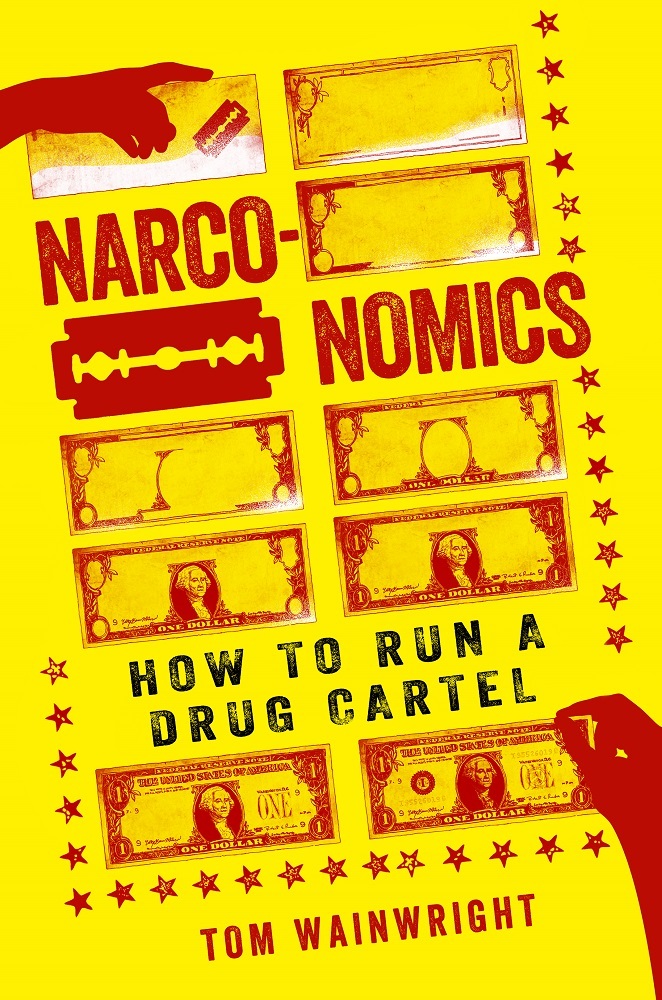
Narconomics
- First published 2013
- English
The global drug trade, a multi-billion dollar industry, operates with surprising parallels to legitimate corporations. Tom Wainwright, an editor for The Economist, reveals how drug cartels employ sophisticated business strategies, from brand building and customer service to supply chain management and human resources, mirroring companies like Walmart and McDonald's. This book takes readers through Andean coca fields, Central American prisons, and the online drug markets of the Dark Web to uncover the economic realities driving this illicit world.
By analyzing cartels as businesses, this investigation challenges conventional approaches to the "war on drugs," demonstrating how current policies often lead to a "balloon effect" where operations simply shift rather than diminish. It offers an innovative perspective on how drug lords recruit, compete, and even practice corporate social responsibility. Discovering the intricate economics of drug trafficking provides a framework not only for understanding one of the world's most resilient industries but also for devising more effective strategies to combat it.
By analyzing cartels as businesses, this investigation challenges conventional approaches to the "war on drugs," demonstrating how current policies often lead to a "balloon effect" where operations simply shift rather than diminish. It offers an innovative perspective on how drug lords recruit, compete, and even practice corporate social responsibility. Discovering the intricate economics of drug trafficking provides a framework not only for understanding one of the world's most resilient industries but also for devising more effective strategies to combat it.
What readers say
4.14
12K ratings across the web 8 in 10 readers loved it
The book is widely praised for offering a remarkably fresh and insightful perspective on the global drug trade, examining it through a unique economic lens. Reviewers consistently highlight how the author brilliantly applies business principles such as supply chain management, competition, franchising, human resources, and public relations to the operations of drug cartels. This approach helps readers understand the lucrative nature of the illicit drug business and why traditional enforcement strategies have often failed. Many found the book incredibly informative, engaging, and eye-opening, appreciating its objective analysis that moves beyond moral judgments to provide a practical understanding of a complex issue. The writing is frequently described as clear, accessible, and even compelling, making economic concepts interesting for a broad audience.
Despite its many strengths, some readers found parts of the book to be dry, particularly those who prioritize entertainment over purely factual content in their reading. A common point of feedback was that the subtitle, "How to Run a Drug Cartel," could be somewhat misleading, as the book ultimately focuses more on policy reform options and regulatory solutions rather than serving as a direct guide to cartel operations. While the economic analysis was generally well-received, a few reviewers expressed a desire for even more technical economic depth throughout the narrative. Additionally, some concerns were raised regarding the reliance on anecdotal evidence and the inherent variability in statistics when dealing with a clandestine industry. A few readers also felt that some of the author's proposed solutions, while thought-provoking, might lack essential components or be somewhat unrealistic.
In conclusion, the book stands out as a highly recommended and thought-provoking read that effectively shatters preconceptions about the drug industry. It provides a comprehensive and coherent picture of its dynamics, prompting readers to rethink established policies and consider innovative approaches. This book is an excellent choice for avid non-fiction readers, anyone with an interest in business, economics, or the global drug trade, and those curious about the effectiveness of current drug policies and potential reforms. It will particularly appeal to readers who appreciate an objective, analytical perspective on complex societal challenges and are open to having their worldview updated.
Reviews
No reviews yet. Be the first.
Details & editions
- This edition
- Audible Studios on Brilliance Audio, 2016
- ISBN
- 9781531871741
- Language
- English
Original edition NARCONOMICS Originally published in 2013 · Spanish · Debate Editorial