Northanger Abbey
by Jane Austen
- First published 1972
- 265 pages
- English
- Classic
Seventeen-year-old Catherine Morland, an avid reader of Gothic novels, is thrust from her sheltered country life into the fashionable society of Bath. Naive and armed with an overactive imagination, she navigates a world of new acquaintances, from the flirtatious Isabella Thorpe to the witty and charming Henry Tilney. Catherine's view of the world is shaped by the thrilling, terror-filled books she adores, leading her to interpret the actions and intentions of those around her through the lens of a fictional heroine.
When an invitation to the Tilney's ancestral home, Northanger Abbey, presents itself, Catherine's romantic expectations soar. She anticipates a mysterious estate full of dark secrets and hidden passages, just like in her novels. What she discovers, however, is a satirical and insightful exploration of the dangers of confusing literature with life. The novel reveals the comical and embarrassing consequences of a young woman's journey to distinguish genuine character from artifice and learns that the complexities of society and the human heart are more intricate than any Gothic plot.
When an invitation to the Tilney's ancestral home, Northanger Abbey, presents itself, Catherine's romantic expectations soar. She anticipates a mysterious estate full of dark secrets and hidden passages, just like in her novels. What she discovers, however, is a satirical and insightful exploration of the dangers of confusing literature with life. The novel reveals the comical and embarrassing consequences of a young woman's journey to distinguish genuine character from artifice and learns that the complexities of society and the human heart are more intricate than any Gothic plot.
What readers say
3.85
474K ratings across the web 6 in 10 readers loved it, 1 didn't like it
Northanger Abbey is widely celebrated by reviewers for its delightful wit and sharp satire, primarily targeting the popular gothic novels of its era. Readers frequently praise the humor that arises from the heroine's overactive imagination and her tendency to misinterpret ordinary events through the lens of sensational fiction. The characters are a significant draw, with Henry Tilney often singled out as an exceptionally charming, intelligent, and humorous romantic lead. Catherine Morland, the protagonist, is found relatable and endearing in her innocence and kindness, with many appreciating her journey of growth and self-discovery. The novel is lauded for its lively prose, memorable quotes, and Austen's genius in crafting a narrative that is both biting in its commentary and genuinely enjoyable.
Despite its many positive attributes, some reviewers found aspects of Northanger Abbey less engaging than Austen's more famous works. Catherine's naivety, while charming to many, occasionally struck some readers as irritating or even overly simplistic, making it difficult to fully connect with her actions. The pacing of the story was also a point of criticism, with several noting that the first half could feel slow or drag, only truly picking up once Catherine arrives at the titular Abbey. The romance between Catherine and Henry, while liked by many, was sometimes perceived as underdeveloped or rushed at the end, lacking the emotional depth found in other Austen pairings. Additionally, as an early work, some felt the novel had an uneven tone or a less refined writing style compared to her later, more polished masterpieces.
Overall, Northanger Abbey is regarded as a unique and important part of Jane Austen's oeuvre, showcasing her early brilliance and distinctive satirical voice. While it may not always reach the heights of her most celebrated novels, its charm, humor, and relatable coming-of-age themes make it a thoroughly enjoyable read for many. It is highly recommended for Jane Austen enthusiasts, readers who appreciate witty social commentary, fans of literary parody, and those looking for a lighthearted romance with a developing heroine. It particularly appeals to anyone interested in the historical context of novel writing and a story that gently pokes fun at popular literary trends.
Reviews
No reviews yet. Be the first.
Details & editions
- This edition
- Independently published, 2021
- ISBN
- 9798534779561
- Language
- English
Original edition Northanger Abbey Originally published in 1972 · English · Penguin Books, Limited
Other editions (1511)
- Paper Mill Press · 1901

- Independently published · 2018

- Independently published · 2022

- CreateSpace Independent Publishing Platform · 2017

- Sastrugi Press · 2021

- Anchor · 2013
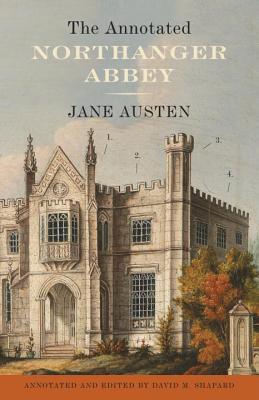
- Independently published · 2021

- Anchor · 2013

- Independently published · 2021

- Belknap Press: An Imprint of Harvard University Press · 2014
