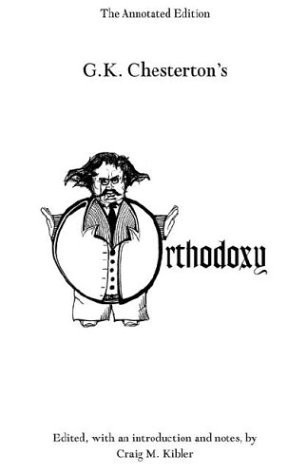
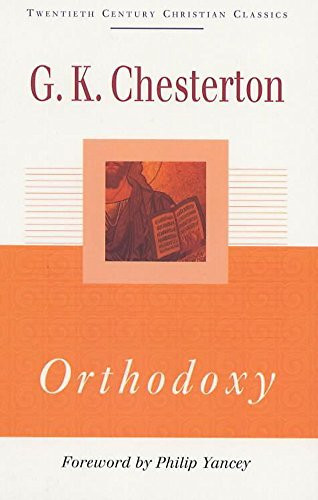
Orthodoxy: The Annotated Edition
8.4 / 10 44K ratings
- Language
- English
- Published
- 2002
- Publisher
- Presbyterian Lay Committe
- Pages
- 236
- ISBN
- 9780965260282
Embark on a unique intellectual journey as G.K. Chesterton chronicles his personal discovery of Christian faith in Orthodoxy. This work is not an argument for whether Christianity can be believed, but an explanation of how Chesterton himself came to believe it, presenting his conclusions as a solution to the inherent paradoxes and longings of human existence.
Chesterton critiques contemporary philosophies, illustrating how Christian doctrine, far from being a stale tradition, offers a dynamic and even startling perspective on reality. He posits that orthodoxy provides an answer to the "riddle of reality," embracing profound truths that balance seemingly furious opposites, offering both security and mystery to the human heart. Discover how this "spiritual autobiography" presents Christianity as a robust framework that uniquely satisfies the complexities of human nature and thought.
Chesterton critiques contemporary philosophies, illustrating how Christian doctrine, far from being a stale tradition, offers a dynamic and even startling perspective on reality. He posits that orthodoxy provides an answer to the "riddle of reality," embracing profound truths that balance seemingly furious opposites, offering both security and mystery to the human heart. Discover how this "spiritual autobiography" presents Christianity as a robust framework that uniquely satisfies the complexities of human nature and thought.
Subjects
- Comics & Graphic Novels
- Kindle Store
- Categories
- Kindle eBooks
- General
- Reference
- Literature & Fiction
- Arts & Photography
- Subjects
- Literary
- Self-Help
- Action & Adventure
- Self Service
- History
- Biographies & Memoirs
- Leaders & Notable People
- Arborist Merchandising Root
- Spiritual
- Education & Teaching
- Schools & Teaching
- Religion & Spirituality
- Worship & Devotion
- Inspirational
- Americas
- Studying & Workbooks
- Christian Books & Bibles
- Bibles
- Catholicism
- Christian Living
- Bible Study & Reference
- Essays
- New Age & Spirituality
- English & College Success
- English
- Essays & Correspondence
- FICTION_GENERAL
- World
- Ministry & Evangelism
- Discipleship
- Politics & Social Sciences
- Philosophy
- Faith
- Art
- Social Sciences
- Fiction
- Christianity
- Biography & Autobiography
- CHRISTIAN LIFE
- Certification & Development
- Religious
- Old Testament
- Theology
- Classics
- Graphic Novels
- Protestantism
- Christian Denominations & Sects
- Fiction, historical, general
- Criticism
- Education
- Literary Collections
- Religious Studies
- Psychology
- Nonfiction
- History & Criticism
- RELIGION
- Biography
- Religion
- Biographical
- Ancient & Medieval Literature
- Ancient & Classical
- Political Science
- European
- English, Irish, Scottish, Welsh
- Language Arts & Disciplines
- Study Skills
- Churches & Church Leadership
- PHILOSOPHY
- Literary Criticism
- Ethics
- Subjects & Themes
- Christian Ministry
- Biblical Criticism & Interpretation
- Christian
- Literacy
- Christology
- World Literature
- Occult & Supernatural
- Aesthetics
- Criticism & Interpretation
- Anglican
- Biblical Commentary
- Christian Theology
- Free Will & Determinism
- Systematic
- Historical Books
- Ethics & Morality
- CHRISTIANITY
- Unabridged Audio - Inspirational/Philosophy
- Christian Church
- Catholic
- Apologetics
- Educational & Nonfiction
- Literature & the Arts
- THEOLOGY
- Christianisme
- Orthodox
- Christian Standard Bible
- RELIGION_PHILOSOPHY
- Evidence
- Religion - World Religions
- Philosophy and religion
Original edition
OrthodoxyOriginally published in 1874 English CreateSpace Independent Publishing Platform
Other editions (488)

Listen to the summary Narrated summary
One embarks on a philosophical journey, much like a yachtsman setting sail from England, determined to discover new lands and chart an entirely original course. Yet, after a long and arduous voyage, one might find oneself planting a flag on familiar shores, realizing that the "new" truth discovered is, in fact, the ancient wisdom that had been there all along. This is the curious, almost comical, autobiography of a soul that sought to invent a philosophy and instead stumbled backward into Christian orthodoxy, finding it to be not a dull dogma, but a wild, exhilarating, and deeply sane answer to the world's riddles.
The modern world often praises self-confidence, urging one to believe in oneself above all else. But this journey reveals a startling truth: complete self-confidence is not merely a sin, but a profound weakness. For to trust solely in oneself, a being fraught with original sin and inherent limitations, is to guarantee failure. True madness, it turns out, is not born of imagination, but from a reason that has lost everything else, seeking to contain the infinite heavens within a finite head until it splits. The materialist, in his quest to free man from spiritual restrictions, often creates a far more restrictive prison, denying the very miracles and mysteries that give life its vibrant color.
Consider the modern philosophies, so often presented as beacons of progress and liberation. Yet, many are merely old Christian virtues gone mad, pushed to an extreme where they become self-contradictory and ultimately destructive. Humility, for instance, once meant doubting oneself but never the truth; now, it often manifests as a proud skepticism, doubting all truth while confidently asserting one's own subjective experience. The pragmatist, chasing an ever-shifting notion of "progress," finds himself making no real advancement, for without fixed goals rooted in an absolute truth, all movement is merely aimless wandering.
The true genius of Christian theology, summarized in the Apostles' Creed, lies in its embrace of paradox, not as contradiction, but as the only way to hold together the furious opposites inherent in reality. It is the "lion tamer" that keeps the wild animals of our best hopes and passions in balance, preventing any single truth from overwhelming all others. It reveres both the meekness of the saint and the courage of the crusader, the love of the world and the disdain of death, acknowledging the profound importance of life while facing its end with hope.
This ancient faith, far from being a drab and antiquated relic, is revealed as the most daring and adventurous way to perceive reality. It offers a sanity that balances imagination with reason, providing both the security of a known path and the exhilarating strangeness of a continuous mystery. It is a worldview that acknowledges the world as a story with a divine storyteller, making existence itself a miracle charged with meaning.
Indeed, Christian orthodoxy is the very key that fits the complicated lock of life, explaining and satisfying the profound, often conflicting, needs of the human spirit. It is a permanent and transcendent truth, transmitted through tradition, that provides the necessary framework for genuine freedom and a consistent human experience across all ages. For it is only within the bounds of this "straight doctrine" that one truly finds the liberty to innovate, to advance, and to live life to its fullest, recognizing the world not as a blind mechanism, but as a gift to be received with wonder and gratitude.
The modern world often praises self-confidence, urging one to believe in oneself above all else. But this journey reveals a startling truth: complete self-confidence is not merely a sin, but a profound weakness. For to trust solely in oneself, a being fraught with original sin and inherent limitations, is to guarantee failure. True madness, it turns out, is not born of imagination, but from a reason that has lost everything else, seeking to contain the infinite heavens within a finite head until it splits. The materialist, in his quest to free man from spiritual restrictions, often creates a far more restrictive prison, denying the very miracles and mysteries that give life its vibrant color.
Consider the modern philosophies, so often presented as beacons of progress and liberation. Yet, many are merely old Christian virtues gone mad, pushed to an extreme where they become self-contradictory and ultimately destructive. Humility, for instance, once meant doubting oneself but never the truth; now, it often manifests as a proud skepticism, doubting all truth while confidently asserting one's own subjective experience. The pragmatist, chasing an ever-shifting notion of "progress," finds himself making no real advancement, for without fixed goals rooted in an absolute truth, all movement is merely aimless wandering.
The true genius of Christian theology, summarized in the Apostles' Creed, lies in its embrace of paradox, not as contradiction, but as the only way to hold together the furious opposites inherent in reality. It is the "lion tamer" that keeps the wild animals of our best hopes and passions in balance, preventing any single truth from overwhelming all others. It reveres both the meekness of the saint and the courage of the crusader, the love of the world and the disdain of death, acknowledging the profound importance of life while facing its end with hope.
This ancient faith, far from being a drab and antiquated relic, is revealed as the most daring and adventurous way to perceive reality. It offers a sanity that balances imagination with reason, providing both the security of a known path and the exhilarating strangeness of a continuous mystery. It is a worldview that acknowledges the world as a story with a divine storyteller, making existence itself a miracle charged with meaning.
Indeed, Christian orthodoxy is the very key that fits the complicated lock of life, explaining and satisfying the profound, often conflicting, needs of the human spirit. It is a permanent and transcendent truth, transmitted through tradition, that provides the necessary framework for genuine freedom and a consistent human experience across all ages. For it is only within the bounds of this "straight doctrine" that one truly finds the liberty to innovate, to advance, and to live life to its fullest, recognizing the world not as a blind mechanism, but as a gift to be received with wonder and gratitude.
What other readers say
Liked
The book is widely praised for its brilliant and captivating style, characterized by wit, humor, and a masterful use of language. Reviewers consistently highlight Chesterton's unique approach, which offers fresh perspectives on complex ideas and often leaves readers feeling stretched in their thinking. Many appreciate his profound insights, particularly his ability to express deeply felt aspects of faith and his portrayal of the central figure of Christianity, presenting arguments with intellectual rigor and a love for paradox. The text is noted for its timelessness, with many finding its ideas surprisingly prescient and applicable to contemporary issues despite being written over a century ago. Readers frequently describe the experience as engaging with a mind on a different level, fostering a sense of wonder and leading to a clearer understanding of the Christian worldview.
Disliked
However, some readers find the book to be dense and demanding, requiring significant concentration to follow Chesterton's intricate reasoning. Critics point to his heavy reliance on figurative language and metaphors, which can sometimes obscure his arguments rather than clarify them, and a perceived lack of clear definitions for key terms. Others describe the writing as wordy or patronizing, and some reviewers express strong disagreement with his arguments, particularly his portrayal of non-Christian philosophies or his specific theological stances. There are also comments on the book's occasional dated references or simplistic assertions regarding historical figures and other cultures, leading some to perceive underlying biases or an overly narrow perspective.
In short
Despite these challenges, many reviewers consider the book a highly rewarding and influential read, with some even crediting it with deepening or solidifying their faith. It is recommended for a wide range of readers, including both Christians and non-Christians interested in grappling with serious ideas and existential questions. The book particularly appeals to those who appreciate intellectual sparring, enjoy a unique literary style, and are open to having their perspectives stretched. While it may require patience and multiple readings to fully digest, readers who engage with Chesterton's "Orthodoxy" often find themselves left with much to ponder, describing it as a powerful work that offers wisdom, joy, and a renewed appreciation for traditional thought.
No reviews yet. Be the first.