I was ten years old when I was forced to wear the veil. It was 1980, one year after the Islamic Revolution, and suddenly the world I knew was split in two. At school, I was separated from the boys. Outside, the world was a cacophony of demonstrations and political slogans I didn't fully understand, but which I repeated with all the passion a child could muster. At home, my parents, who were modern and educated, hosted secret parties and drank wine, their conversations filled with words like “freedom” and “Marx.” I wanted to be a revolutionary, a hero. At night, I had long conversations with God, planning my future as the last prophet.
My family was full of heroes. My grandfather had been a prince, then a communist, and was imprisoned and tortured by the Shah's father. But my greatest hero was my uncle Anoush. He had spent nine years in prison for his revolutionary ideals. When he was released, he came to my room and told me stories of his life on the run and his time in Moscow. He carved me a swan out of a piece of bread, the only possession he had from his time in jail. He was my star. And then, the new regime arrested him as a Russian spy. The last visitor he asked to see was me. Shortly after, he was executed. That night, I told God to get out of my life.
The world outside my home grew darker. The Shah was gone, but the new republic was even more repressive. Fundamentalists patrolled the streets, harassing women for showing a strand of hair. Western culture was outlawed. But my rebellion was just beginning. I wore a denim jacket with “Punk is Not Ded” scrawled on the back and bought Iron Maiden cassettes on the black market. My parents worried. The country was now at war with Iraq, and the sirens would send us running to the basement shelter as bombs fell on Tehran. The constant threat of death hung in the air, a smell of smoke and fear that never quite went away.
One afternoon, I was walking home when a bomb hit my street. Our building was safe, but the home of our Jewish neighbors, the Baba-Levys, was a pile of smoking rubble. I saw something gleaming in the debris. It was the turquoise bracelet that belonged to my friend Neda. It was still attached to… I saw it was still attached to what was left of her arm. The world went silent. I had seen the true face of war.
My parents knew I couldn't survive there. My outspokenness, my refusal to be silent, was too dangerous. When I was fourteen, they made the most difficult decision of their lives: they sent me to Vienna, alone, for a better education and a safer future. The last I saw of my mother, she had fainted in my father's arms as I walked through the passport control gate, turning to look back one last time. I was a child, and I was in exile.
Vienna was a world of freedom, but also one of profound loneliness. I lived in a boarding house run by nuns, then with a series of strangers. I was an outsider, an “Oriental” curiosity. To fit in, I tried to shed my past, even lying about where I was from. I fell in with a group of nihilists and anarchists, dyed my hair, and tried to forget the girl who had wanted to be a prophet. I fell in love for the first time, only to be betrayed. The heartbreak was absolute, and it shattered me. I ended up living on the streets, sick and alone, until I finally collapsed from bronchitis. I had nowhere else to go. I decided to go home.
Returning to Iran was like returning to a ghost. The city was scarred, and so were the people. My friends were not the children I had left behind; they were survivors of a brutal war, their faces etched with a trauma I had escaped. I was a stranger in my own country, haunted by guilt. I tried to build a life, enrolling in art school and finding a new circle of friends who, like me, defied the regime in small, secret ways - with parties, forbidden music, and intellectual debate. I spoke out against hypocrisy in my classes, challenging the rigid doctrines forced upon us.
In an attempt to find a sliver of freedom and independence, I got married. It seemed like the only way for a man and a woman to live together, to have a life of their own. But it was another kind of prison. The relationship was hollow, and I felt myself disappearing. I realized that the compromises required to live in that society, and in that marriage, were ones I could no longer make. After my divorce, I knew I had to leave again.
This time, the departure was different. It was not the panicked escape of a child, but the sober, heartbreaking choice of a woman. I said goodbye to my grandmother, who told me to always remain true to myself. I said goodbye to my parents at the same airport. There were no tears, only a quiet understanding that this was final. As I walked away, I turned and saw them through the glass partition, my father holding my mother, their faces a portrait of love and unbearable loss. I was leaving for good, a free woman who would forever carry the weight of the home she could never return to.


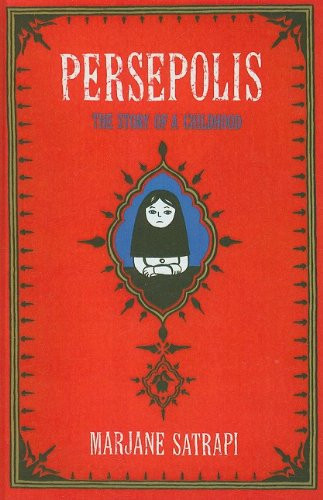


![By Marjane Satrapi Persepolis 2: The Story of a Return [Paperback] [2005] (Author) Marjane Satrapi](https://images.isbndb.com/covers/17921043482321.jpg)

