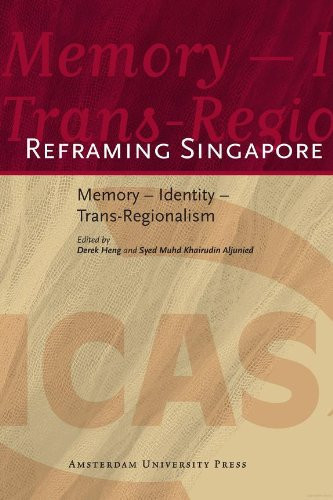
Singapore, a city-state that has surged into the global economic sphere over recent decades, demands a fresh lens through which to understand its evolving essence. Its rapid ascent has prompted a re-evaluation of its very foundations: its history, the tapestry of its populace, its shifting geography, and its intricate transregional and transnational engagements with the world beyond its shores. This deeper examination delves into the complex interplay of memory, identity, and trans-regionalism, seeking to forge a more nuanced comprehension of the nation and the intricate challenges its people navigate.
The journey begins by confronting the very fabric of memory and history, pushing against the often monolithic, state-sponsored narratives of Singapore's past. It is a struggle, much like Milan Kundera's observation of memory against forgetting, that seeks to unearth and recover forgotten stories, challenging dominant interpretations. Here, the discourse shifts from mere political rhetoric to the nuanced construction of a national history, exploring the threads of bi-culturalism and hybridisation that have always been present. Accounts of pivotal events, such as the destructive fires that scarred post-1950s Singapore, are revisited, revealing their profound role in shaping the modernist nation-state. Even the seemingly mundane, like the experiences of female Chinese factory workers in the 1980s and 90s, are brought to light, demonstrating how gender played a crucial role in the discipline and shaping of "The Singapore Story."
Next, the exploration turns inward to the multifaceted nature of identity, recognizing that it is never a static construct but a dynamic negotiation across borders and cultural landscapes. Insights emerge from the textualization of the Baba identity, revealing a rich heritage that defies simple categorization. The many lives of overseas Chinese figures, like Han Wai Toon, illustrate how individuals navigate and negotiate their affiliations and interests across different societies. The very notion of a singular "Singaporean First" identity is questioned, particularly when examining concepts of transnational Malay masculinity or the experiences of Chinese-Singaporeans who have built lives in places like Hong Kong. Each narrative adds a layer to the understanding of how personal and collective identities are continually forged, adapted, and sometimes challenged within and beyond the nation's boundaries.
Finally, the focus expands to Singapore's enduring role as a trans-regional conduit, a vibrant nexus of exchange and interaction. This section unveils the intricate ways in which Singapore is both influenced by and influences its external world. The allure of "Uniquely Singapore" is examined through the lens of Indian media and tourism, highlighting how the city-state projects itself and is perceived abroad. The stories of Filipina trans-migrant workers reveal the global households they create, localizing the global and globalizing the local through their labor and connections with Singaporean employers. Even iconic landmarks like the Raffles Hotel are re-examined, not just as architectural marvels, but as sites where advertising, consumption, and romance intertwine to create a powerful, idealized image. The intricate networks of recruitment agencies facilitating Japanese working women in Singapore further illustrate the deep, often invisible, trans-national flows that continually reshape the nation's social and economic fabric.
Through these diverse perspectives, a more intricate and human understanding of Singapore begins to emerge. It is a portrait not of a fixed entity, but of a nation constantly in motion, shaped by the echoes of its past, the evolving nature of its people, and its undeniable interconnectedness with the wider world. The collected essays invite one to peel back the layers of official narratives and popular perceptions, revealing the rich, complex, and often contested realities that constitute Singapore's ongoing story.