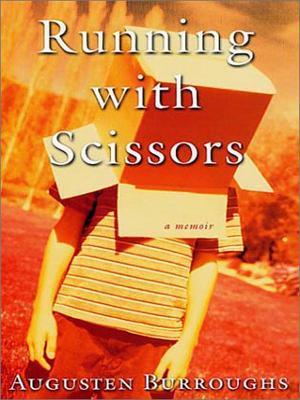
When his mother, a poet with delusions of literary greatness, can no longer care for him, twelve-year-old Augusten Burroughs is sent to live with her psychiatrist. What awaits him is not a place of healing, but the doctor's own dilapidated Victorian home, a place where all the rules of a normal childhood have been discarded. In the care of the eccentric Dr. Finch and his bizarre extended family, Augusten finds himself in a world of unchecked impulses where Valium is eaten like candy, the Christmas tree stays up all year, and sanity is a matter of opinion.
This darkly humorous and startlingly frank memoir chronicles an outlaw childhood lived in the most extraordinary of circumstances. It is a story of surviving a chaotic and unconventional upbringing, navigating a landscape of mental illness and neglect where the lines between patient and caregiver have blurred beyond recognition. For anyone who has ever felt like an outsider, this account of resilience offers a powerful and unforgettable look at the search for identity and family in the most unlikely of places.
My mother stands before the mirror smelling of Jean Naté and lipstick, a poet preparing for a reading. “Something isn't right,” she says, fluffing the shag haircut she got to look like Jane Fonda. She peels the paper from two Kotex maxi pads and, with a flash of brilliance, sticks them under her dress for instant shoulder pads. “You have a very creative mother,” she tells me. I am fixated on her high heels, the way they signal her departure and my own rising dread. My father is a highly functional alcoholic professor, a man with the personality of petrified wood who smells of vodka and psoriasis. Their fights are the soundtrack of our glass house in the woods, arias of rage that end with my father chasing my mother with a fondue pot or my mother hurling the Christmas tree off the deck. I find my own order by polishing my jewelry until it gleams and keeping my hair as smooth and perfect as a mannequin's.
My parents' unraveling leads us to Dr. Finch, a psychiatrist who looks exactly like Santa Claus and carries balloons in his pocket. His office is a dusty, chaotic suite of rooms, and his therapy sessions are bizarre theatrical events. When my parents' marriage finally detonates, I am twelve years old, and my mother informs me that for my own safety from my “homicidal” father, I will be staying with the doctor and his family. I arrive at his house expecting a doctor's pristine residence and instead find a sagging, pink Victorian filled with squalor. The furniture is overturned, animal fur coats the floors, and the air is thick with the smell of wet dog and something else I can't name. This, I am told, is my new home.
Life at Sixty-seven Perry Street is an education in chaos. There are no rules, no bedtimes, and no clean plates. The house is a revolving door of Dr. Finch's eccentric patients and his equally eccentric children. I meet Joranne, an obsessive-compulsive who has lived in an upstairs room for two years, terrified of germs, surviving on food wrapped in aluminum foil and secretly eating the caulking from around the bathroom sink. I play with the doctor's old electroshock therapy machine with his daughters, Natalie and Vickie. We learn a new language, a clinical vocabulary of dysfunction: projection, denial, repression. Fights are not just tolerated but encouraged as a “healthy expression of anger,” and every argument escalates into a group therapy session where psychological labels are hurled like grenades.
In this madhouse, I shed my old self. The navy blazer and pressed slacks are replaced with a pair of ripped jeans. My obsession with perfect hair gives way to an unruly mess of curls. I become partners in crime with Natalie, the doctor's youngest daughter, who is as sharp and wounded as I am. And then I meet Neil Bookman, the doctor's thirty-three-year-old adopted son. He is the first gay person I have ever known, and when he corners me in his room, our first encounter is a confusing violation that morphs into a desperate, clinging affair. He tells me I have a power over him, that he would kill himself if I ever left. His neediness is a drug and a poison, and our relationship becomes a dark vortex of manipulation and longing that consumes my teenage years, until the night he vanishes into thin air, leaving nothing behind but a ghost.
While I navigate the Finch asylum, my mother spirals through her own universe of madness. She finds a lover in Fern, the minister's wife, before moving on to Dorothy, a suicidal art student with a trust fund who becomes her loyal, chaos-loving companion. My mother's psychotic breaks become a seasonal event, each one more spectacular than the last. One episode lands her in a motel in Newport, Rhode Island, where Dr. Finch attempts to treat her himself. She covers herself in baby powder, eats the popcorn ceiling, and accuses the doctor of raping her before being rescued by a sassy, rhinestone-clad waitress named Winnie Pye, who gives her a dramatic makeover and becomes her new best friend.
The final break comes when my mother, lucid and medicated, declares that Dr. Finch is a sick, dangerous man who has been manipulating her for years. The world splits in two, and I am caught in the middle. Natalie, my best friend, demands loyalty to her father. My mother demands that I sever all ties with the family that raised me. I am seventeen, and I realize I belong to neither of them. In the middle of the night, I pack a bag and leave, moving into a slum apartment and taking a job as a waiter. I have no education, no money, and no family to speak of, but I have survived. I have earned a Ph.D. in chaos, and I know, with absolute certainty, that I am ready for New York City. Whatever waits for me there, it cannot possibly be crazier than the world I am leaving behind.
What other readers say
Liked
Many readers found this book to be a uniquely engaging and powerfully written experience, often consumed quickly due to its captivating nature. Reviewers frequently praised the author's distinct voice, crisp prose, and memorable descriptions, which contribute to a narrative that is both darkly humorous and deeply entertaining. Despite the profoundly disturbing subject matter, some appreciated the author's ability to craft a comedic, almost sitcom-like narrative, finding it witty and cleverly observed. For some, the outrageousness of the events depicted was so unbelievable that it lent an air of authenticity, making it a compelling read about an unconventional childhood, particularly within the context of the late 1970s.
Disliked
Conversely, a significant number of readers found the book profoundly disturbing and torturous, expressing disappointment and even revulsion. Many were shocked by the dark and tragic content, which they felt was misrepresented as humorous or quirky by promotional materials or a movie adaptation. The book is frequently described as containing rampant displays of decay, illegal activities, and a general atmosphere of debauchery and neglect, leading to characters that some found unlikable, unrelatable, and deserving of intervention rather than amusement. Specific concerns were raised about graphic and unsettling scenes of exploitation and severe mental illness, which left many readers feeling sickened, disgusted, depressed, and hopeless. Furthermore, the book's veracity as a memoir was a point of contention, with some reviewers citing a lawsuit and claims of embellishment, which led them to question the author's integrity and the factual basis of the narrative. Some also criticized the writing style itself, finding it boring, rambling, or too conventional for the extreme subject matter.
In short
Ultimately, this book is highly polarizing, eliciting exceptionally strong reactions from its readership. While some hail it as a brilliantly written and important work, others dismiss it as a poorly conceived and deeply unsettling read. The debate over its classification as memoir versus fictionalized account further complicates its reception. This book would likely appeal to readers who appreciate dark humor, can tolerate extremely dysfunctional and disturbing content, and are drawn to unconventional narratives that explore the darker side of human experience, particularly those interested in challenging memoirs. However, it is emphatically not recommended for those seeking uplifting stories, lighthearted humor, or for readers sensitive to graphic depictions of abuse, neglect, and severe mental health issues.