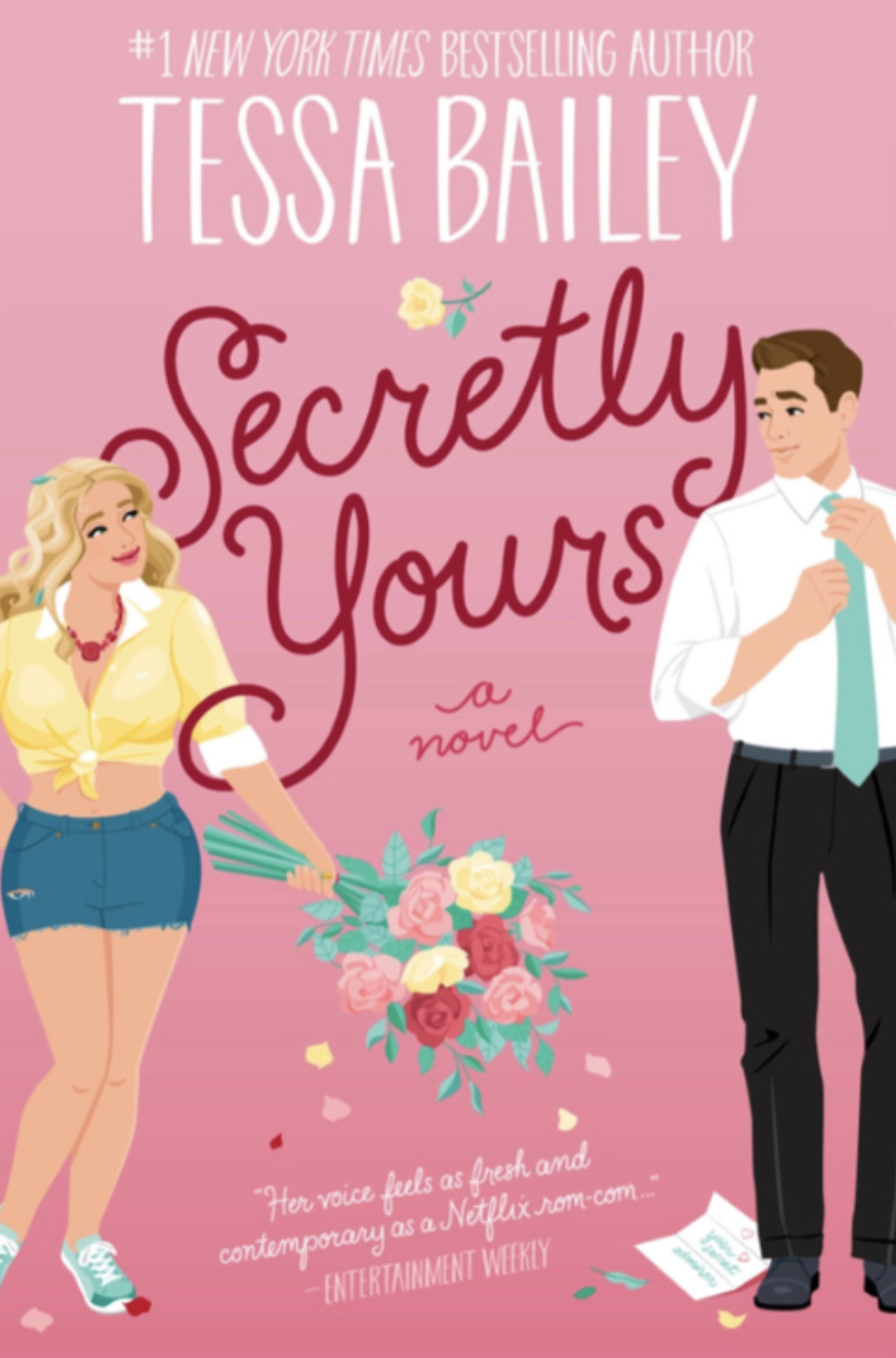
Hallie Welch has never forgotten Julian Vos, the boy from the Vos family winery with whom she almost shared a kiss at fourteen. Years later, Julian, now a disciplined Ivy League professor, returns to his family's Napa Valley estate on sabbatical to write a novel. Their paths cross when Hallie is hired to revitalize the Vos gardens, bringing her vibrant, chaotic energy into his meticulously ordered world.
Despite their clashing personalities, an undeniable tension develops. After a wine-fueled night, Hallie impulsively leaves a secret admirer letter for Julian. As Julian finds himself intrigued by the anonymous messages, he is simultaneously distracted and increasingly drawn to the unpredictable gardener outside his window. This unexpected connection challenges Julian's structured life and forces both of them to confront long-held feelings and the possibility of a future together.
The air in Napa Valley shimmered with the promise of new blooms and old memories, a sentiment Hallie Welch knew intimately. A gardener by trade and by heart, Hallie's world was a vibrant tapestry of growing things, but beneath the surface lay a long-held secret: a teenage crush on Julian Vos, the professor who had just returned to his family's grand vineyard estate. Fifteen years ago, a near-kiss in the moonlit vines had etched Julian into her soul, and despite the years, the spark had never truly faded. Now, as fate would have it, Hallie found herself hired to breathe new life into the very gardens surrounding his temporary sanctuary.
Julian Vos, a man of rigid schedules and academic pursuits, sought only peace and quiet at the Vos estate to finally complete his historical novel. He was a creature of order, meticulously ironing his socks and adhering to strict routines to manage his anxiety. Hallie, with her perpetually dirt-smudged hands, vibrant personality, and a charming disregard for punctuality, was everything he was not. She was a burst of color in his meticulously organized, grayscale world, an irresistible, chaotic distraction that made focusing on his manuscript an increasingly impossible task.
One wine-fueled night, a whisper of old longing and a dash of liquid courage prompted Hallie to do something reckless: she penned an anonymous secret admirer letter to Julian, leaving it where she knew he'd find it during his morning run. This impulsive act, born of a heart still reeling from the loss of her beloved grandmother and navigating a restless period of self-discovery, set in motion a delightful yet confusing game. Julian, intrigued by the mysterious missives, found himself drawn deeper into Hallie's orbit, even as he pondered the identity of his secret admirer, oblivious that the vibrant woman disrupting his peace was also the one stirring his heart with her words.
Their contrasting worlds collided with a delightful friction. Hallie, whose life was deeply intertwined with the memories of her grandmother and her wineshop, Corked, found herself grappling with the balance between her spontaneous nature and the responsibilities that called to her. Julian, on the other hand, was forced to confront his family's expectations for the vineyard and his own vulnerabilities, slowly learning to loosen his rigid control. He was frustrated by Hallie's unpredictability, yet undeniably captivated by her eccentric charm, a fascination that highlighted his internal struggle between maintaining order and surrendering to the messy, beautiful unpredictability of life and connection.
As their connection deepened, filled with sweet banter and undeniable chemistry, the truth about the secret admirer letters loomed. Hallie's confession about her anonymous declarations led to a misunderstanding, triggering Julian's anxieties and a feeling of betrayal. He retreated, seeking solitude to finish his novel, leaving Hallie heartbroken and regretting her impulsive actions. The unraveling of their fragile relationship forced both to confront the consequences of their choices and the profound depth of their emotions, pushing them towards a journey of self-acceptance and the realization that true love often flourishes in the most unexpected and imperfect of gardens.
What other readers say
Liked
Reviews for this book indicate a very divided reception, with many readers finding enjoyment in its particular style while others were significantly disappointed. On the positive side, many reviewers praised the book as a fun, light, and steamy romantic comedy, particularly highlighting the palpable chemistry between the main characters, Hallie and Julian. The "opposites attract" dynamic, often described as grumpy/sunshine, was a draw for some, with Julian, the organized professor, frequently lauded as a charming, nuanced, and swoon-worthy male lead. Readers who appreciate the author's signature explicit style enjoyed the spicy scenes and witty, often laugh-out-loud dirty talk. The vineyard setting was also noted as romantic and contributed to the cozy, small-town atmosphere, while some appreciated the representation of anxiety through Julian's character.
Disliked
Conversely, a significant portion of readers expressed disappointment, feeling the book "missed the mark" or was not the author's best work. Common criticisms revolved around the plot, which many found to be weak, chaotic, boring, or even non-existent, with unnecessary side plots like the "secret admirer" letters adding little to the story. The female main character, Hallie, drew considerable criticism for perceived immaturity, inconsistency, and what some described as "stalker vibes" due to her long-held, unrequited crush. While some praised Julian, others found him bland or felt his anxiety representation was shaky. The pacing was often described as slow and dragging, and many reviewers found the third-act conflict and general miscommunication trope to be frustrating, pointless, or even "stupid." Additionally, while the spice was a positive for some, others felt Julian's dirty talk was out of character or found his initial objectification of Hallie uncomfortable.
In short
In conclusion, this book appears to be a polarizing read. It is likely to appeal to readers seeking a very light, steamy romance with an "opposites attract" dynamic set in a charming location, especially those who prioritize explicit romantic scenes and humorous dialogue over a complex or logical plot. Fans of the author's previous works, particularly those who enjoy her signature style, might find it a satisfying escape. However, readers looking for strong character development, a believable and consistent plot, or a more nuanced approach to romantic conflict may find themselves disappointed and might consider lowering their expectations.