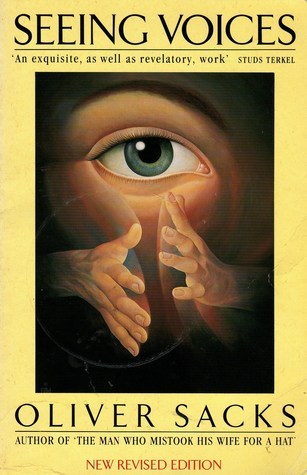
Seeing Voices
by Oliver Sacks
- First published 1989
- English
Embark on a profound exploration into the world of the Deaf, guided by neurologist Oliver Sacks. This book transcends a medical perspective, delving into the rich tapestry of Deaf culture, the complexities of sign language, and the historical struggles for recognition. Through insightful observation and a deep intellectual curiosity, Sacks reveals how sign language functions as a complete and vibrant form of human communication, challenging preconceived notions about language acquisition and the brain's remarkable adaptability.
Discover the unique neurological pathways forged by visual language and witness the powerful emergence of a distinct community and culture. From the historical treatment of Deaf individuals to the pivotal Deaf President Now protest at Gallaudet University, Sacks illuminates the social and linguistic landscapes that define the Deaf experience. This journey offers a compelling re-evaluation of what it means to communicate, think, and belong, inviting readers to expand their understanding of human potential and the diverse forms of intelligence.
What readers say
4.05
6.4K ratings across the web 8 in 10 readers loved it
Oliver Sacks' book is widely praised for its enlightening and deeply informative exploration of the world of deafness, sign language, and Deaf culture. Reviewers consistently highlight how the book broadens understanding, challenging preconceived notions about language, communication, and human cognition. Sacks' engaging and empathetic writing style makes complex neurological and linguistic concepts accessible, drawing readers into fascinating historical accounts and compelling individual stories. The book is lauded for its insightful examination of sign languages as complete, rich linguistic systems, emphasizing their unique visual-spatial qualities and their profound impact on thought processes and community formation. Many found it a powerful and moving journey that reveals the depth and vibrancy of Deaf identity and the critical role of language in shaping human experience.
Despite its strengths, several reviewers point out that the book shows its age, having been published over two decades ago. This leads to some information, particularly concerning technology like cochlear implants and educational approaches, being outdated. The legal and social landscape for people with disabilities has also evolved significantly since its original publication. Some readers found certain sections, especially the middle part dealing with neuroscience, to be overly technical, dry, or repetitive, with an abundance of extensive footnotes that can disrupt the reading flow. A few also noted that the structure, divided into three long chapters, sometimes made it difficult to follow the various thematic threads.
Overall, the book is considered a valuable and thought-provoking read, even with its dated aspects. It serves as an excellent introduction for anyone unfamiliar with the history, culture, and linguistics of the deaf community, often inspiring readers to learn more or even begin studying sign language themselves. Its central themes about the nature of language and its fundamental importance to human development remain highly relevant. This book is recommended for readers interested in neurology, linguistics, human cognition, and cultural studies, as well as for educators and parents seeking to understand the profound impact of deafness and the richness of sign languages and Deaf identity. It is best approached as a foundational text that beautifully illuminates a vital aspect of human experience.
Reviews
No reviews yet. Be the first.
Details & editions
- This edition
- University of California Press, 1989
- ISBN
- 9789994718122
- Language
- English