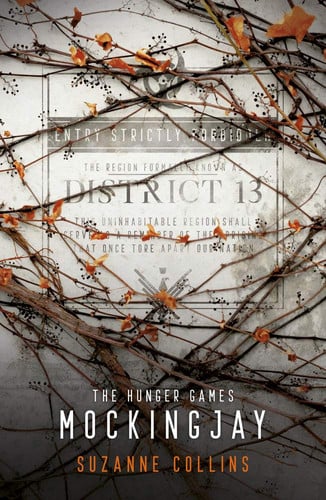
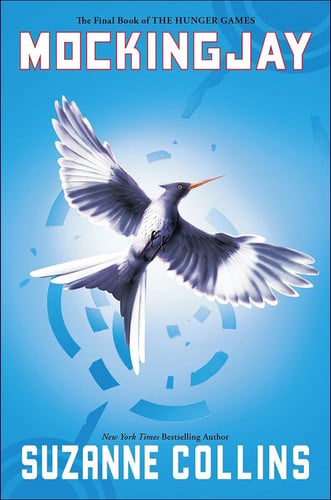
Katniss Everdeen has survived the Hunger Games twice, but the games are far from over. Rescued from the arena and taken to the long-lost District 13, she finds herself at the center of a massive rebellion. Her home has been destroyed, and the districts of Panem are rising up against the Capitol. The leaders of the rebellion need a symbol to unite the people, and they have chosen Katniss. She must become the Mockingjay.
Thrust into a role she never wanted, Katniss becomes the face of a war that threatens to consume everyone she loves. The fight for freedom is a battlefield of propaganda, morally ambiguous choices, and devastating losses that blur the line between the rebels and the Capitol. As she navigates the psychological toll of the conflict and the manipulation from all sides, Katniss must confront the true cost of war and decide for herself what is worth fighting for in the final, definitive struggle for the soul of Panem.
The air in District 13 hums with a grim, utilitarian rhythm, a stark contrast to the ashes that were once District 12. Katniss Everdeen, a survivor of two Hunger Games and now a reluctant symbol, finds herself among the refugees, her sister Prim and her mother, along with Gale and Haymitch, safe within the underground stronghold. But safety is a fragile thing, bought at the cost of her own peace. Peeta Mellark, her fellow victor and the boy with the bread, is a captive of the Capitol, his tortured image broadcast to torment her and fuel the rebellion's fire.
President Alma Coin, the severe leader of District 13, sees in Katniss not a broken girl, but a Mockingjay - a potent symbol to unify the twelve districts against President Snow's tyrannical Capitol. Katniss, haunted by guilt for the destruction of her home and the horrors she's witnessed, initially resists this role. But the promise of immunity for the captured tributes, including Peeta, and the deep-seated desire to finally bring Snow to justice, compels her to agree. She becomes the face of the revolution, filming "propos" in war-torn districts, her raw emotion and defiant spirit igniting hope and fury across Panem.
The war rages, a brutal dance of propaganda and bloodshed. Katniss, accompanied by Gale and a camera crew, bears witness to the Capitol's cruelty and the rebels' fierce determination. She sees the inventive, often ruthless, tactics employed by Gale, a pragmatic approach to warfare that deeply troubles her. During a mission in District 8, she disobeys orders, joining the fight and delivering an impassioned speech that further solidifies her image as the Mockingjay. The rebels manage to rescue Peeta and other captured victors from the Capitol, but the reunion is far from joyful. Peeta has been "hijacked" with tracker jacker venom, his mind twisted to believe Katniss is a muttation, an enemy to be destroyed. He attempts to kill her, leaving Katniss with a profound sense of loss and betrayal, even as medics in District 13 desperately work to restore his memories.
As the rebellion presses on, Katniss and Gale are sent to District 2, a Capitol stronghold. Here, Katniss grapples with the ethical ambiguities of war, witnessing tactics that mirror the Capitol's own indifference to human life. She is wounded while trying to save a Capitol soldier, a moment broadcast for all of Panem to see. Recovering, Katniss is assigned to an elite squad, tasked with navigating the booby-trapped streets of the Capitol itself. The mission, however, soon devolves into a desperate fight for survival within a city turned into a deadly arena by the Capitol's game makers.
The final assault on the Capitol is a harrowing descent into chaos. Traps, explosions, and constant gunfire claim many lives, blurring the lines between the Hunger Games arena and the war zone. Finnick, a steadfast ally, falls victim to the Capitol's muttations, a devastating blow to Katniss and the remaining squad members. As they push towards President Snow's mansion, a horrific bombing occurs. Children, used as human shields by the Capitol, are caught in the blast, and then a second wave of bombs targets the medics rushing to their aid. Among them is Prim, Katniss's beloved sister, who perishes in the inferno. The weapon used in the attack bears a chilling resemblance to a design Gale had worked on, leaving Katniss with an unbearable grief and an unbridgeable chasm between them.
With the Capitol finally breached and Snow captured, a new provisional government is formed under President Coin. A final, symbolic Hunger Games is proposed by Coin, using the Capitol's children as tributes, a proposition that horrifies Katniss but gains the support of the other victors, including Haymitch. At Snow's public execution, Katniss, poised to deliver the killing blow, has a sudden, chilling realization - Snow, in their final conversation, had subtly implicated Coin in Prim's death. In a shocking act of defiance, Katniss turns her bow and shoots Coin through the heart, bringing an abrupt end to the new tyranny before it can truly begin.
Katniss is imprisoned, her actions deemed an act of madness brought on by trauma, a defense supported by Haymitch and Plutarch. She is eventually acquitted and returns to the desolate remains of District 12, haunted by the ghosts of war and the weight of her choices. Gale, unable to reconcile their diverging paths, moves to another district. Slowly, painstakingly, Peeta begins to heal, his memories returning, and he and Katniss find solace in each other's shared understanding of pain and survival. Years later, the Hunger Games are a cautionary tale, and Katniss and Peeta, together in District 12, have built a quiet life, raising two children. The nightmares still come, but they face them together, a testament to enduring love amidst the wreckage of a revolution.
What other readers say
Liked
The reviews for this book highlight several strong positive aspects, particularly its thematic depth and realistic portrayal of the consequences of war. Many readers commend the author for tackling difficult subjects such as grief, trauma, and propaganda with honesty, finding the book profoundly impactful and thought-provoking. The narrative is praised for its emotional depth and for presenting a dark, intense, and haunting conclusion that avoids a conventional "happily ever after," which some see as a brave and gutsy choice by the author. Certain readers also appreciate the nuanced exploration of the protagonist's psychological state, viewing her struggles as a realistic depiction of post-traumatic stress and the devastating effects of conflict.
Disliked
However, a significant portion of the reviews express considerable disappointment and frustration, primarily revolving around the protagonist's character arc and the book's pacing. Many readers felt that the main character, who was previously seen as strong and resourceful, became whiny, passive, and lacked agency, often appearing as a pawn or a victim rather than a hero. The narrative is frequently criticized for being slow, dragging, and anti-climactic, with a perceived lack of close-up action and too much focus on the protagonist's internal despair. Critics also found the book's violence and bleakness excessive, bordering on gratuitous, and felt that many character deaths were rushed or lacked proper emotional weight, contributing to a sense of numbness and detachment. The resolution of the romantic subplot also left some readers dissatisfied, feeling it was either poorly executed or that the protagonist's choice felt like a resignation rather than an active decision.
In short
In conclusion, this book is a polarizing finale that bravely deviates from typical young adult fantasy conventions to deliver a powerful, albeit often bleak, message about war and its psychological toll. Readers who appreciate a challenging, dark, and emotionally intense narrative that delves deeply into themes of trauma, sacrifice, and the moral ambiguities of conflict are likely to find it a profound and impactful read. However, those expecting a more action-driven plot, a traditionally heroic protagonist, a clear-cut resolution to the romantic elements, or a hopeful, uplifting ending might find themselves disappointed by its somber tone and the protagonist's diminished agency.