
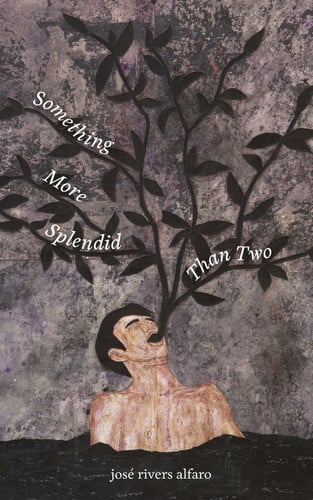
Something More Splendid Than Two
9.14 / 10 7 ratings
Free- Language
- English
- Published
- 2022
- Publisher
- punctum books
- Pages
- 108
- ISBN
- 9781685710644
Something More Splendid Than Two blends literary analysis and memoir to explore intergenerational wounds and the complexities of the Joaquín Murrieta myth. This work functions as a nuanced examination of colonized masculinity and a deeply personal letter from a son to his father, challenging established narratives surrounding the Chicanx folk hero.
Through a tapestry of myth, poetry, historical research, and personal reflection, the book invites readers to consider new possibilities for healing and solidarity across different marginalized experiences. It offers an alternative perspective on the enduring legacy of 19th-century history and the formation of identities across borders.
Through a tapestry of myth, poetry, historical research, and personal reflection, the book invites readers to consider new possibilities for healing and solidarity across different marginalized experiences. It offers an alternative perspective on the enduring legacy of 19th-century history and the formation of identities across borders.
Subjects
Original edition
Something More Splendid Than TwoOriginally published in 2022 English dead letter office, an imprint of punctum books
Other editions (1)
Listen to the summary Narrated summary
A journey begins not with a map, but with a wound, an ache passed down through generations, a silent inheritance that demands excavation. This is a quest into the heart of a familial legacy, a fraught letter penned from son to father, seeking to unravel the tangled threads of history and myth that bind them. At its core lies the enduring legend of Joaquín Murrieta, the Chicanx folk hero, whose story, in the Mexican American imagination, has been reshaped to articulate the profound injuries inflicted upon men after the 1848 border's arbitrary carving. Here, Joaquín is not merely an outlaw; he is recast as a vigilante, a patriarchal figurehead of the Chicanx movement, a symbol both powerful and, perhaps, limiting.
The narrative delves deep into the well-worn paths of Murrieta's myth, particularly revisiting "The Life and Adventures of Joaquín Murieta" by John Rollin Ridge, a foundational text in the canon of Native American literature. Yet, rather than simply retell, this exploration seeks to disrupt, to offer an alternative gaze upon these established narratives. It is an act of meticulous unearthing, pulling at the seams of history to reveal the hidden, interwoven histories of Indigenous and Mexican suffering that linger in the margins of Ridge's 19th-century novel.
Through this careful re-examination, a "queer timeline" begins to unfurl, a space where new possibilities for connection and healing can be imagined. It's a dance between critical analysis and deeply personal reflection, where rigorous scholarship meets lyrical prose, weaving together myth, poetry, historical research, and the intimate echoes of family lore. The language itself becomes a vibrant tapestry, illuminating the devastating impacts of colonized masculinity, particularly on those whose lives straddle the fluid, often violent, boundary between the US and Mexico.
The search extends beyond the historical figure to embrace a personal reckoning with language, colonialism, and patriarchy within one's own family history. It is an unflinching look at the origins of wounds that seem perpetually unhealed, a meticulous and honest confrontation with the failed solidarities between marginalized peoples, and between a son and his past. The narrative marvels at the sheer tenacity required for survival, the arduous lengths one must traverse to simply endure.
This intricate tapestry of memory and critique invites the reader into multiple spaces of critical intimacy, each charged with vulnerability, conflict, and moments of transport and pleasure. It acknowledges that intergenerational trauma and missed opportunities for unity have shaped lives, but crucially, they do not ultimately define them. By dismantling the rigid binaries that perpetuate colonial violence, the work choreographs new possibilities for healing and kinship, stretching across time and space, suggesting that true solidarity might lie in the recognition of shared wounds and the courage to imagine a different future.
The narrative delves deep into the well-worn paths of Murrieta's myth, particularly revisiting "The Life and Adventures of Joaquín Murieta" by John Rollin Ridge, a foundational text in the canon of Native American literature. Yet, rather than simply retell, this exploration seeks to disrupt, to offer an alternative gaze upon these established narratives. It is an act of meticulous unearthing, pulling at the seams of history to reveal the hidden, interwoven histories of Indigenous and Mexican suffering that linger in the margins of Ridge's 19th-century novel.
Through this careful re-examination, a "queer timeline" begins to unfurl, a space where new possibilities for connection and healing can be imagined. It's a dance between critical analysis and deeply personal reflection, where rigorous scholarship meets lyrical prose, weaving together myth, poetry, historical research, and the intimate echoes of family lore. The language itself becomes a vibrant tapestry, illuminating the devastating impacts of colonized masculinity, particularly on those whose lives straddle the fluid, often violent, boundary between the US and Mexico.
The search extends beyond the historical figure to embrace a personal reckoning with language, colonialism, and patriarchy within one's own family history. It is an unflinching look at the origins of wounds that seem perpetually unhealed, a meticulous and honest confrontation with the failed solidarities between marginalized peoples, and between a son and his past. The narrative marvels at the sheer tenacity required for survival, the arduous lengths one must traverse to simply endure.
This intricate tapestry of memory and critique invites the reader into multiple spaces of critical intimacy, each charged with vulnerability, conflict, and moments of transport and pleasure. It acknowledges that intergenerational trauma and missed opportunities for unity have shaped lives, but crucially, they do not ultimately define them. By dismantling the rigid binaries that perpetuate colonial violence, the work choreographs new possibilities for healing and kinship, stretching across time and space, suggesting that true solidarity might lie in the recognition of shared wounds and the courage to imagine a different future.
Opening the reader…
No reviews yet. Be the first.