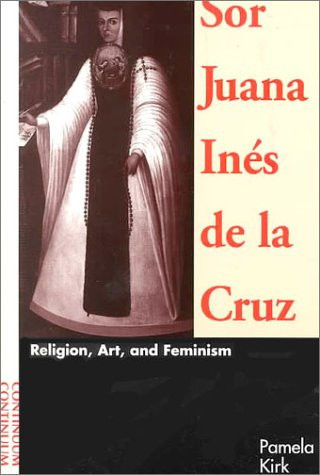
Within the vibrant intellectual landscape of 17th-century New Spain, a towering figure emerges: Sor Juana Inés de la Cruz, a Hieronymite nun whose life and prolific writings challenged the confines of her era. This exploration delves into her profound contributions as a theological mind, an artistic innovator, and an audacious advocate for women's intellectual autonomy, positioning her as a pivotal voice in Latin American thought.
From an early age, Juana Inés de Asbaje y Ramírez de Santillana, as she was known before taking vows, exhibited an extraordinary intellect and an insatiable hunger for knowledge. Rather than succumbing to the societal expectation of marriage, she chose the convent, a decision driven not by fervent mysticism alone, but by a pragmatic desire for the solitude and intellectual freedom it afforded for her studies. Within the cloistered walls, she amassed one of the largest private libraries in the New World, immersing herself in rhetoric, mathematics, natural sciences, and classical literature, largely self-taught.
Sor Juana's artistic output was remarkably diverse, encompassing "sacramental dramas" and intricate liturgical poetry, which cemented her status as a major theological figure. Her villancicos, poems crafted for church celebrations, showcased her wit and inventiveness, breathing life into religious themes with a unique blend of scholarly depth and poetic grace. These works, often rich in allegory and intellectual play, demonstrate her mastery of language and her profound engagement with Christian doctrine.
A significant portion of her work and indeed her very intellectual existence, however, became intertwined with the burgeoning feminist consciousness that permeated her writings. She possessed a clear awareness of her role as a woman artist and thinker in a militantly patriarchal ecclesiastical milieu. Her compositions often subtly, and at times explicitly, questioned the prevailing norms that restricted women's access to education and intellectual pursuits.
The zenith of Sor Juana's intellectual courage manifested in her famous "Carta Atenagórica" and the subsequent "Respuesta a Sor Filotea de la Cruz." The "Carta Atenagórica" was a theological critique of a sermon by a Portuguese Jesuit, an analysis of the finest gifts of Christ to humanity that stirred considerable controversy. This act of public theological discourse, coming from a woman, was met with episcopal criticism of "worldliness" from the Bishop of Puebla, who published her critique under the pseudonym "Sor Filotea" while also reprimanding her.
Her "Respuesta a Sor Filotea de la Cruz" stands as a monumental defense of her rights as an intellectual within the church and a powerful argument for women's right to education and to serve as intellectual authorities. In this eloquent letter, she asserted that intellect should be valued above hierarchy or gender, challenging the very foundations of the male-dominated society in which she lived. She advocated for women to educate other women, envisioning a world where intellectual pursuits were not exclusive to one sex.
Though her later years saw her forced to sell her beloved library and ultimately cease writing under pressure, Sor Juana Inés de la Cruz left an indelible legacy. Her work continues to resonate, not only as a testament to her genius in religion and art but also as a foundational expression of feminist thought in the Americas, a voice that dared to speak for the intellectual freedom and dignity of women in an age that sought to silence them.