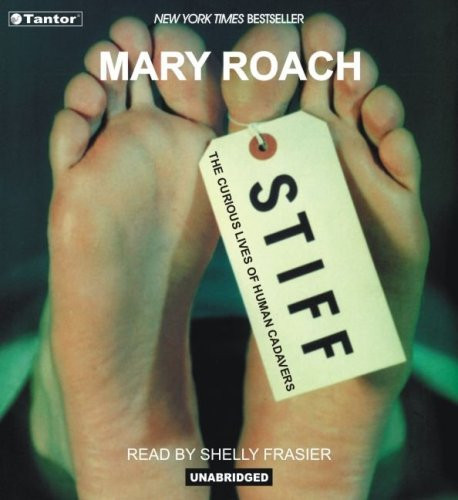
The journey into the curious lives of human cadavers begins not in a sterile morgue, but perhaps in a facial anatomy and facelift refresher course, where surgeons meticulously practice their craft on donated heads. Here, the detached head becomes a teaching tool, a silent instructor offering invaluable lessons in the delicate art of altering human appearance. It's a place where the living learn from the dead, pushing the boundaries of medical skill with an objectified, yet profoundly useful, human form.
From these modern surgical theaters, the narrative delves into the less savory history of human dissection. We uncover the grim reality of body snatching, where desperate anatomists and their often-unscrupulous assistants resorted to illicit means to procure subjects for study. These early days of anatomical science were fraught with ethical quandaries and dark dealings, laying the foundation for our understanding of the human body while simultaneously battling societal taboos and the law.
The exploration continues into the fascinating, if somewhat macabre, world of decomposition. Imagine a research facility where donated bodies are laid out in natural environments, left to the elements. Here, scientists meticulously observe the stages of decay, charting the intricate dance of insects, temperature, and chemical changes. This grim, yet vital, work provides crucial data for forensic science, helping to establish scientific baselines that aid criminal investigations in determining time of death and other mysteries of the grave.
Our silent heroes, the cadavers, have also played an indispensable role in ensuring the safety of the living. We witness their invaluable contribution to automotive safety, serving as the original, and still sometimes necessary, crash test dummies. These "dead men driving" endure simulated collisions, their bodies yielding critical data on impact tolerance that has led to countless innovations in vehicle design and saved thousands of lives. Beyond the road, cadavers have helped reconstruct the terrifying final moments of air disasters, like TWA Flight 800. Without the aid of a black box, the injuries sustained by the deceased passengers can tell the story of what happened in the moments leading up to a crash, a grim puzzle pieced together from human remains.
The utility of the deceased extends even into the realm of warfare and ballistics. We examine the sometimes uncomfortable ethics of using cadavers for military research, studying the effects of bullets, bombs, and landmines on the human form. Such studies, while unsettling, aim to understand trauma and potentially develop more protective gear or less lethal weapons, serving a humanitarian purpose in a paradoxically violent field. The journey also touches on the more peculiar applications, such as the historical experiments conducted to test the authenticity of religious relics, like the Shroud of Turin, pushing the boundaries between faith and empirical investigation.
The very definition of death itself becomes a subject of curious inquiry. We encounter the philosophical and medical complexities surrounding "beating-heart cadavers," individuals who are brain dead but whose organs are kept viable for transplant, raising profound questions about the seat of the human soul and the precise moment when life truly ceases. This exploration delves into historical attempts to define death, from the fear of live burial to the scientific search for the soul.
The narrative ventures into the truly bizarre, exploring historical accounts of medicinal cannibalism, where human remains were consumed for perceived therapeutic benefits, and even investigating an urban legend of human dumplings in China. We also consider the radical frontiers of medical ambition, such as the audacious, if ethically fraught, concept of human head transplants and the historical context of decapitation.
Finally, as our exploration of the cadaver's varied existence draws to a close, we confront the ultimate question of what becomes of our own bodies. The conventional choices of burial and cremation are examined alongside innovative, environmentally conscious alternatives, such as human composting and tissue digestion. These methods propose a return to the earth that is both practical and profound, transforming remains into something new. This grand tour of post-mortem possibilities culminates in a personal reflection on one's own eventual disposition, a contemplation of the final, silent act of generosity or simply, the quiet fading away.