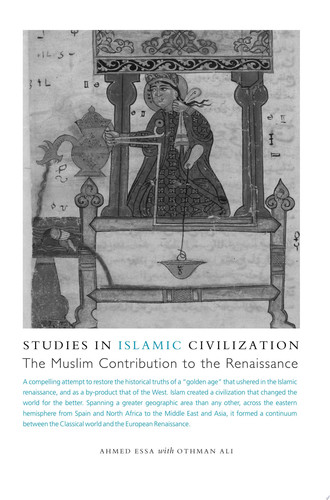
For nearly a thousand years, a vibrant civilization flourished, stretching across a vast expanse of the globe and setting the pace for human progress. This was the world of Islam, a realm where knowledge was cherished, distinctions of class and race dissolved, and the pursuit of earthly bounties was balanced with unwavering moral and ethical principles. It was here, amidst bustling cities and thriving centers of learning, that a wealth of ancient wisdom, destined to be lost to the ages, was meticulously rescued and meticulously preserved.
Within grand libraries like Baghdad's House of Wisdom, scholars from diverse backgrounds converged, translating invaluable Greek and Roman texts into Arabic. This monumental undertaking was not merely an act of preservation; it was a catalyst, breathing new life into forgotten sciences and philosophies. Imagine the quiet intensity of scribes painstakingly copying manuscripts, the murmur of discussions as intricate concepts were debated, and the sheer intellectual energy that permeated these halls. The very language of Arabic became the international tongue of science for over seven centuries, a testament to the intellectual dynamism of the era.
The genius of Muslim scholars ignited an intellectual tradition that would profoundly shape Europe. In fields as varied as astronomy, mathematics, and medicine, groundbreaking discoveries were made, laying the essential foundations for future enlightenment. Think of the intricate celestial observations that refined our understanding of the cosmos, the development of algebraic principles that revolutionized calculations, and the advanced medical practices that transformed healing. Figures like al-Razi, Ibn Sina, al-Kindi, and Ibn Rushd penned treatises that became standard texts in European medical schools for centuries, their insights guiding generations of healers.
Consider the revolutionary impact of innovations in optics, which shed new light on the nature of vision and influenced later European thinkers. Or the sophisticated astronomical models and mathematical tools developed by Islamic astronomers from the thirteenth to sixteenth centuries, work that evidence suggests may have been known to and utilized by Copernicus himself. It was a period of relentless inquiry and practical exploration, where scientific production flourished under complex social, economic, and intellectual conditions.
Beyond the pure sciences, the Muslim world championed advancements that transformed daily life and intellectual dissemination. The introduction of paper from China into the Islamic realm, for instance, proved a pivotal technological leap. Its widespread use facilitated the explosion of written knowledge, making possible the very circulation of ideas that would eventually fuel transformative inventions like the Gutenberg Printing Press in Europe.
This vibrant "golden age" of Islamic civilization was, in essence, a crucial bridge between the ancient world and the burgeoning modernity of the West. It was a period of profound cultural interaction and cross-pollination, where the transfer of knowledge from Arabic to Latin ignited a dynamic exchange of ideas across geographical and cultural borders. The very fabric of European thought, science, and even art and architecture bore the imprint of these profound contributions, from sophisticated geometric motifs to groundbreaking structural designs.
Yet, for too long, this monumental legacy has remained largely overlooked, a silent truth in the annals of history. The full measure of the Muslim world's contribution to the European Renaissance, and indeed to the broader trajectory of human progress, often goes unacknowledged. It is a compelling historical truth that without the tremendous intellectual, scientific, and cultural endeavors of this leading civilization, the Renaissance that reshaped the Western world might never have dawned.