
Sun And Her Flowers
by Rupi Kaur
8.16 / 10 389K ratings
- Language
- English
- Published
- 2017
- Publisher
- Simon & Schuster
- Pages
- 256
- ISBN
- 9781501175282
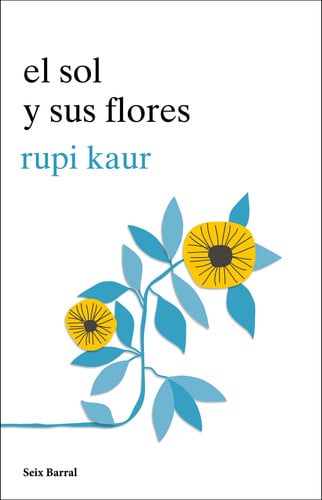
This collection of poetry charts a course through the universal experiences of love, loss, healing, and growth. Divided into five distinct chapters - wilting, falling, rooting, rising, and blooming - the book follows the life cycle of a flower as a metaphor for the human condition. It begins by exploring the pain of heartbreak and loss, then moves inward to themes of ancestry, migration, and finding a home within oneself. The poems, accompanied by the author's own line drawings, are a celebration of love in all its forms.
Through this deeply personal yet widely relatable journey, the collection touches on trauma, healing, femininity, and empowerment. It is an exploration of honoring one's roots while simultaneously rising up to find acceptance and joy. The poems serve as a testament to resilience, offering an intimate look at the process of wilting and the strength it takes to finally bloom. This book provides a space for reflection on personal pain and the powerful capacity for renewal.
Through this deeply personal yet widely relatable journey, the collection touches on trauma, healing, femininity, and empowerment. It is an exploration of honoring one's roots while simultaneously rising up to find acceptance and joy. The poems serve as a testament to resilience, offering an intimate look at the process of wilting and the strength it takes to finally bloom. This book provides a space for reflection on personal pain and the powerful capacity for renewal.
Subjects
Original edition
The Sun and Her FlowersOriginally published in 2017 English Andrews McMeel Publishing
Other editions (6)



Listen to the summary Narrated summary
On the last day of love, my heart cracked inside my body. When you left, you took the sun with you, and I drew every curtain in the house to tell the light to go. I spent my nights casting spells to bring you back, eating the wilting flowers you gave me one by one, desperate for any part of you. Your absence was a missing limb, a jealousy that made me want to rip the sky apart for raining on you when my hands could not. I tried to leave many times, but my lungs would buckle, panting for your air. I knew I was beating a dead thing, but did it matter? Something, even the abuse, was better than the empty space you left behind.
The initial shock gave way to a slow, creeping ache. Every morning began with the same violent realization that you were gone. It wasn't what we left behind that broke me; it was the construction site of our future, the pylons and planks of wood waiting for our return. I was loyal long after you were gone, unable to meet another's eyes, saving my hands for when you came back. But day by day, I realized the person I missed was a mirage, someone who was never there at all. Why is it that when the story ends, we begin to feel all of it?
The fall became a freefall into a deeper darkness. Depression was a shadow living inside me, a numbness that hardened me until I dreamed only of softening. My body became a source of shame. *Why are you so unkind to me*, it cried. *Cause you don't look like them*, I told her. This body also became a home that was broken into, a place I could no longer recognize as my own. Someone kicked the front door in, took everything, and left a hole the size of his manhood in my chest. For years I carried his guilt, decorating my home with his shame, until I finally set it down. It takes a broken person to come searching for meaning between my legs; it takes a whole person to survive it.
To heal, I had to go backward, to the roots. I found my mother, who sacrificed her dreams so I could dream. I found my father, who pulled his family from poverty without knowing what a vowel was. Their lives were a poetry I could never write, their broken english a masterpiece of survival, their accents thick like honey. I am the offspring of two countries colliding, the product of ancestors who decided their stories needed to be told. They are the fabric of my being, the people who sewed me whole. I stand on the sacrifices of a million women before me, and my whole life has been an uprising, one burial after another.
Rise, said the moon, and the new day came. Life does not stop for anybody; it drags you by the legs whether you want to move forward or not. I went for my *i can'ts* and *i won'ts*, lined them up and shot them dead. I wove a cloth from my hair and scrubbed the self-hate off the bone until it exposed love. I realized that what is stronger than the human heart, which shatters over and over and still lives? I finally understood that if I am the longest relationship of my life, it is time to nurture intimacy with the person I lie in bed with each night.
And then, you appeared. I was apprehensive, because falling into you meant falling out of him, and I had not prepared for that. How do I welcome kindness when I have only practiced spreading my legs for the terrifying? You are not them. You are medicinal. You do not stand in my way; you make space for me to step forward. *What is it with you and sunflowers*, you ask. I point to the field of yellow outside. Sunflowers worship the sun, I say. When it arrives, they rise. When it leaves, they bow their heads. That is what the sun does to those flowers. It's what you do to me.
This is the recipe of life. People, like flowers, must wilt, fall, root, and rise in order to bloom. I learned that everything is temporary: moments, feelings, people. I learned that vulnerability is always the right choice in a world that makes it so difficult to remain soft. It was when I stopped searching for home within others and lifted the foundations of home within myself that I found there were no roots more intimate than those between a mind and body that have decided to be whole. The year is done. I have cremated the unnecessary. Here I go, stronger and wiser into the new. The sun and her flowers are here.
The initial shock gave way to a slow, creeping ache. Every morning began with the same violent realization that you were gone. It wasn't what we left behind that broke me; it was the construction site of our future, the pylons and planks of wood waiting for our return. I was loyal long after you were gone, unable to meet another's eyes, saving my hands for when you came back. But day by day, I realized the person I missed was a mirage, someone who was never there at all. Why is it that when the story ends, we begin to feel all of it?
The fall became a freefall into a deeper darkness. Depression was a shadow living inside me, a numbness that hardened me until I dreamed only of softening. My body became a source of shame. *Why are you so unkind to me*, it cried. *Cause you don't look like them*, I told her. This body also became a home that was broken into, a place I could no longer recognize as my own. Someone kicked the front door in, took everything, and left a hole the size of his manhood in my chest. For years I carried his guilt, decorating my home with his shame, until I finally set it down. It takes a broken person to come searching for meaning between my legs; it takes a whole person to survive it.
To heal, I had to go backward, to the roots. I found my mother, who sacrificed her dreams so I could dream. I found my father, who pulled his family from poverty without knowing what a vowel was. Their lives were a poetry I could never write, their broken english a masterpiece of survival, their accents thick like honey. I am the offspring of two countries colliding, the product of ancestors who decided their stories needed to be told. They are the fabric of my being, the people who sewed me whole. I stand on the sacrifices of a million women before me, and my whole life has been an uprising, one burial after another.
Rise, said the moon, and the new day came. Life does not stop for anybody; it drags you by the legs whether you want to move forward or not. I went for my *i can'ts* and *i won'ts*, lined them up and shot them dead. I wove a cloth from my hair and scrubbed the self-hate off the bone until it exposed love. I realized that what is stronger than the human heart, which shatters over and over and still lives? I finally understood that if I am the longest relationship of my life, it is time to nurture intimacy with the person I lie in bed with each night.
And then, you appeared. I was apprehensive, because falling into you meant falling out of him, and I had not prepared for that. How do I welcome kindness when I have only practiced spreading my legs for the terrifying? You are not them. You are medicinal. You do not stand in my way; you make space for me to step forward. *What is it with you and sunflowers*, you ask. I point to the field of yellow outside. Sunflowers worship the sun, I say. When it arrives, they rise. When it leaves, they bow their heads. That is what the sun does to those flowers. It's what you do to me.
This is the recipe of life. People, like flowers, must wilt, fall, root, and rise in order to bloom. I learned that everything is temporary: moments, feelings, people. I learned that vulnerability is always the right choice in a world that makes it so difficult to remain soft. It was when I stopped searching for home within others and lifted the foundations of home within myself that I found there were no roots more intimate than those between a mind and body that have decided to be whole. The year is done. I have cremated the unnecessary. Here I go, stronger and wiser into the new. The sun and her flowers are here.
What other readers say
Liked
The book is widely praised for its heartfelt and empowering exploration of deeply personal and significant themes. Many readers found it beautifully written, inspiring, and relatable, particularly for women and women of color. The collection delves into topics such as femininity, self-love, healing, growth, and the journey of overcoming difficult experiences. Reviewers highlighted the powerful sections dedicated to immigration, ancestry, and the strength of mothers, appreciating the author's ability to tackle sensitive subjects with piercing imagination and raw emotion. The poetic style, characterized by its directness and simplicity, resonated with many, offering a sense of connection and validation. Some noted a positive evolution in the author's writing, with more personal narratives and effective use of metaphor, making the work feel fresh and impactful. The accompanying illustrations were also frequently mentioned as adding depth and bringing the poems to life.
Disliked
Despite the positive reception, several reviewers expressed significant concerns regarding the collection's originality and poetic merit. A recurring criticism was the perceived lack of new content, with some pieces feeling like reworded versions of previously published work or commonly seen sentiments. Accusations of appropriating ideas from other authors were raised by some, questioning the author's integrity. The simplistic style, characterized by a lack of traditional punctuation and unconventional line breaks, was often seen as a weakness rather than a stylistic choice, leading to accusations that the work was not "real" poetry, or felt like "fluffs of nothing" or a "teenager's journal." Reviewers also found some poems to be surface-level, clichéd, or emotionally insecure, particularly in the initial sections. The inclusion of illustrations was sometimes deemed unnecessary, with some preferring to be moved solely by words, and certain themes were occasionally described as feeling out of place or awkward.
In short
Overall, the book elicits a polarized response, often seen as either a profound and empowering experience or a collection lacking in originality and poetic depth. It is generally considered an improvement over the author's previous work by many who were initially skeptical, offering more substantial and personal content. This collection would likely appeal to readers seeking accessible, emotionally resonant poetry that speaks to themes of self-discovery, resilience, and social issues, especially those who appreciate a direct and unfiltered writing style. It is particularly recommended for individuals navigating personal growth, heartbreak, or seeking messages of female empowerment and cultural identity. However, readers accustomed to more traditional poetry or those valuing strict originality and complex literary techniques might find it less satisfying.
No reviews yet. Be the first.