Add to library
You don't have any lists yet. Create one in My Library.
Go to My LibraryAdd to library
You don't have any lists yet. Create one in My Library.
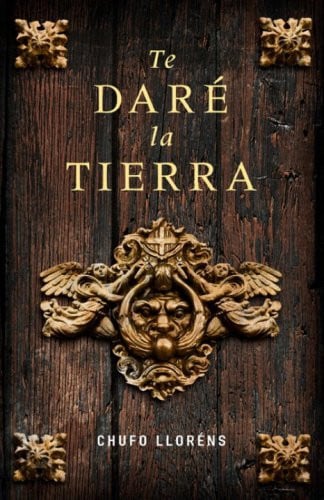
Go to My LibraryTe Dare la Tierra
- Language
- Spanish
- Published in
- Publisher
- Penguin Random House Grupo Editorial
- Pages
- 744
- ISBN
- 9780307392299
At the same time, the city itself is thrown into a dangerous political conflict when its ruler, the Count of Barcelona, engages in a scandalous and adulterous affair. This sweeping historical novel intertwines the personal struggles for love and status with the high-stakes political intrigue of a city in the making. It is a story of pacts and betrayals, passion and revenge, where the fight for personal honor mirrors the battle for a city's soul, offering a vivid immersion into the forging of a medieval metropolis.
Subjects
Far from the clamor of the port, in the stone halls of power, a different kind of ambition was tearing the realm apart. The young count, Ramon Berenguer I, had returned from his travels smitten by the beautiful Almodis de la Marca, the wife of the Count of Toulouse. Consumed by a passion that defied law and scripture, he planned to repudiate his own wife to possess her. This reckless desire ignited the fury of his grandmother, the formidable Ermesenda de Carcasona, a woman of iron will who had ruled the county as regent and would not see it fractured by her grandson's lust. From Rome itself, the Pope watched with alarm, fearing a civil war that would leave the Christian frontier vulnerable to the waiting Moors.
Martí's letter led him not to a nobleman, but to a warrior in a cassock: Eudald Llobet, a cleric whose powerful build spoke of a past spent in battle. Llobet had been his father's comrade, and from his lips, Martí learned the truth of the man he had long resented. Guillem Barbany had not been a mere mercenary, but a loyal soldier bound by an ancient oath of vassalage, a man who had sacrificed his family for his honor and, in his final moments, had given his life to save Eudald's. “He left you more than a ring,” the cleric revealed, handing Martí a small key and a sealed testament. “He left you a future he never had.”
The key opened a path into the walled world of the Call, the Jewish quarter, and to the counting house of Baruj Benvenist, a venerable money-changer and the keeper of his father's secret. In a hidden vault, a heavy, iron-strapped chest was opened, revealing not just a soldier's savings, but a king's ransom. A lifetime of plunder and sacrifice - gold mancusos, glittering jewels, and a ruby diadem - lay before Martí, the brutal and bloody price of his father's honor. In a single moment, the poor farmer's son became one of the wealthiest men in Barcelona.
With his new fortune, Martí began to build a life, but his ambition soon found a new focus. At the city's slave market, amidst the clamor and despair, his eyes met those of Laia Betancourt. Her beauty was a quiet sorrow, her gaze a silent plea. He was instantly captivated, but she was the stepdaughter of the powerful and sinister Bernat Montcusi, the count's most influential - and corrupt - counselor. Though Martí could not have Laia, he found himself moved by compassion, purchasing a gifted slave girl named Aixa and a Muslim family destined to be torn apart, acts of kindness that would unknowingly shape his fate.
Martí's star began to rise. He became a shipowner, a merchant, his ventures reaching across the sea. His ambition was singular: to become a citizen of Barcelona, to earn a name so respected that not even the formidable Montcusi could deny him Laia's hand. This drive forced him into a dangerous partnership with the very man who stood as his greatest obstacle. As Martí navigated the treacherous currents of commerce and courtly favor, Count Ramon Berenguer brought Almodis to Barcelona, installing her as his consort in defiance of his grandmother and God. The city seethed with tension, and the lovers were excommunicated, their passion casting a shadow of illegitimacy and conflict over the entire county.
But the higher Martí climbed, the darker the shadow cast by Bernat Montcusi grew. The counselor's interest in his stepdaughter was not paternal but a vile, possessive obsession. He saw Martí not just as an upstart, but as a rival for Laia's affection. In a cruel campaign of torment, Montcusi isolated the girl, turning her home into a gilded cage. He abused her in body and spirit, using Aixa as a pawn in his sadistic games, until Laia, broken and without hope, threw herself from the battlements of his mansion. Her death shattered Martí's world, but not before she left behind a secret letter - a final, desperate testament to her suffering and Montcusi's monstrous guilt.
Fueled by grief and a cold fury, Martí used all his wealth and influence to seek justice. He invoked an ancient law, challenging Montcusi to a *litis honoris* - a public trial of honor before the count and the assembled nobility. The great hall of the city became a theater of whispers and veiled glances as Martí, armed with a dead girl's letter and damning evidence of Montcusi's corruption, faced his powerful adversary. The trial laid bare not only the counselor's personal depravity but also his public crimes, including a scheme to frame the honorable Baruj Benvenist for treason to cover his own financial blunders, a plot that had sent the innocent man to the gallows.
The evidence was irrefutable. Bernat Montcusi's web of lies unraveled, and he was stripped of his titles, his wealth, and his honor, condemned to a life of exile and disgrace. Justice was a bitter wine, tasting of loss and ashes. Martí had won, but Laia was gone, and his victory felt hollow. Yet in the shadows of his grief, a quiet light remained. Ruth, the wise and gentle daughter of the martyred Baruj, had stood by him through his darkest hours. Her love was not a fiery passion born of a fleeting glance, but a deep, steady flame promising warmth and renewal. Looking at her, Martí saw not an end, but a new beginning - a chance to build a life not on vengeance, but on a promise. For her, he would build a new world. For her, he would give the land.
No discussions yet for this book.
Delete Discussion
Are you sure you want to delete this discussion? This action cannot be undone.
Rating Sources
Many readers praised the book's immersive historical setting, particularly its vivid portrayal of medieval Barcelona in the 11th century. The author's extensive research into the period is evident, creating a rich backdrop of customs, laws, and daily life that some found captivating. Reviewers noted that despite its length, the story managed to be entertaining and, for many, deeply engaging, especially after an initial slow start. The narrative, filled with elements of love, secrets, betrayals, and the struggle for survival, resonated with those who enjoy grand historical sagas. Some found the writing style pleasant and the plot effective in illustrating historical context, leading to a strong connection with the story and its characters.
However, a significant number of reviews highlighted several drawbacks. A frequent criticism was the book's excessive length, with many feeling the story could have been told in half the pages without losing its essence. This led to descriptions of the narrative as tedious, slow-paced, and overly descriptive in parts, with some readers resorting to skipping chapters. Characters were often described as flat, archetypal, and manichean, lacking nuance or complexity, making it difficult for readers to connect with them deeply or even remember them. The plot was frequently deemed predictable, and the dialogue was sometimes criticized for being repetitive, verbose, and lacking directness. Additionally, some reviewers felt that the historical details, while abundant, occasionally served more to showcase research than to genuinely advance the narrative or immerse the characters in their time, and a few noted concerns about perceived machismo in the portrayal of female characters.
In conclusion, "Te daré la tierra" elicits a notably mixed response, with readers often experiencing an irregular journey that ranges from deep engagement to frustration. While it may not be considered a groundbreaking work in its genre by all, its undeniable historical scope and narrative ambition are recognized. This book is likely to appeal most to readers who enjoy expansive historical sagas set in medieval Barcelona, particularly those who appreciate a detailed backdrop and a clear-cut distinction between good and evil. It would suit those who are patient with a slower narrative pace and less concerned with intricate character development or unpredictable plot twists, instead seeking an entertaining journey through a well-researched historical period.
No reviews yet. Be the first to review this book!
Delete Review
Are you sure you want to delete this review? This action cannot be undone.


