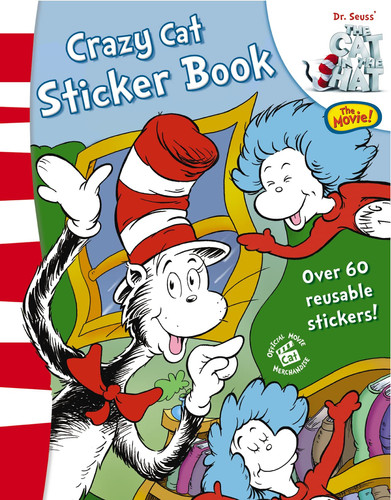
On a cold, wet day, two children find themselves stuck in the house with nothing to do. Their dreary afternoon is interrupted by the arrival of a tall, mischievous cat in a red and white striped hat. Against the wishes of the family fish, the Cat in the Hat begins a series of tricks and games designed to entertain the children, Sally and her brother. What starts as playful fun quickly escalates into chaos, especially with the appearance of two companions, Thing One and Thing Two.
The house is turned upside down, and the children are faced with a growing mess and the impending return of their mother. The story, told with simple rhymes and whimsical illustrations, captures the tension between spontaneous fun and household rules. It explores the excitement of the unexpected while leaving the reader to ponder what happens when the lines of right and wrong are blurred by a charismatic stranger, ultimately questioning what one would do in the face of such delightful mayhem.
This classic children's book is widely celebrated for its ability to captivate young readers and foster a love for literature. Many reviewers praise its engaging, silly, and whimsical nature, highlighting the enjoyment derived from its distinct rhythm, playful rhymes, and vibrant illustrations. It is frequently lauded as an excellent tool for early readers, utilizing simple vocabulary and repetition that makes it accessible and fun to read aloud. Readers, both children and adults, often describe feeling giddy and uplifted by the book's unique charm and the imaginative world it creates. Its iconic status is consistently recognized, with many considering it a signature work that has positively impacted generations of children learning to read.
However, the book also elicits strong negative reactions and deeper, sometimes unsettling, interpretations from some readers. A significant number of adults perceive the story as a "nightmare-quality horror," citing themes of a strange, intrusive character entering an unsupervised home, causing chaos, and potentially encouraging children to conceal events from their parents. Concerns are raised about the Cat's disruptive behavior and the potential moral implications of the narrative. Critiques also extend to the writing style itself, with some finding the rhyming and monosyllabic language to be "lazy" or "subpar," and the overuse of exclamation points distracting. For these readers, particularly those sensitive to themes of strangers or unchecked mischief, the book can be disturbing rather than amusing.
Ultimately, "The Cat in the Hat" remains a foundational work in children's literature, celebrated for its historical role in making reading enjoyable for countless children. While it can be enjoyed as a straightforward, fun adventure, its narrative also lends itself to diverse, often contrasting, adult interpretations, ranging from a lighthearted tale to a cautionary one. It is highly recommended for young children, especially those aged four to eight, who benefit from its engaging rhymes and illustrations for developing reading skills and imagination. Adults who appreciate Dr. Seuss's unique artistic and linguistic style, or those interested in literary analysis, will also find value in this enduring classic, provided they approach it with an openness to its inherent absurdity and the wide spectrum of emotions it can evoke.