
Add to library
You don't have any lists yet. Create one in My Library.
Go to My LibraryAdd to library
You don't have any lists yet. Create one in My Library.
Go to My LibraryThe Glass Castle
- Language
- English
- Published in
- Publisher
- Virago
- Pages
- 341
- ISBN
- 9781844081813
As the children learned to fend for themselves, their father's grand promises, chief among them the magnificent glass castle he would one day build, were the only things that felt stable. This memoir recounts a childhood of shocking poverty and neglect, yet it is told without anger or self-pity. It is a story of survival, loyalty, and the complex, unconditional love that can bind a family together, even as it is breaking apart. The narrative explores how our deepest wounds can give rise to our greatest strengths and forces a consideration of what it means to call a place, or a person, home.
Subjects
Original edition details
Other editions (20)

The Glass Castle A Memoir
2006 • Scribner
English

The Glass Castle (Turtleback School & Library Binding Edition)
2006 • Turtleback Books
English

The Glass Castle A Memoir
2017 • Simon and Schuster
English

The Glass Castle A Memoir
2009 • Simon and Schuster
English
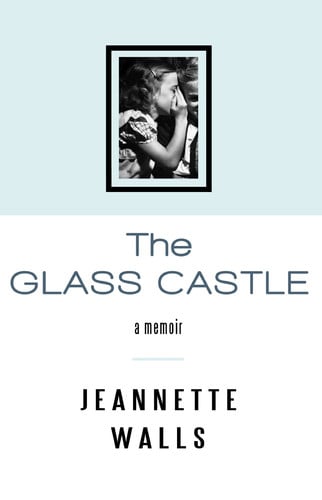
The Glass Castle A Memoir
2009 • Center Point Pub.
English
Other editions
The Glass Castle A Memoir
2006 • Scribner
English
The Glass Castle (Turtleback School & Library Binding Edition)
2006 • Turtleback Books
English
The Glass Castle A Memoir
2017 • Simon and Schuster
English
The Glass Castle A Memoir
2009 • Simon and Schuster
English
The Glass Castle A Memoir
2009 • Center Point Pub.
English
The Glass Castle - A Memoir
2005 • Scribner
English

The Glass Castle: A Memoir
2017 • Simon & Schuster Audio
English

The Glass Castle
2005 • Scribner
English
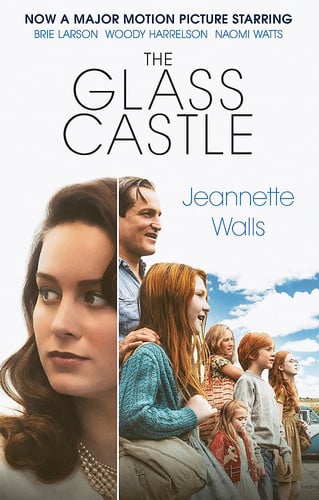
The Glass Castle
2006 • Virago
English
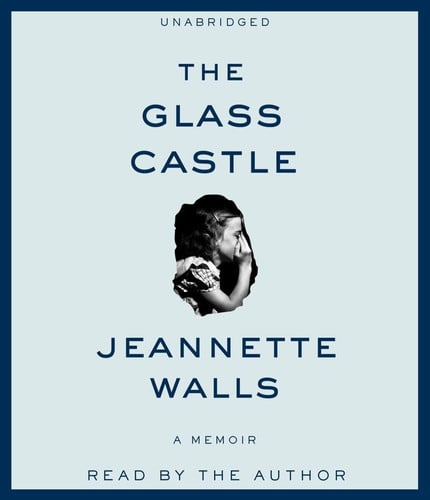
The Glass Castle: A Memoir
2010 • Simon & Schuster Audio
English

The Glass Castle A Memoir
2007 • Simon and Schuster
English
The Glass Castle: A Memoir
2005 • Recorded Books
English
The Glass Castle The New York Times Bestseller - Two Million Copies Sold
2010 • Little, Brown Book Group
English

Glass Castle(Chinese Edition)
2007 • University Press
Chinese

The Glass Castle
2006 • Virago
English

The Glass Castle, unabridged, 10 CD set
2005 • Recorded Books
English

El Castillo de Cristal
2008 • Penguin Random House Grupo Editorial
Spanish

Le château de verre
2008 • R. Laffont
French
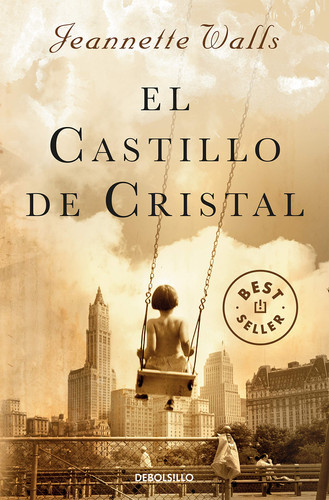
El castillo de cristal / The Glass Castle: A Memoir (Spanish Edition)
2016 • Debolsillo
Spanish
玻璃城堡 追寻爱与自我的奇异之旅
2006 • 久周出版文化事业
Chinese
It's my earliest memory. I was three years old and on fire. Standing on a chair in our trailer in southern Arizona, I was cooking hot dogs for myself in a pink tutu dress when the flames caught the fabric and climbed my body. The hospital was a wonderland of quiet and order, of clean white sheets and endless chewing gum. But my parents' world was one of motion and chaos. When my family came to visit, their laughter echoed through the quiet halls. My father, Rex, told me hospitals were for quacks and that he should have taken me to a Navajo witch doctor. After six weeks, he decided I'd had enough of the antiseptic joint. He swept me up in his arms, smelling of whiskey and cigarettes, and we checked out, Rex Walls–style - running down the emergency stairs as a nurse shouted for us to stop. A few days later, I was back at the stove, cooking hot dogs. "You've got to get right back in the saddle," Mom said. "You can't live in fear of something as basic as fire."
We were always doing the skedaddle, fleeing in the middle of the night from bill collectors Dad called “the gestapo.” We lived like nomads in dusty mining towns across the desert, our home the backseat of a beat-up Plymouth. Mom, an artist, taught us to find beauty in the severity of the landscape, to identify edible plants, and to wash with a single cup of water. Dad, a brilliant but erratic engineer, taught us geology, physics, and how to shoot his pistol. Life was an adventure, full of grand deprivations and sudden windfalls. We'd gorge on cantaloupes from a derailed train or grapes picked during a strike, then go hungry for days. We slept under the stars, Dad pointing out the constellations. He told us we were luckier than the rich city folks who couldn't even see the sky.
Dad was a master storyteller, and his greatest story was the one he was still writing for us. He carried the blueprints everywhere we went for the Glass Castle, a magnificent house he was going to build for us in the desert. It would be made entirely of glass and powered by solar cells. All we had to do was find gold, and he was working on a contraption called the Prospector to do just that. He was a genius who could fix anything, but he had what Mom called a “little bit of a drinking situation.” When he stuck to beer, life was fun and a little scary. But when he hit the hard stuff, he became an angry-eyed stranger who smashed furniture and raged at Mom. Still, at night, he would tell us stories of his heroics, and I believed every word. One Christmas, when we had no money for presents, he took me out into the desert night. "Pick out your favorite star," he said. I chose Venus. "It's Christmas," he said. "You can have a planet if you want."
The adventure began to curdle when we moved to Welch, West Virginia, Dad's grim, impoverished hometown. We were banished to live with his mother, Erma, a bitter, abusive woman who despised us. Welch was a place trapped in a cold, damp hollow, covered in coal dust. The magic of the desert was replaced by a gritty, gnawing hunger. At school, I was bullied for being poor and skinny, my lard sandwiches a source of ridicule. We kids learned to fend for ourselves, scrounging for food in garbage cans and picking up stray lumps of coal along the road. The house Dad finally bought for us on Little Hobart Street was a dilapidated shack on a steep hillside with no plumbing and a roof that leaked like a sieve. We dug a foundation for the Glass Castle in the backyard, but as the months wore on with no money and no progress, Dad told us to use the hole for garbage.
Lori, my older sister, was the first to understand that we had to save ourselves. She dreamed of escaping to New York City to become an artist. Brian and I joined her mission, and together we saved every dollar we could from odd jobs, stashing the money in a pink plastic piggy bank we named Oz. It was our joint escape fund. But one night, I came home to find Oz slashed open and empty. Dad had stolen our future. The betrayal was absolute, the final proof that he would never build the Glass Castle or save us. I told Lori she would still get out, I swore it. I arranged for her to work as a nanny for the summer, a job that came with a one-way bus ticket to New York. The day she left, I knew I would be next. Dad saw the family falling apart. "It sure is," I told him.
The moment I finished junior year, I took a bus to New York myself. The city was an astonishment of light and noise and possibility. I found a job waiting tables, then as a reporter for a small newspaper in Brooklyn. I enrolled at Barnard College, piecing together loans, grants, and work to pay for it. One by one, my siblings followed. Brian came and eventually joined the police force. Then we sent for Maureen. For a time, we were all together again, living in the city, a world away from Welch. We had created the lives we'd wanted. But our new world was shattered when Mom and Dad showed up in a broken-down van, announcing they had moved to New York to be a family again.
They drifted through a series of flophouses and boarding rooms before their money ran out. Soon, they were homeless, sleeping on park benches. I was living on Park Avenue by then, in a life so different from theirs it felt like a lie. I tried to help, but Mom insisted that being homeless was an adventure, a choice. “I'm not a charity case,” she'd say, even as she was pulling a perfectly good discarded painting from a Dumpster. Dad, however, was fading. Years of hard living had finally caught up with him. He was only fifty-nine when he died of a heart attack. In the hospital, he took my hand. "Hey," he said, giving me a wink. "Have I ever let you down?" I just smiled.
Years later, we are all gathered for Thanksgiving at the country house I share with my second husband, John. Brian is a decorated police sergeant, a father, and he's restored a beautiful old house in Brooklyn. Lori is a freelance artist. Mom arrives wearing four sweaters and carrying shopping bags full of treasures she's found. She is still a squatter, but the city has sold her the building for a dollar. She tells us that Maureen, who moved to California after a breakdown, is thinking of visiting. As John carves the turkey, he proposes a toast. We all lift our glasses. Mom looks up at the ceiling for a moment, thinking. "I've got it," she says. "Life with your father was never boring." We clink our glasses together. Outside, a wind picks up, rattling the windows, and the candle flames dance, shifting along the border between turbulence and order.
No discussions yet for this book.
Delete Discussion
Are you sure you want to delete this discussion? This action cannot be undone.
Rating Sources
Readers widely praise this memoir for its compelling and honest storytelling, often describing it as a gripping page-turner that is beautifully written and difficult to put down. Many reviewers highlight the author's remarkable resilience and strength in overcoming an unconventional and challenging childhood, finding her journey inspiring and thought-provoking. The narrative is lauded for its raw, unflinching portrayal of family dynamics, often without overt judgment, which some found to be a unique and powerful approach. Readers appreciated how the book explores complex themes such as perseverance, forgiveness, and the human capacity to adapt, often evoking strong emotional responses ranging from laughter and tears to anger and profound compassion. The book is frequently recommended for its ability to provide deep insight into diverse life experiences and its powerful testament to the human spirit.
However, some readers expressed reservations, finding the narrative style too journalistic or detached, wishing for more personal reflection and introspection from the author regarding her childhood experiences and emotions. This perceived lack of explicit emotional processing or condemnation of her parents' actions led some to feel a sense of unease or dissatisfaction. Criticisms also include the repetitive use of certain symbolic elements and a sense that the author's rapid transition from a difficult upbringing to success felt underdeveloped. For some, the depiction of the parents' choices, characterized by neglect, alcoholism, and a lack of responsibility, was deeply frustrating or even infuriating, making it difficult to reconcile with the author's apparent acceptance. A few reviewers also suggested the book might unintentionally romanticize or normalize what they perceived as severe abuse and criminal irresponsibility.
Overall, this memoir is a powerful and emotional read that offers a unique perspective on a challenging upbringing and the complexities of familial love. It is highly recommended for readers who appreciate deeply personal memoirs, stories of resilience and triumph over adversity, and narratives that explore nuanced family relationships without explicit judgment from the author. Those who enjoy examining different social realities and the human spirit's ability to endure and find its own path will likely find this book compelling. However, readers who prefer a narrative with clear emotional resolution or overt condemnation of parental failings may find it a more challenging or unsettling experience.
No reviews yet. Be the first to review this book!
Delete Review
Are you sure you want to delete this review? This action cannot be undone.