The Language Instinct: How the Mind Creates Language
- First published 1994
- 200 pages
- English
In The Language Instinct, Steven Pinker argues that the human capacity for language is not a cultural invention, but an innate, biological instinct. He posits that humans are born with a genetically wired ability to acquire and use language, much like spiders inherently know how to spin webs or beavers build dams. This perspective challenges common assumptions, proposing that a universal grammar underlies all human languages and that children effortlessly master complex linguistic rules because their brains are predisposed to do so.
Pinker draws on a range of evidence, from studies of language acquisition in children to neuro-linguistics, to reveal language as a specialized adaptation that evolved to facilitate communication. This exploration offers a new understanding of what it means to be human, demonstrating how language shapes thought and connects us to our deepest biological heritage.
Pinker draws on a range of evidence, from studies of language acquisition in children to neuro-linguistics, to reveal language as a specialized adaptation that evolved to facilitate communication. This exploration offers a new understanding of what it means to be human, demonstrating how language shapes thought and connects us to our deepest biological heritage.
What readers say
4.01
23K ratings across the web 7 in 10 readers loved it, 1 didn't like it
Steven Pinker's book is widely praised for its engaging and accessible exploration of language, presenting a compelling argument that it is an innate human instinct. Reviewers frequently highlight Pinker’s ability to demystify complex academic concepts, making them understandable and fascinating for a general audience. The book is lauded for its clarity, wit, and lucid style, successfully conveying a "whirlwind of information" across various disciplines, including neurobiology and child development. Many readers found it highly informative, learning a great deal about how language works, how it is acquired, and its evolutionary underpinnings. Specific aspects appreciated include detailed case studies of language acquisition in children and the deaf, as well as an insightful critique of traditional prescriptive grammar rules.
Despite its strengths, the book draws criticism for several reasons. A common complaint is its considerable length and occasional dry, technical passages, particularly those delving into linguistic theories or sentence diagramming, which some found tedious or difficult to follow. Reviewers also point to Pinker’s strong theoretical stance, rooted in generative linguistics, which is sometimes presented as definitive despite ongoing academic debates. Concerns are raised about the book's perceived bias, its "objectivist" viewpoint, and a tendency to simplify or dismiss opposing theories. Furthermore, some readers identified factual inaccuracies, particularly concerning examples from non-English languages, which undermined the book's credibility for them. The book is also noted for its English-centric focus and, being an older work, some of its information is considered outdated.
Ultimately, "The Language Instinct" is considered a significant and thought-provoking work, capable of opening up new avenues of thought for many readers. It is highly recommended for those with a keen interest in linguistics, psycholinguistics, or cognitive science, especially individuals seeking a foundational understanding of the subject without prior academic background. Readers who appreciate clear, engaging popular science writing and are open to exploring the idea of language as an evolved biological instinct will likely find it rewarding. However, those looking for a light read, seeking the very latest linguistic research, or holding strong opposing views on language theory may find its length, technicality, or polemical style less appealing.
Reviews
No reviews yet. Be the first.
Details & editions
- This edition
- Penguin, 2003
- ISBN
- 9780141929682
- Language
- English
Original edition The Language Instinct Originally published in 1994 · English · William Morrow
Other editions (57)
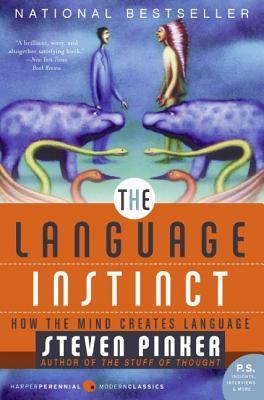
- Harper Perennial Modern Classics · 2007
- Shang Zhou Chu Ban/Tsai Fong Books · 2015

- Brilliance Audio · 2014

- Olympus · 2014

- Orion (an Imprint of The Orion Publishing Group Ltd ) · 2001

- Alianza Editorial Sa · 2005

- Alianza Editorial Sa · 1997

- Perennial (HarperCollins) · 1995

- Penguin Books, Limited · 2015

- Brilliance Audio · 2011
