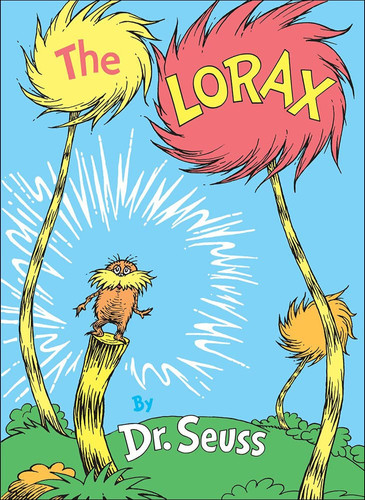
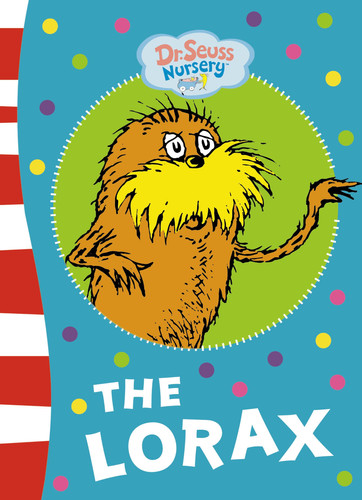
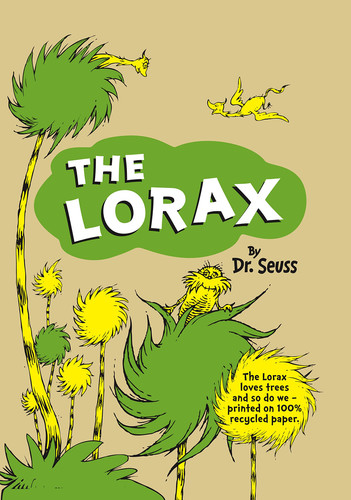
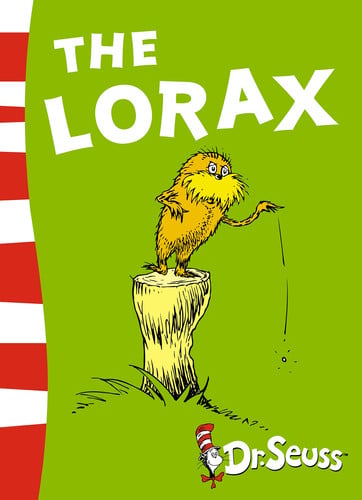
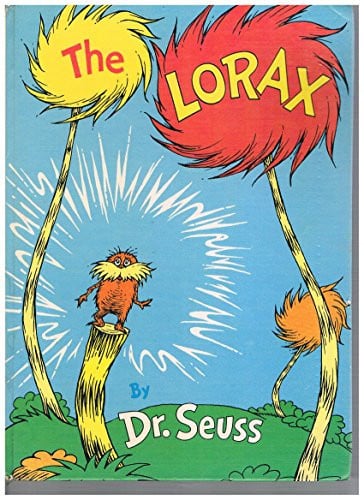
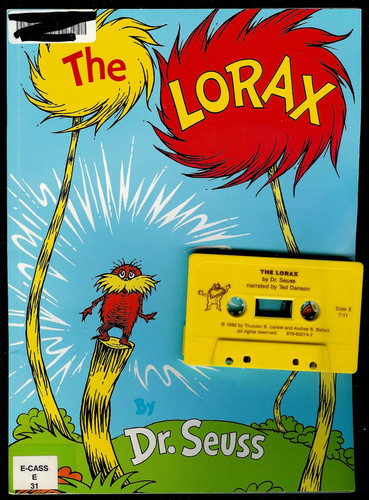
At the far end of town, where the Grickle-grass grows and the wind always smells of old, stale, and sour, stands the Street of the Lifted Lorax. No living thing stirs, save for the whisper of the wind through rusted pipes and the occasional grumble of a curious young boy. He seeks the Once-ler, a shadowy figure who dwells in a dilapidated dwelling, high above the sour-smelling air. For fifteen cents, a nail, and the shell of a great-great-great-grandfather snail, the Once-ler agrees to tell his tale, a story of what once was and what came to be.
The Once-ler's story begins in a time when the world was fresh, before the smog and the gloom. He describes a land of glorious, bright-colored Truffula Trees, with tufts softer than silk and smelling of sweet butterfly milk. Here, the Brown Bar-ba-loots played in the shade, eating Truffula fruits, while the Swomee-Swans sang their beautiful songs and the Humming-Fish hummed in the clear, cool waters. It was a paradise, untouched and vibrant. But then, the Once-ler arrived, captivated by the Truffula Trees. He chopped down the first one, discovering that its tuft could be knitted into a wondrous thing called a Thneed - a versatile garment, useful for nearly anything!
No sooner had the first Truffula Tree fallen than a small, orange creature with a grand mustache popped out of the stump. This was the Lorax, who spoke for the trees, for the trees had no tongues. He confronted the Once-ler, his voice sharp and urgent, asking, "Sir! You are a barbarian! Why would you chop down this tree?" But the Once-ler, filled with the thrill of his invention, dismissed the Lorax's protests. He sold his first Thneed, then another, and soon, the demand grew. He called his family, and they arrived in droves, setting up factories, and the chopping began in earnest.
The Super-Axe-Hacker was invented, tearing through the Truffula Forest with terrifying speed. The Lorax returned, his pleas growing more desperate. He showed the Once-ler the starving Brown Bar-ba-loots, their bellies empty because their Truffula fruit was gone. He sent them off to find food elsewhere, with a heavy heart. Then came the Swomee-Swans, their throats raw from the polluted air, unable to sing, forced to fly away. The Once-ler's factories belched smoke and goo, fouling the air and the waters where the Humming-Fish once hummed. The fish, too, had to leave, flopping and gasping as they sought cleaner streams.
The Once-ler, however, remained blinded by his ambition and the ever-growing piles of money. "I meant no harm! I most truly did not!" he insisted, even as the landscape around him turned gray and desolate. He built his empire bigger and bigger, convinced that progress meant endless growth, heedless of the environmental toll. He dismissed the Lorax's warnings as mere "silly talk," focusing only on the production of more and more Thneeds. The air thickened, the water turned murky, and the once-vibrant forest was reduced to stumps.
Then came the inevitable silence. The very last Truffula Tree was chopped down. With no more trees, there were no more Thneeds to be made, and the factories ground to a halt. The Once-ler's family packed up and left, leaving him alone amidst the wreckage of his own making. The Lorax, with a sorrowful glance and a heavy heart, picked himself up by the seat of his pants and silently flew away, leaving behind only a small pile of rocks with a single, cryptic word etched upon it: "UNLESS."
For years, the Once-ler pondered that word, alone in his crumbling dwelling, surrounded by the ghosts of his greed. He finally understood its profound meaning when the young boy arrived, eager to hear his story. "UNLESS someone like you cares a whole awful lot," the Once-ler explained, "nothing is going to get better. It's not."
With a newfound glimmer of hope, the Once-ler dropped the very last Truffula Tree seed into the boy's hands. He charged the boy with the immense task of planting it, nurturing it, and growing a new Truffula Forest, so that perhaps, one day, the Lorax and all the creatures might return. The fate of the world, he realized, rests with those who care enough to act.