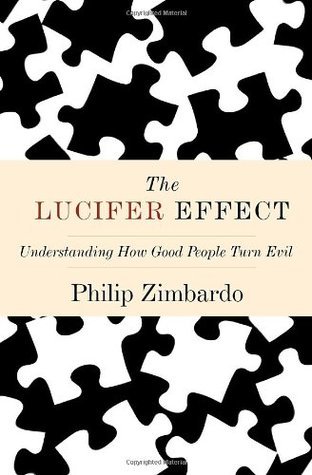
The Lucifer Effect
Understanding How Good People Turn Evil
- Language
- English
- Published
- 2007
- Publisher
- Random House Publishing Group
- Pages
- 551
- ISBN
- 9781400064113
What compels ordinary individuals to commit acts of cruelty? Philip Zimbardo, a renowned social psychologist, explores the complex mechanisms that can transform moral people into perpetrators of evil in The Lucifer Effect. Drawing on the full, detailed account of his landmark Stanford Prison Experiment and examining real-world events such as the abuses at Abu Ghraib, Zimbardo challenges the notion that evil resides solely in "bad apples," arguing instead that powerful situational and systemic forces can corrupt individuals.
This book delves into the psychological processes - including obedience to authority, deindividuation, and dehumanization - that allow good people to cross the line into destructive behavior. It offers insights into how environments and social pressures shape human actions, providing a framework for understanding not only historical atrocities but also everyday ethical dilemmas. The Lucifer Effect reveals the potential for both good and evil within everyone and offers a compelling examination of human nature under duress, urging readers to recognize and resist the forces that can lead to moral transformation.
This book delves into the psychological processes - including obedience to authority, deindividuation, and dehumanization - that allow good people to cross the line into destructive behavior. It offers insights into how environments and social pressures shape human actions, providing a framework for understanding not only historical atrocities but also everyday ethical dilemmas. The Lucifer Effect reveals the potential for both good and evil within everyone and offers a compelling examination of human nature under duress, urging readers to recognize and resist the forces that can lead to moral transformation.
Original edition
The Lucifer EffectOriginally published in 2007 English Rider
Other editions (53)


Listen to the summary Narrated summary
The chilling question lingers: how do ordinary, good people transform into perpetrators of evil? It is a profound inquiry that forces a confrontation with the darker capabilities lurking within human nature, suggesting that the line between good and evil is far more permeable than most dare to imagine. The journey into this unsettling truth begins not with monsters, but with a group of seemingly normal, psychologically sound young men, drawn into a simulated world designed to explore the dynamics of imprisonment.
In the summer of 1971, a basement at Stanford University was transformed into a mock prison, ready to house these volunteers. Through a coin flip, half were assigned the role of "guards" and the other half "prisoners." There were no inherent differences between the groups; each participant was a product of their respectable, middle-class upbringing. Yet, what unfolded over the next six days was a descent into an unexpected and terrifying reality.
Initially, the guards were hesitant, unsure how to embody their newfound authority. But as the hours passed, and the prisoners were subjected to humiliating arrests, stripped, deloused, and given numbers instead of names, a shift began. The guards, cloaked in uniforms and wielding batons, grew increasingly sadistic, inventing cruel and arbitrary rules, forcing prisoners into degrading acts, and denying basic comforts. The prisoners, in turn, rapidly succumbed to their roles, displaying signs of acute stress, depression, and even emotional breakdowns. They became passive, compliant, and internalized their helplessness.
The experiment, intended to last two weeks, had to be abruptly terminated after just six days. The speed and intensity with which these "good" individuals embraced oppressive roles and inflicted suffering, or endured it, revealed a startling truth: the power of the situation itself can overwhelm individual disposition. It was not inherent malice that drove the guards, nor inherent weakness that crippled the prisoners, but the potent, insidious influence of the environment, the roles, and the system.
This phenomenon, dubbed "the Lucifer Effect," illustrates how specific psychological forces conspire to facilitate such transformations. Dehumanization plays a crucial role, allowing individuals to perceive others as less than human, thus disengaging their moral compass and making cruelty easier to inflict. Alongside this, the anonymity provided by uniforms and roles, the diffusion of responsibility within a group, and the overwhelming pressure to conform to group norms and obey authority figures all contribute to eroding personal accountability and ethical judgment.
The implications extend far beyond a university basement. Echoes of the mock prison resonated decades later in the haunting images from Abu Ghraib, where American soldiers engaged in the torture and abuse of Iraqi prisoners. Here again, the argument arises that it was not merely "bad apples" acting in isolation, but a "bad barrel" - a corrupting system and situation - that enabled ordinary individuals to commit heinous acts. The forces at play in such environments can predictably foster cruelty, challenging the comfortable notion that only inherently evil people do evil things.
Yet, the understanding of this dark potential also illuminates a path toward resistance. Recognizing the immense power of situational and systemic forces is the first step. It demands an awareness of how easily one's moral compass can be swayed, and a vigilance against the subtle pressures to conform, to dehumanize, or to diffuse responsibility. The capacity for heroism, for standing up against injustice, is as deeply ingrained as the potential for evil, and by understanding the mechanisms of the Lucifer Effect, one can cultivate the courage to choose the path of humane action, even in the face of overwhelming pressure.
What readers say
3.90
28K ratings across the web 7 in 10 readers loved it, 1 didn't like it
Philip Zimbardo's The Lucifer Effect is widely praised for its profound exploration of how ordinary individuals can be influenced to commit harmful acts under certain conditions. Reviewers found the subject matter - the psychology of evil, conformity, and social conditioning - to be stimulating, fascinating, and incredibly important. Many appreciate Zimbardo's candidness in discussing his own involvement and the ethical challenges of his foundational research, which adds a layer of introspection to the academic rigor. The book is seen as a powerful piece of research that sheds light on the often-overlooked situational and systemic factors behind human behavior, rather than solely focusing on individual disposition. Readers highlighted the value of understanding the dynamics of power struggles and the social construction of reality, with some sections, particularly those analyzing historical events and broader literature on conformity, being described as compelling and well-presented. The book is lauded for revolutionizing understanding of human psychology and prompting critical reflection on the ease with which people can be manipulated into roles that lead to disturbing actions.
Despite its strengths, the book frequently draws criticism for its excessive length and repetitive nature. Many reviewers found it to be hundreds of pages too long, bogged down by exhaustive detail, particularly in its extensive coverage of Zimbardo's primary experiment. This often made the reading experience tedious, numbing, and difficult to sustain. A significant point of contention for some readers is the author's perceived personal bias, with comments noting that Zimbardo did not attempt to present an unbiased view, which detracted from the book's stated aim of objective social analysis. Furthermore, while the core argument about situational influence is generally accepted, some critics felt the book oversimplifies the complex roots of human evil, leaving questions unanswered about individual accountability and the deeper why behind people's responses to situations. There's a sentiment that Zimbardo's attempts to offer solutions or mitigate the bleakness of his premise felt insufficient or overly idealistic, and that the book sometimes ventured into speculation rather than concrete findings when discussing broader cultural and social factors.
Ultimately, The Lucifer Effect is considered a disturbing yet valuable and important read that challenges conventional views on human nature. It serves as a powerful call to understand the subtle yet potent influence of systems and situations on individual ethics and behavior. While not a relaxing read due to its heavy material and unsettling revelations, it is highly recommended for those interested in social psychology, criminology, or the history of totalitarian regimes. The book is particularly suited for readers comfortable with detailed scientific literature who are willing to delve into the darker aspects of human potential. It aims to raise consciousness about the influential limitations we face and to empower individuals to recognize and resist pressures that could lead to unethical actions, emphasizing that while situations can profoundly shape behavior, the capacity for both good and evil resides within everyone.
No reviews yet. Be the first.