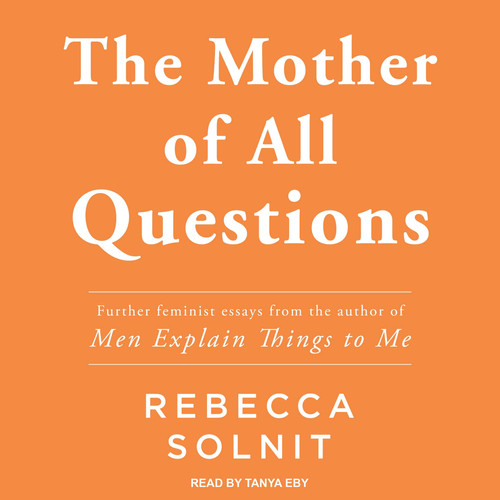
Positives Rebecca Solnit's collection of essays is widely praised for its intelligence, powerful insights, and beautiful, incisive prose. Many reviewers found the book to be a profound and inspiring read that ignites feminist passion and offers new perspectives on societal issues. Solnit is commended for tackling a broad range of significant topics, including violence against women, the silencing of marginalized voices, and the historical marginalization of women in cultural narratives, all delivered with a journalistic eye and deep empathy. Specific essays, such as "A Short History of Silence" and "Men Explain Lolita to Me," are frequently highlighted as particularly brilliant and essential reading. Readers often describe feeling hopeful and determined after engaging with Solnit's arguments, appreciating her forward-thinking approach and eloquent writing style that propels the feminist movement forward.
Negatives Despite its strengths, some readers found the collection to have notable drawbacks. A common critique is the repetition of ideas across various essays, which for some made the book feel uneven or less impactful when read cover-to-cover. Several reviewers felt that the book retreads ground covered in Solnit's previous works, and that some of the arguments might not offer new insights for those already familiar with feminist discourse. More significantly, some critics point to a perceived lack of intersectionality in Solnit's analysis, noting an exclusion of trans women's experiences and a problematic handling of topics like sex work. Other concerns include a style that some found chaotic or overly didactic, and an optimism that, for a few, felt dated given the ongoing challenges to women's rights. Some also found the explicit descriptions of violence to be too graphic.
Conclusion Overall, "The Mother of All Questions" is presented as a powerful and thought-provoking collection that resonates deeply with many readers, serving as a compassionate call to action for feminist engagement. While its intelligence and passionate advocacy are widely celebrated, potential readers should be aware of the recurring themes and the scope of its feminist lens. This book would particularly appeal to those seeking to be inspired and invigorated in the fight for gender equality, as well as readers new to Solnit's work or feminist essay collections in general. However, those looking for a deeply intersectional analysis, or who are sensitive to stylistic repetition or graphic content, might approach it with tempered expectations. It is ultimately recommended for anyone interested in exploring the complexities of contemporary sexism and the enduring struggle for women's voices to be heard.