Add to library
You don't have any lists yet. Create one in My Library.
Go to My LibraryAdd to library
You don't have any lists yet. Create one in My Library.
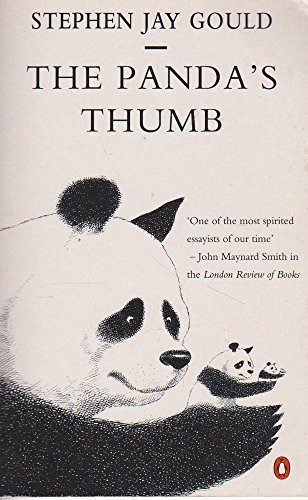
Go to My LibraryThe Panda's Thumb More Reflections in Natural History
- Language
- English
- Published in
- Publisher
- Penguin
- Pages
- 285
- ISBN
- 9780140134803
Subjects
Original edition details
Other editions (14)
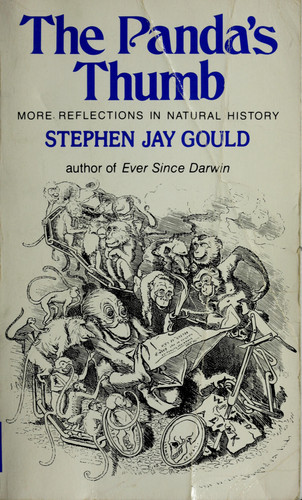
The Panda's Thumb More Reflections in Natural History
1982 • Norton
English
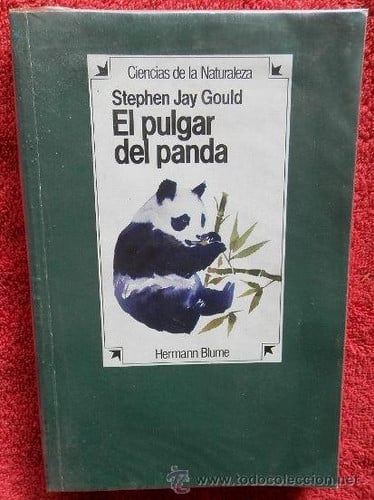
El Pulgar Del Panda/the Panda's Thumb (Spanish Edition)
1983 • Blume Editorial Sa
Spanish
The Panda's Thumb
1987 • Books on Tape, Inc.
English

Pandas Thumb
1992 • WW Norton
English
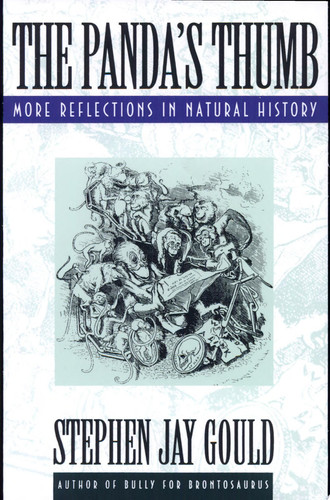
The Panda's Thumb
2010 • W. W. Norton
English
Other editions
The Panda's Thumb More Reflections in Natural History
1982 • Norton
English
El Pulgar Del Panda/the Panda's Thumb (Spanish Edition)
1983 • Blume Editorial Sa
Spanish
The Panda's Thumb
1987 • Books on Tape, Inc.
English
Pandas Thumb
1992 • WW Norton
English
The Panda's Thumb
2010 • W. W. Norton
English
Pandanın başparmağı Doğa tarihi üzerine düşünceler
2010 • Versus Kitap
Turkish

De duim van de panda over evolutie en ontwikkeling
1993 • Uitgeverij Contact
Dutch
El pulgar del panda
2003 • Crítica
Spanish
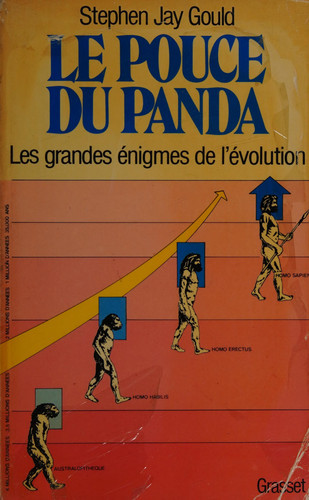
Le Pouce du panda. Les Grandes énigmes de l'évolution
1982 • Grasset
French
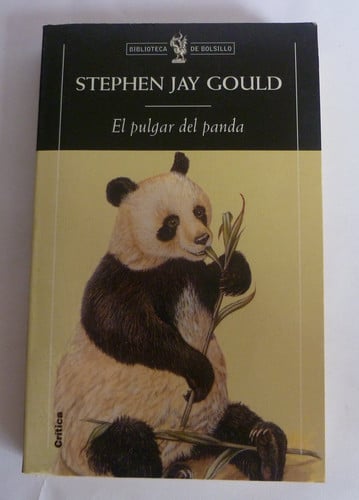
El pulgar del panda
2004 • Editorial Crítica
Spanish
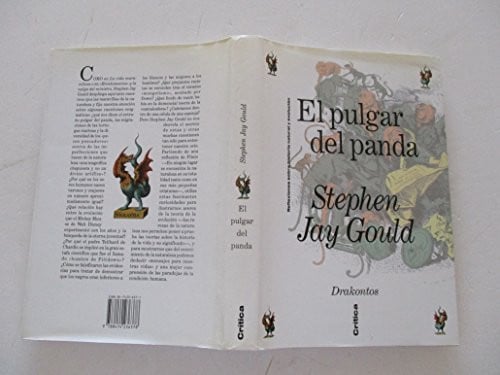
El Pulgar del Panda Reflexiones Sobre Historia Natural y Evolución
1994 • Critica Editorial
Spanish

The Panda's Thumb More Reflections in Natural History
1999 • W. W. Norton, Incorporated
English

The Panda's Thumb
1980 • Books on Tape
English

Pandas Thumb
Books On Tape
No discussions yet for this book.
Delete Discussion
Are you sure you want to delete this discussion? This action cannot be undone.
Rating Sources
The reviews consistently praise Stephen Jay Gould's exceptional writing style, describing it as a pleasure to read, engaging, and highly articulate. Readers commend his ability to seamlessly blend sophisticated cultural references with rigorous scientific explanations, making complex topics accessible without oversimplifying them. His prose is noted for its clarity, wit, and intellectual depth, often infused with personality and a humanistic approach to science. The book is celebrated for its wide-ranging exploration of natural history and evolutionary concepts, delving into fascinating animal examples, the historical context of scientific thought, and the influence of culture and bias on scientific endeavors. Many found it an excellent resource for clarifying common misconceptions about Darwinism and appreciated Gould's focus on the "imperfections" and contrivances in evolution as evidence of its often non-linear path.
Despite its strengths, some readers noted a few drawbacks. A recurring point is that certain scientific information, particularly in paleontology and geology, reflects the understanding of the late 1970s when the essays were written, meaning some theories or discoveries have since been superseded. While Gould's writing is generally lauded, a few reviewers found some of his arguments, particularly concerning the gradualism versus catastrophism debate, to be occasionally frustrating or to set up false dichotomies, potentially overgeneralizing conclusions or moving scientific questions too readily into cultural clashes. Additionally, as a collection of essays, the book's fragmented structure sometimes led to a lack of a cohesive narrative or occasional repetition, making it feel aimless to some or requiring a greater effort from the reader to connect the themes. There was also a mention that some historical terminology used in the essays for disabilities would now be considered unacceptable.
Overall, The Panda's Thumb is widely regarded as a highly enjoyable and significant work of popular science. While acknowledging that some scientific specifics may be dated, the book's enduring value lies in Gould's masterful writing and his insightful examination of how science operates within a human and cultural context. It is highly recommended for curious amateurs, students, and general readers interested in evolution, natural history, and the philosophy of science. Those who appreciate accessible yet intellectually stimulating non-fiction, a humanistic perspective on scientific inquiry, and the beauty of well-crafted prose will find this collection particularly rewarding. It serves not only as an introduction to evolutionary thought but also as an inspiring demonstration of science's fascinating and often imperfect journey.
No reviews yet. Be the first to review this book!
Delete Review
Are you sure you want to delete this review? This action cannot be undone.


