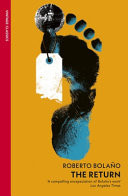
The Return
7.98 / 10 1.7K ratings
- Language
- English
- Published
- 2024
- Publisher
- Penguin Random House
- Pages
- 208
- ISBN
- 9781784879518
Roberto Bolaño's The Return presents a collection of thirteen stories that delve into the complex tapestry of human experience, exploring the boundaries between life and death, love and violence, the sacred and the profane. These narratives navigate the lives of characters who inhabit society's fringes, encountering enigmatic figures from porn stars and criminals to detectives and spectral presences. Each tale offers a glimpse into troubled souls and unforeseen circumstances, often infused with a distinct blend of mordant humor and profound insight.
The collection showcases Bolaño's mastery of the short form, where stories nestle within one another, shifting and scattering, yet always returning to fundamental human obsessions. From a young partygoer whose consciousness persists after death to a man reflecting on his mother's past, these stories capture the extremes of existence alongside the quiet, lingering acts in between. The Return invites readers to immerse themselves in a world where the unexpected is the norm and the act of storytelling itself becomes a journey into the heart of what drives us.
The collection showcases Bolaño's mastery of the short form, where stories nestle within one another, shifting and scattering, yet always returning to fundamental human obsessions. From a young partygoer whose consciousness persists after death to a man reflecting on his mother's past, these stories capture the extremes of existence alongside the quiet, lingering acts in between. The Return invites readers to immerse themselves in a world where the unexpected is the norm and the act of storytelling itself becomes a journey into the heart of what drives us.
Subjects
Original edition
The ReturnOriginally published in 2010 English New Directions
Other editions (6)


Listen to the summary Narrated summary
A Parisian disco, at four in the morning, becomes the unlikely theater for a man's final breath. He collapses on the dance floor, his doctor's warnings finally catching up to him, and then, a peculiar liberation: his consciousness detaches, hovering. There is, indeed, a life of a kind after this life, a whispered truth that settles upon his newly freed spirit. But this ethereal existence comes with its own unsettling revelations, for upon returning to the abandoned vessel of his own body, he discovers it has been rented out, a macabre arrangement with a necrophiliac named Jean-Claude Villeneuve. The horror transmutes into a strange empathy, a reconciliation with the abject, as he observes the intimate, grotesque dance of his earthly remains.
Elsewhere, the shadows of the past cling to those who navigate the fringes. A Chilean expatriate in Barcelona recounts a photograph, a girl, and a descent into the orbit of a Russian gangster, a tale of survival and inexplicable loss. Another story pulls back the curtain on the world of adult film, where a man remembers his childhood beside a mother who graced the screens, her life intertwined with an aged male porn actor he later seeks out. These are lives lived on the margins, where the mundane rubs shoulders with the illicit, and the choices made, or forced upon them, carve out destinies both vast and unforgiving.
The air is often thick with a sense of impending dissolution, a quiet decay that permeates even the living. Two women, almost spectral in their facelessness, believe they are stalked by a killer, their existence a fragile, ghost-like premonition. Old friends, or perhaps merely acquaintances, find themselves trapped in the confines of a prison cell, their conversations drifting from existential crises to the weight of masculinity and honor in a world that seems to be crumbling around them. The very fabric of identity feels precarious, shifting and blurring, as characters, like Belano, one of the famed savage detectives, grapple with their own physical deterioration, confronting reflections that no longer seem to belong to them.
Dreams offer little respite, instead becoming conduits for unsettling encounters. A writer finds himself in a surreal meeting with the deceased poet Enrique Lihn, who, despite their past correspondence, denies knowing him, appearing more like a B-list Hollywood actor than a man of letters. The apartment they inhabit defies logic, its glass floors and shifting architecture mirroring the elusive nature of memory and recognition. Even in death, or the dreamscape of it, the lines between reality and illusion, between who one was and who one is perceived to be, remain stubbornly undefined.
Throughout these narratives, a dark current of violence runs, not always overt, but ever present, shading into the everyday. It is the violence of a fascist cop, the brutality of soccer hooligans, the grim enforcement of cartels, and the deeper malaise of exile and cramped lives lived in precarious balance. It is a nightmare logic, where normality and fascism are two sides of the same coin, often expressed through acts against women, a brutal testament to a society where terror has become the norm.
Yet, amidst the depravity and the grim realities, there are glimpses of something else. The dead man, observing his necrophiliac, finds a strange peace, an acceptance of his new state of being without nostalgia or sadness. The story concludes with his quiet presence as the man who believed him still alive continues to speak, a silent reconciliation ruling the end. These are stories that linger, weaving together main arguments, examples, and actionable advice as they appear, using the same voice and directness as the original. Each tale, in its own way, explores the extremes of human experience - sex, violence, and death - and the subtle, often haunting, acts that connect them, revealing the intricate ways stories nestle within one another, shifting and returning again and again.
Elsewhere, the shadows of the past cling to those who navigate the fringes. A Chilean expatriate in Barcelona recounts a photograph, a girl, and a descent into the orbit of a Russian gangster, a tale of survival and inexplicable loss. Another story pulls back the curtain on the world of adult film, where a man remembers his childhood beside a mother who graced the screens, her life intertwined with an aged male porn actor he later seeks out. These are lives lived on the margins, where the mundane rubs shoulders with the illicit, and the choices made, or forced upon them, carve out destinies both vast and unforgiving.
The air is often thick with a sense of impending dissolution, a quiet decay that permeates even the living. Two women, almost spectral in their facelessness, believe they are stalked by a killer, their existence a fragile, ghost-like premonition. Old friends, or perhaps merely acquaintances, find themselves trapped in the confines of a prison cell, their conversations drifting from existential crises to the weight of masculinity and honor in a world that seems to be crumbling around them. The very fabric of identity feels precarious, shifting and blurring, as characters, like Belano, one of the famed savage detectives, grapple with their own physical deterioration, confronting reflections that no longer seem to belong to them.
Dreams offer little respite, instead becoming conduits for unsettling encounters. A writer finds himself in a surreal meeting with the deceased poet Enrique Lihn, who, despite their past correspondence, denies knowing him, appearing more like a B-list Hollywood actor than a man of letters. The apartment they inhabit defies logic, its glass floors and shifting architecture mirroring the elusive nature of memory and recognition. Even in death, or the dreamscape of it, the lines between reality and illusion, between who one was and who one is perceived to be, remain stubbornly undefined.
Throughout these narratives, a dark current of violence runs, not always overt, but ever present, shading into the everyday. It is the violence of a fascist cop, the brutality of soccer hooligans, the grim enforcement of cartels, and the deeper malaise of exile and cramped lives lived in precarious balance. It is a nightmare logic, where normality and fascism are two sides of the same coin, often expressed through acts against women, a brutal testament to a society where terror has become the norm.
Yet, amidst the depravity and the grim realities, there are glimpses of something else. The dead man, observing his necrophiliac, finds a strange peace, an acceptance of his new state of being without nostalgia or sadness. The story concludes with his quiet presence as the man who believed him still alive continues to speak, a silent reconciliation ruling the end. These are stories that linger, weaving together main arguments, examples, and actionable advice as they appear, using the same voice and directness as the original. Each tale, in its own way, explores the extremes of human experience - sex, violence, and death - and the subtle, often haunting, acts that connect them, revealing the intricate ways stories nestle within one another, shifting and returning again and again.
What other readers say
Liked
Roberto Bolaño's "The Return" is widely celebrated for its distinctive style and profound thematic explorations. Reviewers consistently praise the collection for its ability to be thought-provoking, often prompting readers to reflect deeply on life, death, and societal norms. Many stories are highlighted as exceptional, lauded for their unique blend of mystery, surrealism, and emotional depth, creating a haunting and compelling reading experience. Bolaño is admired for his talent in merging genre fiction, such as thrillers and ghost stories, with high literature, transforming often gritty subjects with unexpected tenderness and dark humor. The narratives are noted for their tension and the way they illuminate cultural and historical contexts while simultaneously delving into universal aspects of the human condition, showcasing the author's remarkable command of storytelling.
Disliked
However, the collection is not without its criticisms, with a recurring theme being its uneven quality. Several reviewers felt that "The Return" did not consistently reach the acclaimed heights of Bolaño's other major works, particularly "Last Evenings on Earth" or his celebrated novels, with some stories described as "slight" or feeling like less developed ideas. While many appreciate the author's unflinching portrayal of dark themes, including violence, explicit sexual content, and morbid humor, some readers found these depictions to be excessive, cold, or even pointless, especially regarding the brutalization of women. A few stories were considered forgettable or disappointing, leading some to suggest that the collection might primarily appeal to existing Bolaño enthusiasts or "completionists" rather than serving as an ideal entry point for new readers.
In short
In conclusion, "The Return" offers a complex and often challenging literary experience, characterized by Bolaño's signature blend of the surreal and the mundane, the grotesque and the tender. Despite some perceived unevenness, the collection contains powerful, unforgettable stories that exemplify his unique literary prowess and his unwavering commitment to tackling difficult subjects. This book is best suited for readers who appreciate dark, experimental, and intellectually stimulating short fiction, particularly those already familiar with and drawn to Bolaño's distinctive voice, his themes of exile and despair, and the resilient human spirit. New readers should approach with an open mind and be prepared for explicit content and a gritty, often unsettling exploration of humanity's darker corners, as it offers a compelling, if sometimes demanding, introduction to an author who masterfully transforms low-brow culture into high art.
No reviews yet. Be the first.