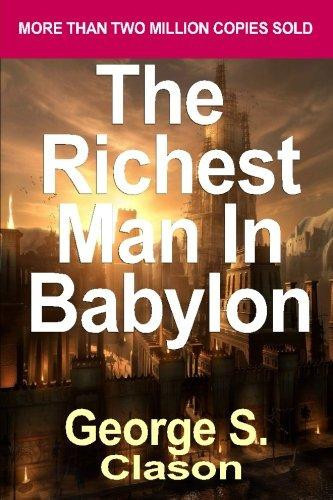
The Richest Man in Babylon Now Revised and Updated for the 21st Century (Paperback) - Common
8.46 / 10 254K ratings
- Language
- English
- Published
- 2010
- Publisher
- CreateSpace Independent Publishing Platform
- Pages
- 92
- ISBN
- 9781530427710
Within the ancient city of Babylon, once the wealthiest metropolis in the world, lie the timeless secrets to personal wealth and prosperity. This collection of parables has guided millions since it was first published, offering a clear path to financial success through stories of merchants, artisans, and shepherds. The principles that elevated the citizens of Babylon from poverty to riches are presented through the journey of Arkad, a humble scribe who became the city's wealthiest man. His wisdom forms the basis of a straightforward yet profound financial philosophy.
The book reveals the fundamental laws of money, demonstrating how to acquire it, how to keep it, and how to make it earn more. Through simple and engaging tales, you will learn the importance of paying yourself first, living below your means, and putting your money to work. It is not a modern get-rich-quick scheme, but a return to the foundational truths of wealth management that have proven effective for centuries. For anyone who wishes to take control of their finances and build a secure future, these lessons from the ancients provide a complete guide.
The book reveals the fundamental laws of money, demonstrating how to acquire it, how to keep it, and how to make it earn more. Through simple and engaging tales, you will learn the importance of paying yourself first, living below your means, and putting your money to work. It is not a modern get-rich-quick scheme, but a return to the foundational truths of wealth management that have proven effective for centuries. For anyone who wishes to take control of their finances and build a secure future, these lessons from the ancients provide a complete guide.
Subjects
- Kindle Store
- Categories
- Kindle eBooks
- Reference
- Literature & Fiction
- Subjects
- Literary
- Self-Help
- Health, Fitness & Dieting
- Self Service
- Biographies & Memoirs
- Arborist Merchandising Root
- Business & Money
- Motivational
- Management & Leadership
- Spiritual
- Management
- Education & Teaching
- EDUCATION
- Religion & Spirituality
- Economics
- Christian Living
- New Age & Spirituality
- Self-Esteem
- Essays & Correspondence
- Writing, Research & Publishing Guides
- Higher & Continuing Education
- Personal Transformation
- Politics & Social Sciences
- Philosophy
- Specialty Boutique
- New, Used & Rental Textbooks
- Business & Economics
- Business
- Personal Growth
- Writing
- General Interests & Hobbies
- Self-Help General
- Professionals & Academics
- Accounting
- New Thought
- Literary Collections
- SELF-HELP TECHNIQUES
- Religion
- Success
- Skills
- BUSINESS
- Entrepreneurship
- Investing
- Educators
- Diaries & Journals
- Econometrics
- Ethics
- Study Aids
- Business Culture
- Motivation & Self-Improvement
- Business Development & Entrepreneurship
- Finance
- Financial Risk Management
- Motivational & Inspirational
- Personal Finance
- Adult & Continuing Education
- Self-help techniques
- Happiness
- Investments & Securities
- Self-Management
- Motivation
- FINANCE, PERSONAL
- Leadership
- Personal Success
- Business Ethics
- Job Hunting
- Commodities
- Money & Monetary Policy
- Careers
- Budgeting & Money Management
- Moral and ethical aspects
- Financial
- BUSINESS ETHICS
- Wealth Management
- Introduction
- COMMERCE
- Financial Aid
- Budgeting
- Business ethics
- Free Enterprise & Capitalism
- Wealth
- Money Management
- Finance, personal
Original edition
The Richest Man in Babylon Original 1926 EditionOriginally published in 1926 English Innovative Eggz LLC
Other editions (192)
- The Richest Man in Babylon The Original 1926 Edition (A George S. Clason Classics)

- The Richest Man in Babylon (PREMIUM PAPERBACK, PENGUIN INDIA): All-time bestselling classic about personal finance and wealth management for anyone who desires success
- O homem mais rico da Babilônia

- El Hombre Más Rico de Babilonia Spanish Edition

- El Hombre Mas Rico de Babilonia

Listen to the summary Narrated summary
In the ancient city of Babylon, a place of immense wealth and grandeur, many citizens toiled ceaselessly yet found their purses perpetually lean. Two such men, Bansir the chariot builder and Kobbi the musician, lament their empty coffers, wondering why gold seems to avoid them, despite their diligent work. They recall Arkad, their childhood friend, who has become the richest man in Babylon, and decide to seek his counsel, hoping to uncover the secret to his overflowing wealth.
Arkad, a man of great wisdom and generosity, welcomes his friends and agrees to share the principles that transformed him from a poor scribe into a man of immense fortune. He begins with the first and most fundamental cure for a lean purse: "Start thy purse to fattening." He advises that a part of all one earns is theirs to keep, urging them to save at least one-tenth of all their income before spending on anything else. This portion, he explains, is the seed from which wealth grows, and it must never be touched for immediate gratification.
Next, Arkad reveals the importance of "Control thy expenditures." He teaches that desires are endless, and unless one consciously distinguishes between necessary expenses and mere wants, their spending will always expand to consume their entire income. He urges them to create a budget, to track their spending, and to prioritize their needs, ensuring that the saved portion of their earnings remains untouched.
The third cure Arkad imparts is to "Make thy gold multiply." He explains that saved gold, like a diligent worker, must be put to work to earn more gold. He encourages wise investments, where the initial capital generates further income, and that income, in turn, generates more, creating an army of golden slaves working tirelessly for their owner. This principle of compounding, he assures, is the true path to lasting wealth.
However, Arkad cautions against losing this hard-won wealth, presenting the fourth cure: "Guard thy treasures from loss." He warns against reckless ventures and promises of exorbitant returns, advising them to seek counsel from experienced and wise individuals who have a proven track record of handling money. Gold, he states, is eager to slip away from those who do not understand its laws or trust it to inexperienced hands.
The wisdom continues with the counsel to "Make of thy dwelling a profitable investment," encouraging home ownership as a means to reduce expenses and build equity. He also speaks of the need to "Ensure a future income," highlighting the importance of planning for old age and the protection of one's family through foresight and sound investments that continue to yield returns even when one can no longer work.
Finally, Arkad emphasizes the seventh cure: "Improve thy ability to earn." He reminds them that self-improvement and the continuous acquisition of knowledge and skills are paramount. The more one learns and perfects their craft, the greater their capacity to earn, thereby increasing the stream of gold that can be saved and invested. He stresses that true success comes to those who crush procrastination and commit to constant growth.
Through these parables and the "Five Laws of Gold" - which reiterate the importance of saving, seeking wise counsel, avoiding risky ventures, owning one's home, and ensuring a future income - Arkad illustrates that the principles of acquiring and keeping wealth are not mysteries, but rather timeless truths accessible to all who choose to learn and apply them. The path to a bulging purse, he concludes, lies in discipline, diligence, and the unwavering commitment to these simple yet profound laws of prosperity.
Arkad, a man of great wisdom and generosity, welcomes his friends and agrees to share the principles that transformed him from a poor scribe into a man of immense fortune. He begins with the first and most fundamental cure for a lean purse: "Start thy purse to fattening." He advises that a part of all one earns is theirs to keep, urging them to save at least one-tenth of all their income before spending on anything else. This portion, he explains, is the seed from which wealth grows, and it must never be touched for immediate gratification.
Next, Arkad reveals the importance of "Control thy expenditures." He teaches that desires are endless, and unless one consciously distinguishes between necessary expenses and mere wants, their spending will always expand to consume their entire income. He urges them to create a budget, to track their spending, and to prioritize their needs, ensuring that the saved portion of their earnings remains untouched.
The third cure Arkad imparts is to "Make thy gold multiply." He explains that saved gold, like a diligent worker, must be put to work to earn more gold. He encourages wise investments, where the initial capital generates further income, and that income, in turn, generates more, creating an army of golden slaves working tirelessly for their owner. This principle of compounding, he assures, is the true path to lasting wealth.
However, Arkad cautions against losing this hard-won wealth, presenting the fourth cure: "Guard thy treasures from loss." He warns against reckless ventures and promises of exorbitant returns, advising them to seek counsel from experienced and wise individuals who have a proven track record of handling money. Gold, he states, is eager to slip away from those who do not understand its laws or trust it to inexperienced hands.
The wisdom continues with the counsel to "Make of thy dwelling a profitable investment," encouraging home ownership as a means to reduce expenses and build equity. He also speaks of the need to "Ensure a future income," highlighting the importance of planning for old age and the protection of one's family through foresight and sound investments that continue to yield returns even when one can no longer work.
Finally, Arkad emphasizes the seventh cure: "Improve thy ability to earn." He reminds them that self-improvement and the continuous acquisition of knowledge and skills are paramount. The more one learns and perfects their craft, the greater their capacity to earn, thereby increasing the stream of gold that can be saved and invested. He stresses that true success comes to those who crush procrastination and commit to constant growth.
Through these parables and the "Five Laws of Gold" - which reiterate the importance of saving, seeking wise counsel, avoiding risky ventures, owning one's home, and ensuring a future income - Arkad illustrates that the principles of acquiring and keeping wealth are not mysteries, but rather timeless truths accessible to all who choose to learn and apply them. The path to a bulging purse, he concludes, lies in discipline, diligence, and the unwavering commitment to these simple yet profound laws of prosperity.
What other readers say
Liked
The Richest Man in Babylon is widely praised for its timeless financial wisdom, presented through an engaging and easy-to-understand narrative. Many readers appreciate its unique approach of using simple parables and stories set in ancient Babylon, which makes complex financial concepts accessible and enjoyable, even for those who typically find finance books boring. Reviewers often highlight how the book effectively changes one's perspective on personal finances, offering clear, memorable principles such as saving a portion of one's income, controlling expenditures, making money work for you, and increasing earning ability. Its short length and motivating tone make it an inspiring read, with many recommending it as a foundational text that provides a vital 'jolt' to straighten out financial habits and pursue wealth-building.
Disliked
However, some readers find the book to be overly simplistic and repetitive, arguing that its core advice could be condensed into just a few sentences. Critics describe the content as basic or common knowledge, suggesting it doesn't offer groundbreaking insights for those already familiar with personal finance. The book's age is also noted as a potential drawback, with its archaic language and writing style proving difficult or 'horribly written' for some, and its principles not fully addressing the complexities of modern economics, rampant consumerism, or interest-based finance. A few reviewers felt the story format was merely a superficial vehicle for basic ideas, contributing to the perceived redundancy rather than enhancing the depth of the lessons.
In short
Overall, The Richest Man in Babylon stands as a classic that successfully distills fundamental financial principles into an approachable format. While its simplicity and repetitive nature may not appeal to everyone, especially those seeking advanced financial strategies, it serves as an excellent starting point for a specific audience. This book is highly recommended for beginners in personal finance, teenagers, young adults, or anyone struggling with basic money management and debt. It is particularly valued by readers who prefer learning through engaging stories rather than dense academic texts, and who are looking for clear, actionable steps to build a solid financial foundation and cultivate lasting wealth-building habits.
No reviews yet. Be the first.