
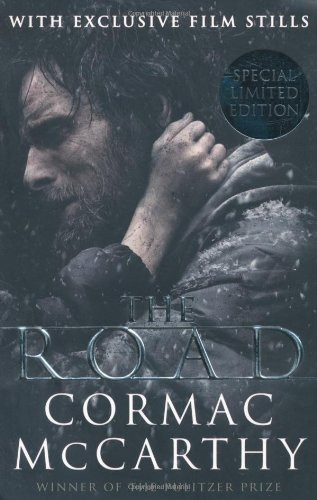
The Road
by Cormac McCarthy, Tom Stechschulte, Ltd. 2006 M-71
8 / 10 1.1M ratings
- Language
- English
- Published
- 2021
- Publisher
- Recorded Books
- ISBN
- 9781428105492
In a world consumed by ash and darkness following an unnamed cataclysm, a father and his young son journey alone through the ravaged American landscape. They push a shopping cart with their few remaining possessions, heading south toward the coast, armed with only a pistol and their devotion to one another. The world around them is devoid of life, the sky is perpetually gray, and the survivors they encounter are often a greater threat than the desolate environment itself. Their journey is a relentless struggle for survival against starvation, the cold, and the predatory remnants of humanity.
This novel strips away civilization to explore the fundamental essence of human connection. The narrative is a meditation on the depths of parental love, the moral choices made when society has collapsed, and the fragile nature of hope in the face of overwhelming despair. It is a story that questions what it means to be human in a world without a future, and whether goodness can endure when everything else has been lost. The journey down this road is an exploration of the enduring power of love and the will to carry the fire of humanity in the darkest of times.
This novel strips away civilization to explore the fundamental essence of human connection. The narrative is a meditation on the depths of parental love, the moral choices made when society has collapsed, and the fragile nature of hope in the face of overwhelming despair. It is a story that questions what it means to be human in a world without a future, and whether goodness can endure when everything else has been lost. The journey down this road is an exploration of the enduring power of love and the will to carry the fire of humanity in the darkest of times.
Subjects
- Travel
- Literature & Fiction
- Genre Fiction
- Horror
- Literary
- Action & Adventure
- Science Fiction & Fantasy
- Fiction
- Education & Teaching
- Voyages and travels
- Coming of Age
- Family Life
- Contemporary
- Studying & Workbooks
- Workbooks
- Psychological
- Classics
- American fiction (fictional works by one author)
- Fiction, general
- Media Tie-In
- Adventure
- Post-Apocalyptic
- Fiction, science fiction, general
- Ethics
- Dystopian
- Fathers and Sons
- Apocalyptic & Post-Apocalyptic
- Survival
- Sagas
- TV, Movie, Video Game Adaptations
- New York Times reviewed
- Disasters
- Fiction, horror
- Description and Travel
- Science Fiction
- Thrillers
- Civilization
- American Fiction (Fict
Original edition
RoadOriginally published in 2006 English Recorded Books
Other editions (70)


Listen to the summary Narrated summary
The world had ended. Not with a bang, but with a whimper of ash and cold, an unspecified cataclysm that left the earth charred, the sky perpetually gray, and the sun a distant, muted memory. Nothing grew. Animals were gone. Most of humanity had devolved into roving bands of cannibals, their moral compasses shattered by starvation and despair. In this desolate landscape, a man and a boy, his young son, moved south, pushing a laden shopping cart along the desolate roads, their breath pluming in the perpetual chill.
Their journey was a relentless test of endurance, a daily fight against cold, hunger, and the constant threat of discovery by those who had lost all humanity. The man, gaunt and wracked by a persistent cough that promised his eventual demise, carried a pistol with only two rounds, a grim last resort. He was the boy's sole protector, his teacher, his entire world. He taught the boy to be wary, to read the signs of danger in the empty towns and skeletal forests. They scavenged relentlessly, sifting through the ruins of convenience stores and abandoned homes for cans of peaches, stale crackers, anything to sustain their dwindling hope.
The man clung to fragmented memories of the world before, of green summers and his wife, the boy's mother, who had chosen to end her life rather than face the inevitable horrors of this new existence. These memories were bittersweet, a contrast to the stark reality of their present. The boy, having known only this ash-choked world, was a beacon of innocence and compassion, often urging his father to help strangers, even when such acts carried immense risk. He was the "fire" his father spoke of, the embodiment of goodness they desperately tried to carry forward.
They encountered glimpses of the horror that stalked the roads: a basement filled with human captives, kept as livestock by a brutal gang; the sudden, terrifying appearance of a road agent who lunged for the boy, only to be shot by the man. Each encounter, each narrow escape, chipped away at the boy's fragile innocence, making him question if they, too, were becoming like the "bad guys." The man, though hardened by necessity, wrestled with these moral quandaries, knowing that every act of survival, no matter how brutal, was for his son.
As they pressed on towards the coast, a destination without a promise, the man's cough worsened, his strength fading with each labored step. He knew his time was short. He tried to prepare the boy, to instill in him the resilience and the moral fortitude needed to continue alone. He spoke of carrying the fire, of being good, of finding other good people, even as the world around them offered little evidence of such a possibility.
Finally, on the desolate beach, the man succumbed. The boy stayed with him for three days, a small, solitary figure in a world of endless gray, before setting off alone, clutching the pistol. It was then, in his utter isolation, that he encountered another family – a man, a woman, and two children. They were "good guys," carrying the fire, and after a moment of profound uncertainty, the boy chose to trust them. He joined their small caravan, stepping into an uncertain future, carrying the weight of his father's love and the fragile flame of humanity within him.
Their journey was a relentless test of endurance, a daily fight against cold, hunger, and the constant threat of discovery by those who had lost all humanity. The man, gaunt and wracked by a persistent cough that promised his eventual demise, carried a pistol with only two rounds, a grim last resort. He was the boy's sole protector, his teacher, his entire world. He taught the boy to be wary, to read the signs of danger in the empty towns and skeletal forests. They scavenged relentlessly, sifting through the ruins of convenience stores and abandoned homes for cans of peaches, stale crackers, anything to sustain their dwindling hope.
The man clung to fragmented memories of the world before, of green summers and his wife, the boy's mother, who had chosen to end her life rather than face the inevitable horrors of this new existence. These memories were bittersweet, a contrast to the stark reality of their present. The boy, having known only this ash-choked world, was a beacon of innocence and compassion, often urging his father to help strangers, even when such acts carried immense risk. He was the "fire" his father spoke of, the embodiment of goodness they desperately tried to carry forward.
They encountered glimpses of the horror that stalked the roads: a basement filled with human captives, kept as livestock by a brutal gang; the sudden, terrifying appearance of a road agent who lunged for the boy, only to be shot by the man. Each encounter, each narrow escape, chipped away at the boy's fragile innocence, making him question if they, too, were becoming like the "bad guys." The man, though hardened by necessity, wrestled with these moral quandaries, knowing that every act of survival, no matter how brutal, was for his son.
As they pressed on towards the coast, a destination without a promise, the man's cough worsened, his strength fading with each labored step. He knew his time was short. He tried to prepare the boy, to instill in him the resilience and the moral fortitude needed to continue alone. He spoke of carrying the fire, of being good, of finding other good people, even as the world around them offered little evidence of such a possibility.
Finally, on the desolate beach, the man succumbed. The boy stayed with him for three days, a small, solitary figure in a world of endless gray, before setting off alone, clutching the pistol. It was then, in his utter isolation, that he encountered another family – a man, a woman, and two children. They were "good guys," carrying the fire, and after a moment of profound uncertainty, the boy chose to trust them. He joined their small caravan, stepping into an uncertain future, carrying the weight of his father's love and the fragile flame of humanity within him.
What other readers say
Liked
The Road is frequently lauded for its powerful emotional impact, with many readers finding it a gripping, terrifying, and deeply moving experience. Reviewers often praise Cormac McCarthy's masterful, lean prose, describing it as precise, economical, and intensely honed, which contributes to the book's stark yet beautiful imagery. The dialogue between the father and son is highlighted as particularly effective, often described as genius in its ability to convey realistic communication and the characters' psychological states despite its brevity. The novel is celebrated for its exploration of profound themes such as the undeniable power of love, compassion, and the human will to survive against overwhelming odds, often symbolized by the phrase "carrying the fire." Many readers appreciate the book's ability to evoke strong emotions and its profound philosophical and theological dimensions, even in its bleakest moments.
Disliked
Conversely, a significant portion of the reviews criticizes the book for its repetitive nature and perceived stylistic affectations. Some find the prose to be ostentatiously empty, lacking precision, and as unengaging as a "laundry list" due to redundant descriptions. The absence of traditional punctuation, including quotation marks and apostrophes, is a major point of contention, often deemed pretentious, self-indulgent, and a hindrance to readability. Critics also point to flat, dull, and repetitive characterizations, particularly the father and son's dialogue and unchanging relationship, which some argue fails to make them sympathetic or believable. The plot is often described as minimal or non-existent, and the ending is seen by some as tacked on and incongruous with the emotional build-up. Furthermore, some reviewers argue the book is unoriginal, borrowing heavily from established post-apocalyptic tropes without adding depth, and that its relentless bleakness and focus on human suffering can feel emotionally manipulative or "tragedy porn."
In short
Ultimately, The Road is a polarizing novel, celebrated by many for its profound emotional resonance and unique literary style, while equally criticized for its perceived stylistic flaws and lack of narrative depth. Readers who appreciate minimalistic, poetic prose, enjoy exploring themes of love, survival, and morality in a deeply bleak setting, and are willing to engage with unconventional narrative techniques are likely to find this book a powerful and memorable experience. However, those who prefer traditional narrative structures, clear character development, and a more accessible writing style may find it tedious, frustrating, and emotionally unfulfilling.
No reviews yet. Be the first.