
The Tao of Physics An Exploration of the Parallels Between Modern Physics and Eastern Mysticism
7.94 / 10 20K ratings
- Language
- English
- Published
- 1992
- Publisher
- Flamingo
- Pages
- 416
- ISBN
- 9780006544890
Fritjof Capra's The Tao of Physics explores the surprising parallels between the theories of modern physics and the ancient wisdom of Eastern mystical traditions. This book reveals how concepts from quantum mechanics, relativity, and particle physics resonate with the philosophical insights found in Hinduism, Buddhism, and Taoism. It delves into the fundamental interconnectedness and dynamic nature of the universe, suggesting that both scientific and mystical paths converge on a similar understanding of reality. Readers will encounter a perspective that challenges the conventional separation of science and spirituality, offering a unified view of existence.
Subjects
- Action & Adventure
- Fantasy
- Fiction
- Military
- Science & Math
- Body, Mind & Spirit
- Religion & Spirituality
- Physics
- Politics & Social Sciences
- Mysticism
- New Thought
- Other Religions, Practices & Sacred Texts
- Science
- Religion
- Metaphysics
- Quantum Theory
- Audio Adult: Books On Tape
- Hinduism
- Eastern
- History & Philosophy
- Movements
- History & Schools of Thought
- Religion and Science
- Philosophy & Social Aspects
- Dark Fantasy
- Cosmology
- Other Eastern Religions & Sacred Texts
- Audiobooks
- Taoism
- Space Science
- Relativity
- Zen
- Abridged Audio - Inspirational
- Philosophie
- Taoist
- Religious Aspects
Original edition
The Tao of PhysicsOriginally published in 1975 English Bantam Books
Other editions (15)
- The Tao of Physics An Exploration of the Parallels between Modern Physics and Eastern Mysticism
- The Tao of Physics: An Exploration of the Parallels between Modern Physics and Eastern Mysticism
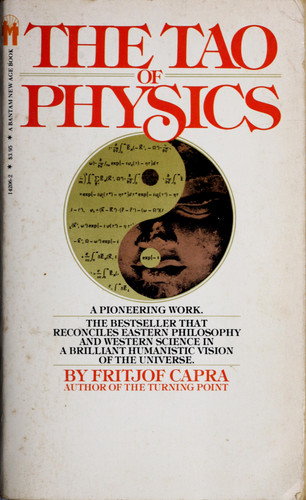
- The Tao of Physics An Exploration of the Parallels Between Modern Physics and Eastern Mysticism

- The Tao of Physics An Exploration of the Parallels Between Modern Physics and Eastern Mysticism
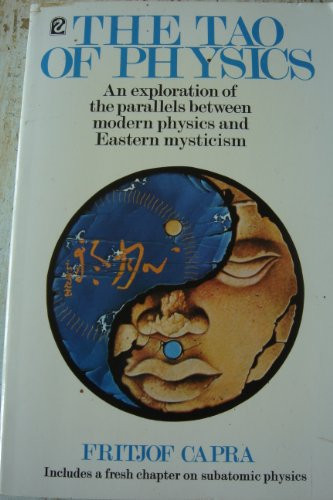
- The Tao of Physics

Listen to the summary Narrated summary
A profound journey unfolds, revealing an unexpected convergence at the heart of existence. It begins by dismantling the rigid, mechanistic worldview that long dominated Western thought, a view that meticulously separated the observer from the observed, mind from matter, and isolated objects from their intricate web of relationships. This classical framework, with its solid, predictable particles and absolute space and time, is shown to be merely a macroscopic approximation, crumbling as one delves into the deeper strata of reality.
As the exploration ventures into the realm of modern physics - the unsettling yet exhilarating world of quantum mechanics and relativity - a startling new picture emerges. Here, the universe is not a collection of discrete, immutable building blocks, but a dynamic, indivisible whole. Subatomic particles, far from being tiny, billiard-ball-like entities, are revealed as fleeting, interconnected patterns of energy, endlessly dancing into and out of existence. They are not definite "things" but "tendencies to exist," their very nature defined by their relationships and interactions within the cosmic web.
This dynamic, interconnected nature of reality finds a resounding echo in the ancient mystical traditions of the East. In the philosophies of Hinduism, Buddhism, and Taoism, the universe has always been perceived as a single, undifferentiated reality, where all phenomena are transient manifestations of an underlying oneness. The divisions we perceive in the world - between objects, events, and even ourselves - are understood as constructs of the mind, obscuring a fundamental unity.
Consider the concept of space and time. Classical physics held them as independent, absolute containers. Yet, relativity theory shatters this illusion, unveiling them as inextricably interwoven into a four-dimensional continuum, spacetime, where all measurements are relative to the observer's motion. This profound insight mirrors the mystical understanding that space and time are not objective realities but aspects of consciousness, fluid and interdependent, transcending our ordinary three-dimensional perceptions.
Moreover, the very act of observation, once considered neutral, takes on a pivotal role in quantum theory. The observer is no longer a detached spectator but an active participant, influencing the reality being observed. This revolutionary idea resonates deeply with Eastern spiritual wisdom, which has long emphasized the inseparable unity of subject and object, where consciousness is not separate from the fabric of the universe but an integral part of its unfolding.
The universe, in its deepest essence, is portrayed as a ceaseless, rhythmic flow. Matter is never quiescent; it is a continuous dance of energy, a cosmic choreography of creation and destruction. This constant flux, this interplay of opposites - like the Yin and Yang in Taoism, or the destructive yet creative dance of Shiva in Hinduism - is not chaos but the very rhythm of existence, a harmonious process of transformation that permeates all levels of reality, from the subatomic to the cosmic.
Both modern physics and Eastern mysticism, in their attempts to grasp the ultimate nature of reality, encounter the limits of language and rational thought. The paradoxes inherent in quantum phenomena defy conventional logic, much like the ineffable truths sought through mystical experience. Both paths ultimately point towards a direct, non-intellectual apprehension of reality, a holistic awareness that transcends conceptual frameworks.
Thus, a remarkable parallel emerges: the insights gleaned from the most advanced scientific inquiries into the nature of matter align profoundly with the ancient wisdom traditions born from deep meditative experiences. They both unveil a universe that is a dynamic, interconnected, and intrinsically unified whole, where every part is in relation to every other, and change is the only constant. It is a vision that invites one to perceive the cosmos not as a collection of separate entities, but as an inseparable, living dance.
As the exploration ventures into the realm of modern physics - the unsettling yet exhilarating world of quantum mechanics and relativity - a startling new picture emerges. Here, the universe is not a collection of discrete, immutable building blocks, but a dynamic, indivisible whole. Subatomic particles, far from being tiny, billiard-ball-like entities, are revealed as fleeting, interconnected patterns of energy, endlessly dancing into and out of existence. They are not definite "things" but "tendencies to exist," their very nature defined by their relationships and interactions within the cosmic web.
This dynamic, interconnected nature of reality finds a resounding echo in the ancient mystical traditions of the East. In the philosophies of Hinduism, Buddhism, and Taoism, the universe has always been perceived as a single, undifferentiated reality, where all phenomena are transient manifestations of an underlying oneness. The divisions we perceive in the world - between objects, events, and even ourselves - are understood as constructs of the mind, obscuring a fundamental unity.
Consider the concept of space and time. Classical physics held them as independent, absolute containers. Yet, relativity theory shatters this illusion, unveiling them as inextricably interwoven into a four-dimensional continuum, spacetime, where all measurements are relative to the observer's motion. This profound insight mirrors the mystical understanding that space and time are not objective realities but aspects of consciousness, fluid and interdependent, transcending our ordinary three-dimensional perceptions.
Moreover, the very act of observation, once considered neutral, takes on a pivotal role in quantum theory. The observer is no longer a detached spectator but an active participant, influencing the reality being observed. This revolutionary idea resonates deeply with Eastern spiritual wisdom, which has long emphasized the inseparable unity of subject and object, where consciousness is not separate from the fabric of the universe but an integral part of its unfolding.
The universe, in its deepest essence, is portrayed as a ceaseless, rhythmic flow. Matter is never quiescent; it is a continuous dance of energy, a cosmic choreography of creation and destruction. This constant flux, this interplay of opposites - like the Yin and Yang in Taoism, or the destructive yet creative dance of Shiva in Hinduism - is not chaos but the very rhythm of existence, a harmonious process of transformation that permeates all levels of reality, from the subatomic to the cosmic.
Both modern physics and Eastern mysticism, in their attempts to grasp the ultimate nature of reality, encounter the limits of language and rational thought. The paradoxes inherent in quantum phenomena defy conventional logic, much like the ineffable truths sought through mystical experience. Both paths ultimately point towards a direct, non-intellectual apprehension of reality, a holistic awareness that transcends conceptual frameworks.
Thus, a remarkable parallel emerges: the insights gleaned from the most advanced scientific inquiries into the nature of matter align profoundly with the ancient wisdom traditions born from deep meditative experiences. They both unveil a universe that is a dynamic, interconnected, and intrinsically unified whole, where every part is in relation to every other, and change is the only constant. It is a vision that invites one to perceive the cosmos not as a collection of separate entities, but as an inseparable, living dance.
What other readers say
Liked
The book is widely praised for its ambitious attempt to draw parallels between modern physics, particularly quantum mechanics, and various Eastern philosophies and mystical traditions. Many readers found it a fascinating and mind-expanding exploration, appreciating its interdisciplinary approach to understanding reality. For some, it served as a transformative read, bridging what they perceived as a divide between scientific and spiritual worldviews. Reviewers highlight its ability to offer an accessible overview of complex scientific concepts without heavy mathematics, making it suitable for a general audience curious about Eastern cultures and the philosophical implications of physics. The book is noted for stimulating new ways of thinking about interconnectedness, the dynamic nature of existence, and the potential for a spiritual dimension within scientific inquiry. Its historical significance as a seminal work in this field is also frequently acknowledged.
Disliked
Despite its positive reception by some, the book faces significant criticism, primarily regarding its scientific rigor and philosophical depth. Many reviewers contend that the author's interpretations of quantum physics verge on "quantum woo" or "New Age trickery," accusing him of misrepresenting scientific principles or inappropriately scaling subatomic phenomena to macroscopic reality. Critics also point to the use of outdated physics theories, such as the bootstrap model, which were not updated in subsequent editions, diminishing the book's scientific credibility over time. From a philosophical standpoint, the book is often described as lacking discipline and sound reasoning, with some arguing that the parallels drawn are superficial, cherry-picked, or forced. Reviewers also found the writing style repetitive and dull, leading to a tedious reading experience for many, and questioned the author's authority or comprehensive understanding of the diverse Eastern mystical traditions he attempts to synthesize.
In short
Ultimately, the book emerges as a polarizing work, celebrated by some for its groundbreaking synthesis and criticized by others for its perceived inaccuracies and intellectual shortcomings. While it may not satisfy those seeking a deeply rigorous or updated scientific treatise, nor a comprehensive philosophical text, it has undeniably sparked curiosity and encouraged a broader perspective on the nature of reality for many. This book is best suited for open-minded readers who are intrigued by the conceptual overlap between science and spirituality, and who are willing to engage with a work that prioritizes philosophical musing over strict academic precision. It serves as an influential, albeit flawed, starting point for exploring the profound questions at the intersection of physics and mysticism.
No reviews yet. Be the first.