
Add to library
You don't have any lists yet. Create one in My Library.
Go to My LibraryAdd to library
You don't have any lists yet. Create one in My Library.
Go to My LibraryThe Wind-up Bird Chronicle
- Language
- English
- Published in
- Publisher
- Vintage
- Pages
- 609
- ISBN
- 9780099562986
Toru's search for his wife and cat plunges him into a web of interconnected lives and histories, where he encounters a cast of eccentric characters: a troubled teenage girl, a pair of psychic sisters, and a war veteran haunted by horrific memories from Japan's past. His journey leads him to the bottom of a dry well in a neighbor's yard, a place that becomes a gateway to another reality and the hidden depths of his own consciousness. What begins as a domestic search becomes a surreal exploration of loss, memory, and the unseen forces that shape the modern world, challenging the boundaries between dreams and reality itself.
Subjects
Original edition details
Other editions (21)

The Wind-Up Bird Chronicle A Novel
1998 • Knopf Doubleday Publishing Group
English

The Wind-Up Bird Chronicle A Novel
2010 • Knopf Doubleday Publishing Group
English

Wind-Up Bird Chronicle
2006 • Naxos Audiobooks
English

The Wind-Up Bird Chronicle
1999 • Random House Value Publishing
English

The Wind-up Bird Chronicle
2010 • Vintage
English
Other editions
The Wind-Up Bird Chronicle A Novel
1998 • Knopf Doubleday Publishing Group
English
The Wind-Up Bird Chronicle A Novel
2010 • Knopf Doubleday Publishing Group
English
Wind-Up Bird Chronicle
2006 • Naxos Audiobooks
English
The Wind-Up Bird Chronicle
1999 • Random House Value Publishing
English
The Wind-up Bird Chronicle
2010 • Vintage
English

The Wind-Up Bird Chronicle
1997 • Knopf
English

The Wind-up Bird Chronicle
1997 • Alfred A. Knopf
English

The Wind-up Bird Chronicle
1999 • Harvill
English
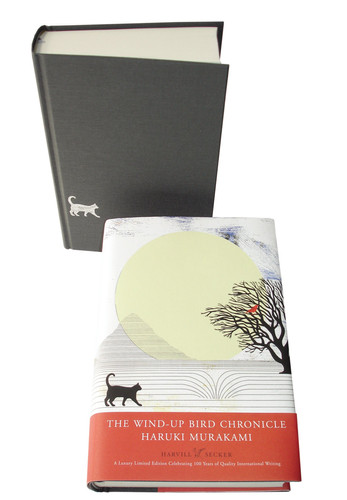
The Wind-up Bird Chronicle
2010 • Harvill Secker
English

The Wind-Up Bird Chronicle (Vintage Classics Japanese Series)
2019 • Vintage
English

Crónica del pájaro que da cuerda al mundo.
2001 • Círculo de Lectores, 2001, Barcelona.
Spanish

Mister Aufziehvogel.
2000 • btb
German

ねじまき鳥クロニクル第1部 泥棒かささぎ編
1997 • 新潮社
Japanese
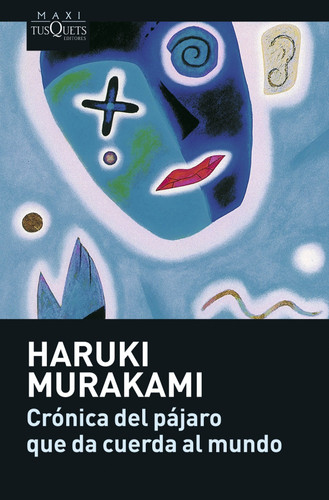
Crónica del pájaro que da cuerda al mundo
2008 • Tusquets Editores
Spanish
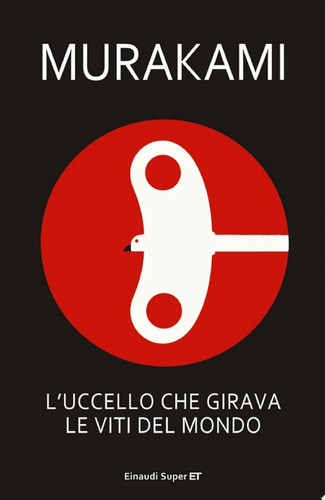
L'uccello che girava le Viti del Mondo
2013 • EINAUDI
Italian

Crónica del pájaro que da cuerda al mundo
2005 • Tusquets
Spanish
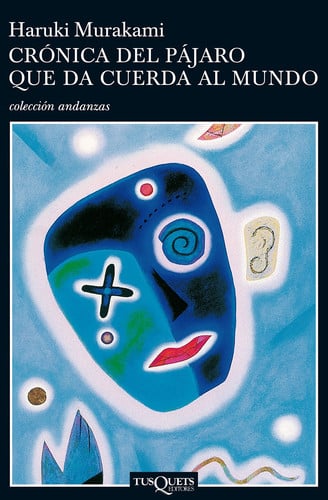
Crónica del pájaro que da cuerda al mundo
2001 • Tusquets Editores
Spanish

Хроники заводной птицы
2015 • Izdatelʹstvo ĖKSMO
Russian
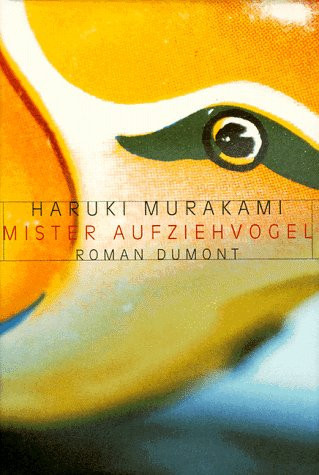
Mister Aufziehvogel.
1998 • DUMONT Literatur und Kunst Verlag
German
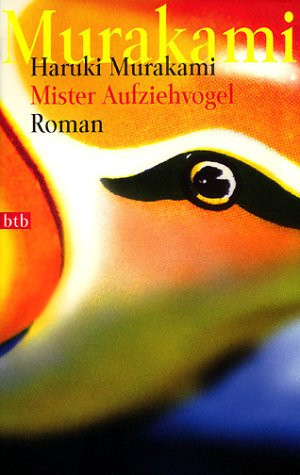
Mister Aufziehvogel. Sonderausgabe.
2001 • btb
German
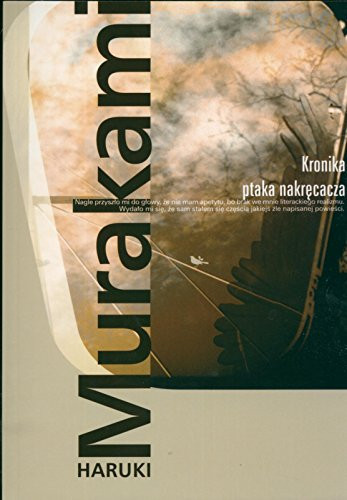
Kronika ptaka nakręcacza
2007 • Muza
Polish
The alley led me to a vacant house with a stone bird statue in its overgrown yard, and to a girl named May Kasahara. She was sixteen, with a slight limp and a scar near her eye from a motorcycle accident. She sat in her yard, watching the world with a detached curiosity, asking me strange questions. “If you were in love with a girl and she turned out to have six fingers, what would you do?” she asked. “What if she had four breasts?” She spoke of death as a small, hard core inside the body that she wanted to cut open and examine. In the heat of the afternoon, I dozed in a deck chair in her yard, and she whispered in my ear about the squishy texture of death, her voice weaving into the oppressive silence of the neighborhood. The cat was nowhere to be found, but I had found something else: a dry well in the vacant house's yard, a dark, waterless hole that seemed to be waiting for something.
My ordinary life was slipping away, replaced by a series of bizarre encounters. A woman named Malta Kano, summoned by my brother-in-law to find the cat, met me in a hotel tearoom. She wore a red vinyl hat and spoke of mystical waters on the island of Malta and the “elements of the body.” She told me her younger sister, Creta, had been defiled by Noboru Wataya. “We live in a violent and chaotic world,” she said, her eyes lacking all depth. “And within this world, there are places that are still more violent, still more chaotic.” She held my palm and told me the disappearance of the cat was only the beginning. Soon after, Kumiko vanished. She left without a word, taking only a blouse and skirt she'd picked up from the cleaner's on her way to work.
A letter arrived from an old soldier named Lieutenant Mamiya, an acquaintance of a fortune-teller I once knew. He came to my house to deliver a keepsake from the deceased man - an empty box - and stayed to tell me a story. He spoke of his time as a young officer in Manchuria before the war, of a secret mission across the border into Outer Mongolia. He told me of being captured by Soviet troops and watching his commander being skinned alive by a Mongolian officer. “They do a small area at a time,” the Russian officer had explained. “They have to work slowly if they want to remove the skin cleanly.” Thrown into a dry well and left for dead, Mamiya had survived, but he spoke of a brilliant light that flooded the bottom of the well for a few seconds each day, a light in which he felt he had burned away the very core of his life.
To find Kumiko, or perhaps to find myself, I began to descend into the dry well in the vacant house's yard. I bought a rope ladder and lowered myself into the cool, silent darkness. Down there, cut off from the world, time seemed to warp and memories grew vivid. I thought of the first time I met Kumiko, our first date at an aquarium where she stared, mesmerized, at the jellyfish. “The real world is in a much darker and deeper place than this,” she had told me, “and most of it is occupied by jellyfish and things.” In the well, I began to have strange, vivid dreams of a hotel room, numbered 208, where I would meet Creta Kano. And one morning, after a night spent in the well, I woke to find a strange, bluish mark on my right cheek, like a bruise the size of a baby's palm.
My brother-in-law, Noboru Wataya, began to close in. Now a popular politician, his face was everywhere. He sent a grotesque, misshapen man named Ushikawa to see me, offering a deal: if I gave up my connection to the vacant house and its well, he would help me find Kumiko. I refused. My search had become a quiet war against him, a man who seemed to be a creature of pure corruption, a hollow man who thrived on defiling others. The well was now my only territory, my only weapon. I bought the land with money given to me by a mysterious, elegant woman named Nutmeg Akasaka, who seemed to see the mark on my face as a sign of a special power.
Night after night, I descended into the well. In the total darkness, I would try to pass through the wall into that other world, into Room 208. I knew Kumiko, or some part of her, was trapped there. One night, I finally broke through. I found myself in the dark hotel room, a baseball bat in my hand. Someone else was there, a man with a knife. We fought in the pitch blackness. I felt the blade slice my cheek, right where the mark was. I swung the bat and felt it connect with his skull, a sound like a watermelon splitting open. I had killed him, this shadow creature, this embodiment of Noboru Wataya's defilement. The spell seemed to be broken, but when I called out for Kumiko, she was gone.
The well began to fill with water, its long silence broken. As the water rose around me, I felt my strength leave me, the world fading to black. It was Cinnamon, Nutmeg's silent, graceful son, who pulled me out. When I recovered, I learned that Noboru Wataya had collapsed from a stroke at the exact moment of our struggle in the other world. He was left in a coma, a man trapped inside his own darkness. The mark on my face had vanished, healed by the knife's cut. And then, a final message from Kumiko appeared on Cinnamon's computer. She was going to the hospital to unplug her brother's life support. “I have to kill my brother, Noboru Wataya,” she wrote. “I have to do it for his sake too. And to give my own life meaning.”
After she killed him, Kumiko went to prison. She refused to see me, wanting to serve her time in peace. The world slowly settled back into a kind of quiet normalcy. The strange women - Malta, Creta, Nutmeg - disappeared from my life. May Kasahara went back to school. One day, the cat came home, his tail just as I remembered it. I sit on my veranda, waiting. The wind-up bird has not returned, but I listen for it. Its spring is wound, and the world, for now, continues to turn.
No discussions yet for this book.
Delete Discussion
Are you sure you want to delete this discussion? This action cannot be undone.
Rating Sources
Readers frequently praise The Wind-Up Bird Chronicle for its uniquely captivating and dreamlike atmosphere, blending the surreal with the everyday in a masterful display of magical realism. Many found the storytelling incredibly engaging, describing it as a page-turner that draws them into a mysterious world where ordinary life slowly unravels into the extraordinary. The novel is celebrated for its thought-provoking exploration of themes such as alienation, loneliness, the search for identity, and the pervasive cruelty humans inflict upon each other, both personally and on a grand historical scale. Reviewers often highlight the memorable and bizarre cast of characters, along with fascinating digressions and subplots that, while seemingly unconnected, contribute to a richly layered narrative. The prose itself is frequently lauded for its fluid, pure style and emotional depth, with some considering it one of the author's finest works.
However, the book is not without its criticisms. Some readers found the plot to be meandering and unfocused, with numerous loose ends and unresolved mysteries that left them frustrated rather than intrigued. The protagonist is sometimes described as bland or passive, making it difficult for some to connect with the narrative. A recurring point of contention is the portrayal of female characters, with some reviewers explicitly calling out instances of misogyny or finding them to be irritating, over-sexualized, or lacking in realism. The extensive use of spiritual or mystical elements, including psychic characters who "just know" things, was also criticized by some as repetitive, clichéd, or a convenient plot device that verged on "mumbo-jumbo." For these readers, the book's pervasive weirdness felt forced or arbitrary, rather than ingeniously crafted, and they struggled to find a cohesive theme or message despite its considerable length.
Ultimately, The Wind-Up Bird Chronicle is a divisive but highly acclaimed work. It is recommended for readers who appreciate non-linear narratives, a strong sense of magical realism, and a willingness to embrace ambiguity and unanswered questions. Those who enjoy introspective journeys into the subconscious, thought-provoking themes, and unique literary experiences will likely find it a profound and rewarding read. However, readers who prefer clear, linear plots, definitive resolutions, or a more grounded sense of reality, and those sensitive to potentially problematic character portrayals, may find themselves struggling to connect with its distinctive style.
No reviews yet. Be the first to review this book!
Delete Review
Are you sure you want to delete this review? This action cannot be undone.


