
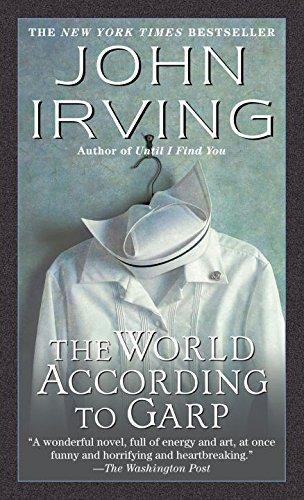
The World According to Garp
by John Irving
8.22 / 10 243K ratings
Classic- Language
- English
- Published
- 1979
- Publisher
- Pocket Books
- Pages
- 609
- ISBN
- 9780671822200
This is the life of T.S. Garp, the son of Jenny Fields, a feminist leader far ahead of her time. Determined to have a child but not a husband, Jenny, a nurse, orchestrates an unconventional conception with a dying soldier, setting the stage for a life less ordinary. While Garp grows up to pursue his own passions for wrestling and writing, his existence is forever entwined with that of his famous mother, whose radical autobiography transforms her into a cultural icon and plunges their lives into a world of sexual extremes, fanaticism, and unforeseen consequences.
Following Garp from his peculiar birth to his eventful career as a novelist and family man, the story navigates a landscape rich with lunacy and sorrow. It is a world populated by a cast of unforgettable characters, where the lines between comedy and tragedy, love and violence, and absurdity and profound truth are constantly blurred. The narrative explores the complexities of parenthood, the anxieties of life and death, and the struggle to create a meaningful identity in a world that defies logic. It is an unflinching look at the beautiful and brutal business of being human.
Following Garp from his peculiar birth to his eventful career as a novelist and family man, the story navigates a landscape rich with lunacy and sorrow. It is a world populated by a cast of unforgettable characters, where the lines between comedy and tragedy, love and violence, and absurdity and profound truth are constantly blurred. The narrative explores the complexities of parenthood, the anxieties of life and death, and the struggle to create a meaningful identity in a world that defies logic. It is an unflinching look at the beautiful and brutal business of being human.
Original edition
The World According to GarpOriginally published in 1978 English E. P. Dutton/Bookthrift
Other editions (193)



Listen to the summary Narrated summary
The world begins, in a sense, with Jenny Fields, a woman of unyielding will and singular purpose. A nurse during wartime, she desired a child but utterly rejected the notion of a husband. Her unconventional path led her to Technical Sergeant Garp, a dying, brain-damaged ball turret gunner, from whom she conceived a son, whom she named T.S. Garp. This peculiar genesis set the stage for a life steeped in the extraordinary, a world where the mundane rarely held sway. Jenny raised young Garp at the Steering School, an all-boys preparatory academy where she worked as a nurse, instilling in him a fierce independence, though his passions for wrestling and writing were entirely his own, topics she held little interest in.
As Garp matured, his life intertwined with Helen Holm, the wrestling coach's daughter, a woman whose intelligence and love of literature matched his own. Their courtship was punctuated by Garp's earnest attempts at writing, driven by a desire to impress her. After graduation, a sojourn in Vienna with his mother provided Garp with the raw material for his first novella, "The Pension Grillparzer." Upon their return, Garp and Helen married, beginning a family that would be central to his existence. While Garp pursued his literary aspirations, often as a stay-at-home father, Helen became an English professor. Meanwhile, Jenny Fields found unexpected fame with her autobiography, "A Sexual Suspect," a blunt and honest account of her life that catapulted her into the role of a feminist icon, a position she embraced with characteristic directness.
Garp's world, however, was a place of lurking danger and sudden, often violent, reversals. He became a devoted, almost obsessively protective, father to his sons, Duncan and Walt, constantly vigilant against the world's myriad threats. Yet, despite his efforts, tragedy struck with a brutal force that reshaped his family forever. An act of infidelity on Helen's part, discovered by Garp in a moment of reckless driving with his children, led to a devastating car crash, killing young Walt and costing Duncan an eye. The aftermath was a testament to the resilience and fragility of love, as Garp and Helen grappled with unimaginable grief and the slow, painful process of forgiveness.
Through these years, Garp continued to write, his stories often mirroring the "lunacy and sorrow" that defined his reality. He found unexpected friendship and understanding in figures like Roberta Muldoon, a kind-hearted transgender woman and former football player who became a steadfast presence in their unconventional household. The public sphere, however, proved more volatile. Jenny's fame attracted a diverse following, including the radical "Ellen Jamesians," women who, in solidarity with a young girl whose tongue had been cut out by her rapists, chose to mutilate their own tongues. Garp, though supportive of his mother, often found himself at odds with the more extreme factions of her admirers, particularly after his novels, which contained scenes of graphic violence, were misinterpreted.
The line between Garp's fiction and his lived experience often blurred, as if his imagination conjured the very dangers he sought to articulate. He wrote with a profound sense of foreboding, a recognition that life was a series of unpredictable events, often absurd, frequently tragic. This awareness permeated his work, reflecting a world where safety was an illusion and vulnerability a constant companion. His narratives, embedded within the larger story of his life, offered glimpses into his deepest fears and his desperate attempts to make sense of the chaos.
Ultimately, Garp's life, a tapestry woven with love, lust, creativity, and profound sorrow, met its own abrupt and violent end. He was assassinated on the grounds of the Steering School, a victim of the very extremism and misunderstanding that had shadowed his mother's public life and his own literary career. Yet, the world, according to Garp, continued. His daughter, Jenny, named for her formidable grandmother, grew up to become a doctor, ensuring her father's works remained in print, a testament to his enduring, if often misunderstood, vision. His story, and the lives of those around him, became a sprawling, tragicomic testament to the human condition, a vibrant, often shocking, affirmation that, in this world, we are all terminal cases.
As Garp matured, his life intertwined with Helen Holm, the wrestling coach's daughter, a woman whose intelligence and love of literature matched his own. Their courtship was punctuated by Garp's earnest attempts at writing, driven by a desire to impress her. After graduation, a sojourn in Vienna with his mother provided Garp with the raw material for his first novella, "The Pension Grillparzer." Upon their return, Garp and Helen married, beginning a family that would be central to his existence. While Garp pursued his literary aspirations, often as a stay-at-home father, Helen became an English professor. Meanwhile, Jenny Fields found unexpected fame with her autobiography, "A Sexual Suspect," a blunt and honest account of her life that catapulted her into the role of a feminist icon, a position she embraced with characteristic directness.
Garp's world, however, was a place of lurking danger and sudden, often violent, reversals. He became a devoted, almost obsessively protective, father to his sons, Duncan and Walt, constantly vigilant against the world's myriad threats. Yet, despite his efforts, tragedy struck with a brutal force that reshaped his family forever. An act of infidelity on Helen's part, discovered by Garp in a moment of reckless driving with his children, led to a devastating car crash, killing young Walt and costing Duncan an eye. The aftermath was a testament to the resilience and fragility of love, as Garp and Helen grappled with unimaginable grief and the slow, painful process of forgiveness.
Through these years, Garp continued to write, his stories often mirroring the "lunacy and sorrow" that defined his reality. He found unexpected friendship and understanding in figures like Roberta Muldoon, a kind-hearted transgender woman and former football player who became a steadfast presence in their unconventional household. The public sphere, however, proved more volatile. Jenny's fame attracted a diverse following, including the radical "Ellen Jamesians," women who, in solidarity with a young girl whose tongue had been cut out by her rapists, chose to mutilate their own tongues. Garp, though supportive of his mother, often found himself at odds with the more extreme factions of her admirers, particularly after his novels, which contained scenes of graphic violence, were misinterpreted.
The line between Garp's fiction and his lived experience often blurred, as if his imagination conjured the very dangers he sought to articulate. He wrote with a profound sense of foreboding, a recognition that life was a series of unpredictable events, often absurd, frequently tragic. This awareness permeated his work, reflecting a world where safety was an illusion and vulnerability a constant companion. His narratives, embedded within the larger story of his life, offered glimpses into his deepest fears and his desperate attempts to make sense of the chaos.
Ultimately, Garp's life, a tapestry woven with love, lust, creativity, and profound sorrow, met its own abrupt and violent end. He was assassinated on the grounds of the Steering School, a victim of the very extremism and misunderstanding that had shadowed his mother's public life and his own literary career. Yet, the world, according to Garp, continued. His daughter, Jenny, named for her formidable grandmother, grew up to become a doctor, ensuring her father's works remained in print, a testament to his enduring, if often misunderstood, vision. His story, and the lives of those around him, became a sprawling, tragicomic testament to the human condition, a vibrant, often shocking, affirmation that, in this world, we are all terminal cases.
What other readers say
Liked
Many readers hail this book as a masterpiece, praising its masterful storytelling and uniquely engaging writing style. Reviewers consistently highlight the author's ability to create outrageous yet deeply human characters who behave with a striking realism, leaving a lasting impression. The novel is celebrated for its blend of light and dark humor, often eliciting both laughter and tears, and for its insightful commentary on the human condition. It boldly tackles significant themes such as feminism, sexuality, parenthood, and societal intolerance, particularly impressive for its forward-thinking approach at the time of its publication. The narrative is noted for its unpredictable plot twists and its fearless portrayal of life's messy, gruesome, and explicit moments, refusing to shy away from difficult realities.
Disliked
Despite its acclaim, the book is not universally loved. A notable criticism is its perceived lack of a compelling plot or direction, with some readers finding the story dull and the characters unengaging, leading them to abandon the book midway. Some reviewers felt the novel was excessively long and could have benefited from significant editing, describing parts as tedious or expository. Another common point of contention is the author's recurring narrative patterns and character archetypes, leading some longtime fans to feel the book is too similar to his other works. For others, the constant stream of tragic, often gratuitous, events and absurd situations undermined the seriousness of the themes, making the narrative feel like an "X-rated soap opera" rather than a profound exploration of life.
In short
Ultimately, this book stands as a highly influential and often polarizing work, celebrated for its distinctive blend of tragicomedy and its unflinching look at life's complexities. It is highly recommended for readers who appreciate unconventional fiction, dark humor, and rich, descriptive prose. Fans of John Irving's signature style will likely find it a compelling read, as will those interested in novels that explore profound social issues like feminism, sexual identity, and the anxieties of parenthood, all while presenting characters who are both larger-than-life and deeply relatable. This book particularly resonates with those who are not afraid of confronting the darker, messier aspects of human experience and who enjoy a narrative that challenges conventions and provokes thought.
No reviews yet. Be the first.