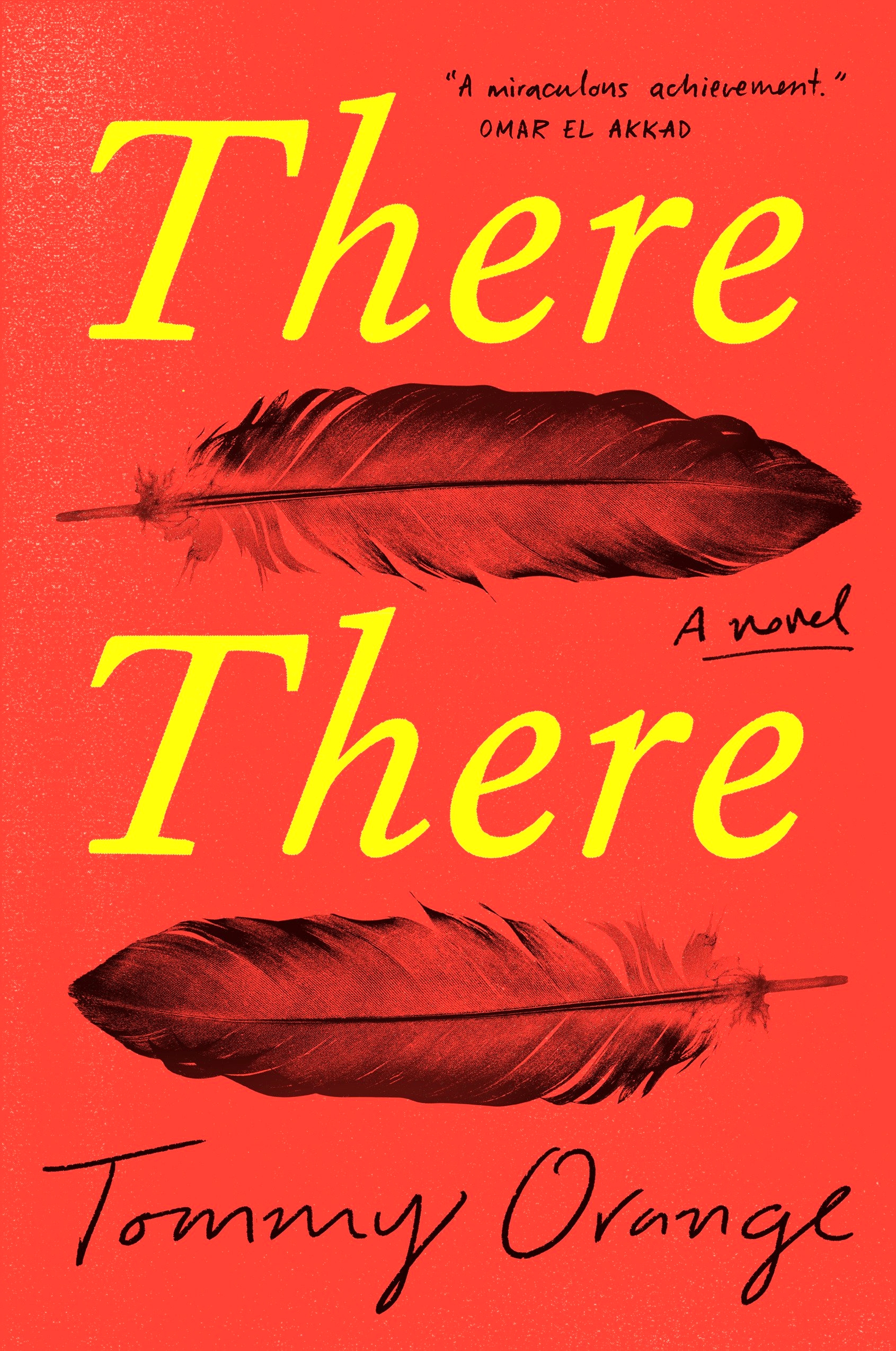
Meet one of the great modern classics of the twenty-first century. There There is ambitious, heartwarming, heartbreaking, and intellectual. It discusses a subject, a people, a culture rarely given space on the page: urban Native Americans. Modernity meets tradition, the old ways exist in the city of Oakland. These things that seem at first opposite exist comfortably side-by-side. Do not believe the myth of the vanishing Indian.
There is no one perspective of this experience; here he presents us with twelve interwoven stories as a representation of diversity of perspective and experience. And this works beautifully; this novel has very few flaws. There are twelve (plus) Point-of-View characters and we need every one of them. Perhaps we could have used more chapters featuring the various main players, but we could never have cut one of these perspectives. They are rich in detail for their short time on the page and we recognize familiar faces when they appear in others' chapters. So many lives in one book, a real treat because of the flawless execution. First time novel?! What will he turn out next, we wait on bated breath. The Red Feathers, Bear Shields, Oxendenes...each bring something unique and important to the narrative, shaping the way the reader understands the events and the history of indigenous oppression in both urban and rural areas of America. It draws on important moments in history to frame the novel, but never gets bogged down with weighty history. It has this adept lightness to the most dark subjects. Each topic and moment is handled with care. Alcatraz occupation, ancestral lands, head hunting -- all are presented in turn to add to the depth of this novel. Ingenious the way Orange weaves his narrative, a pleasure to watch the strands of lives cinch together around those capsule moments of the powwow.
Identity and authenticity of of one's indigeneity. Some deny their heritage and try to forget their pain. Meet one of the great modern classics of the twenty-first century. There There is ambitious, heartwarming, heartbreaking, and intellectual. It discusses a subject, a people, a culture rarely given space on the page: urban Native Americans. Modernity meets tradition, the old ways exist in the city of Oakland. There is no one perspective of this experience; here he presents us with twelve interwoven stories as a representation of diversity of perspective and experience. And this works beautifully; this novel has very few flaws. There are twelve plus PoV characters and we need every single one of them. Perhaps we could have used more chapters featuring the various main players, but we could never have cut one of these perspectives. They each bring something unique and important to the narrative, shaping the way the reader understands the events and the history of indigenous oppression in both urban and rural areas of America. It contains important moments in history to frame the novel, but never gets bogged down with weighty history. It has this adept lightness to the most dark subjects. Each topic and moment is handled with care.
A young boy practices his powwow dancing alone in his bedroom, wearing too-small regalia found tucked away deep in a closet. He knows nothing of their culture, but everything about the feathers and the way the drums make him feel. A man sees his brown skin in the mirror doesn't match his mother's, wonders who his father is, seeks that connection across social media. They ache for the dance, for the answers behind their skin. There are some beautiful moments of self-realization and embraces of heritage.
It begins with a plan to rob a powwow. We meet these faces, know their stories, see their struggles. The ending is a jagged hole. We do not know the fates of many characters; we read the lines over and over again, searching for meaning. We hope.
There is no "there there"? There is, though. This novel shows that the 'there,' the heart of Oakland, exists in the memories, contributions, and traditions of its people.