
They Both Die at the End
by Adam Silvera
7.5 / 10 908K ratings
- Language
- English
- Published
- 2018
- Publisher
- HarperCollins
- Pages
- 400
- ISBN
- 9780062457806
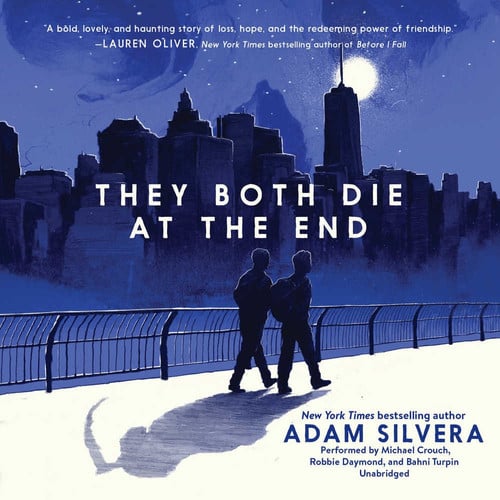
On September 5th, a little after midnight, Mateo Torrez and Rufus Emeterio both receive a call from Death-Cast, a company with the ability to predict a person's death. The news is blunt: they will die sometime within the next twenty-four hours. Complete strangers, the two teenage boys find themselves alone and facing their final day. Seeking a connection, they both download the Last Friend app, which brings them together for one last, great adventure - an attempt to live an entire lifetime in a single day.
The story follows Mateo and Rufus as they navigate New York City, confronting their pasts, their fears, and what it truly means to be alive. It is a devastating yet uplifting exploration of how two people's lives can change over the course of one unforgettable day. This novel does not ask if you can cheat death, but instead poses a more profound question: what would you do if you knew you only had one day left to live?
The story follows Mateo and Rufus as they navigate New York City, confronting their pasts, their fears, and what it truly means to be alive. It is a devastating yet uplifting exploration of how two people's lives can change over the course of one unforgettable day. This novel does not ask if you can cheat death, but instead poses a more profound question: what would you do if you knew you only had one day left to live?
Subjects
- Kindle Store
- Categories
- Kindle eBooks
- Literature & Fiction
- Action & Adventure
- Fantasy
- Science Fiction & Fantasy
- Romance
- Contemporary
- United States
- Friendship
- Teen & Young Adult
- Fiction
- Juvenile Fiction
- Humorous
- Love
- Children's fiction
- Adventure and adventurers, fiction
- Juvenile fiction
- New york (n.y.), fiction
- Social Themes
- Social & Family Issues
- People & Places
- Juvenile Nonfiction
- Social Topics
- Emotions & Feelings
- Science & Nature
- Young Adult Fiction
- Dystopian
- LGBTQ+
- Health & Daily Living
- Love & Romance
- Adventure and adventurers
- Death
- Hispanic & Latino
- Humorous Stories
- Death, Grief, Bereavement
- Survival Stories
- LGBTQ
- New York Times bestseller
- Friendship, fiction
- Dating & Relationships
- Romance fiction
- Gay men
- Computers & Digital Media
Original edition
They Both Die at the EndOriginally published in 2017 English HarperCollins
Other editions (12)



Listen to the summary Narrated summary
The early hours of September 5th begin with an inescapable truth for Mateo Torrez and Rufus Emeterio: they are going to die today. The calls from Death-Cast, a service that foretells one's demise within a twenty-four-hour window, arrive between midnight and three AM, shattering the quiet of their respective worlds. For eighteen-year-old Mateo, a shy and cautious soul who has lived a life of quiet anxieties, the news is a brutal awakening. His father lies in a coma, and his best friend, Lidia, a young mother, already carries too much sorrow. He feels utterly alone, grappling with a lifetime of unlived moments.
Across the city, seventeen-year-old Rufus, impulsive and fiercely loyal, receives his own call amidst a furious confrontation. He's a foster kid, a "Pluto" with his chosen family of fellow orphans, still reeling from the recent loss of his own blood relatives in a tragic accident. With his friends scattered and the police on his trail after the fight, Rufus, too, finds himself facing his End Day without the comfort of his closest companions. Both boys, strangers until this fateful dawn, yearn for someone to share their final hours, to make sense of the inevitable.
A solution emerges in the form of the Last Friend app, a digital lifeline for Deckers seeking companionship on their last day. With a hesitant tap, Mateo and Rufus connect. Their first meeting in a park is a study in contrasts: Mateo, nervous and unsure, still clinging to the edges of his comfort zone, and Rufus, outwardly defiant, yet carrying a profound grief beneath his tough exterior. Despite their differing temperaments, an unspoken understanding flickers between them, a shared vulnerability in the face of their looming end. They decide to spend their remaining time together, to squeeze a lifetime into a single day.
Their journey through New York City becomes a poignant quest for experiences, for connection, for living. They visit places that hold personal significance or offer a chance for new memories: a virtual travel hub where they can "visit" distant lands, a karaoke bar where Mateo finally sheds some of his inhibitions, and even a cemetery, a stark reminder of their destination. Each shared moment, from quiet conversations to exhilarating, spur-of-the-moment risks, peels back layers of their carefully constructed selves. Mateo begins to shed his fears, embracing spontaneity and the raw beauty of existence, while Rufus finds a space to process the anger and guilt that have consumed him since his family's death.
As the hours dwindle, their bond deepens, evolving from a desperate companionship into something profound and unexpected. They meet Lidia, Mateo's friend, and her young son, Penny, offering Mateo a chance to say a heartfelt goodbye and see the future he won't be a part of. Rufus also seeks out his friends, the Plutos, for a final farewell, finding a measure of peace and closure. In each other, Mateo and Rufus discover a love that transcends the brevity of their acquaintance, a powerful connection forged in the crucible of their last day.
The city lights begin to dim, and the final moments approach. Hand-in-hand, having lived more fully in a single day than many do in a lifetime, they face their destiny. Their journey, marked by laughter, tears, and a blossoming love, culminates not in despair, but in a profound acceptance. They have found solace, courage, and an enduring love in the face of the inevitable, proving that even with a known end, life, and the connections made within it, can be infinitely rich and meaningful.
Across the city, seventeen-year-old Rufus, impulsive and fiercely loyal, receives his own call amidst a furious confrontation. He's a foster kid, a "Pluto" with his chosen family of fellow orphans, still reeling from the recent loss of his own blood relatives in a tragic accident. With his friends scattered and the police on his trail after the fight, Rufus, too, finds himself facing his End Day without the comfort of his closest companions. Both boys, strangers until this fateful dawn, yearn for someone to share their final hours, to make sense of the inevitable.
A solution emerges in the form of the Last Friend app, a digital lifeline for Deckers seeking companionship on their last day. With a hesitant tap, Mateo and Rufus connect. Their first meeting in a park is a study in contrasts: Mateo, nervous and unsure, still clinging to the edges of his comfort zone, and Rufus, outwardly defiant, yet carrying a profound grief beneath his tough exterior. Despite their differing temperaments, an unspoken understanding flickers between them, a shared vulnerability in the face of their looming end. They decide to spend their remaining time together, to squeeze a lifetime into a single day.
Their journey through New York City becomes a poignant quest for experiences, for connection, for living. They visit places that hold personal significance or offer a chance for new memories: a virtual travel hub where they can "visit" distant lands, a karaoke bar where Mateo finally sheds some of his inhibitions, and even a cemetery, a stark reminder of their destination. Each shared moment, from quiet conversations to exhilarating, spur-of-the-moment risks, peels back layers of their carefully constructed selves. Mateo begins to shed his fears, embracing spontaneity and the raw beauty of existence, while Rufus finds a space to process the anger and guilt that have consumed him since his family's death.
As the hours dwindle, their bond deepens, evolving from a desperate companionship into something profound and unexpected. They meet Lidia, Mateo's friend, and her young son, Penny, offering Mateo a chance to say a heartfelt goodbye and see the future he won't be a part of. Rufus also seeks out his friends, the Plutos, for a final farewell, finding a measure of peace and closure. In each other, Mateo and Rufus discover a love that transcends the brevity of their acquaintance, a powerful connection forged in the crucible of their last day.
The city lights begin to dim, and the final moments approach. Hand-in-hand, having lived more fully in a single day than many do in a lifetime, they face their destiny. Their journey, marked by laughter, tears, and a blossoming love, culminates not in despair, but in a profound acceptance. They have found solace, courage, and an enduring love in the face of the inevitable, proving that even with a known end, life, and the connections made within it, can be infinitely rich and meaningful.
What other readers say
Liked
The book is widely lauded for its unique and thought-provoking speculative premise, which explores themes of living versus dying and making the importance of making the most of one's time. Many readers found it to be a deeply emotional and personal experience, prompting introspection about their own fears and anxieties regarding mortality and compelling them to confront profound questions about life. The author's writing style is frequently praised for its balance of depth and humor, including a talent for dark comedy. The main characters, a gay Puerto-Rican and a bisexual Cuban-American, are highlighted for their relatable flaws, authentic voices, and the strong, complementary connection they form. Additionally, the narrative’s use of multiple perspectives, including seemingly minor characters, was often appreciated for enriching the world-building and demonstrating the interconnectedness of lives.
Disliked
However, some readers found the book's pacing to be slow, describing certain sections as dragging or feeling like filler, which diminished the overall emotional impact for them. A recurring criticism concerns the central romantic relationship, with some reviewers finding the "insta-love" unconvincing and lacking sufficient build-up or chemistry given the short timeframe. The writing style also drew mixed reactions, with some describing it as clichéd, repetitive, or featuring unnatural dialogue. While the core concept was celebrated, a segment of the audience felt that the world-building, specifically the mechanics of the central speculative element, lacked sufficient explanation. Furthermore, the numerous side character perspectives, while praised by some, were seen by others as distracting and ultimately contributing little to the main narrative.
In short
Despite these varied opinions, the book generally stands out for its powerful emotional resonance and its ability to spark profound reflections on life, death, and the importance of living authentically. It is particularly recommended for readers who appreciate character-driven speculative fiction, stories with strong LGBTQ+ representation, and narratives that delve into philosophical questions about human existence. Those who enjoy a deep emotional journey and are open to contemplating their own mortality will likely find this book a moving and impactful read. However, readers seeking fast-paced plots, extensive world-building details, or a more conventionally developed romance might find it less engaging.
No reviews yet. Be the first.