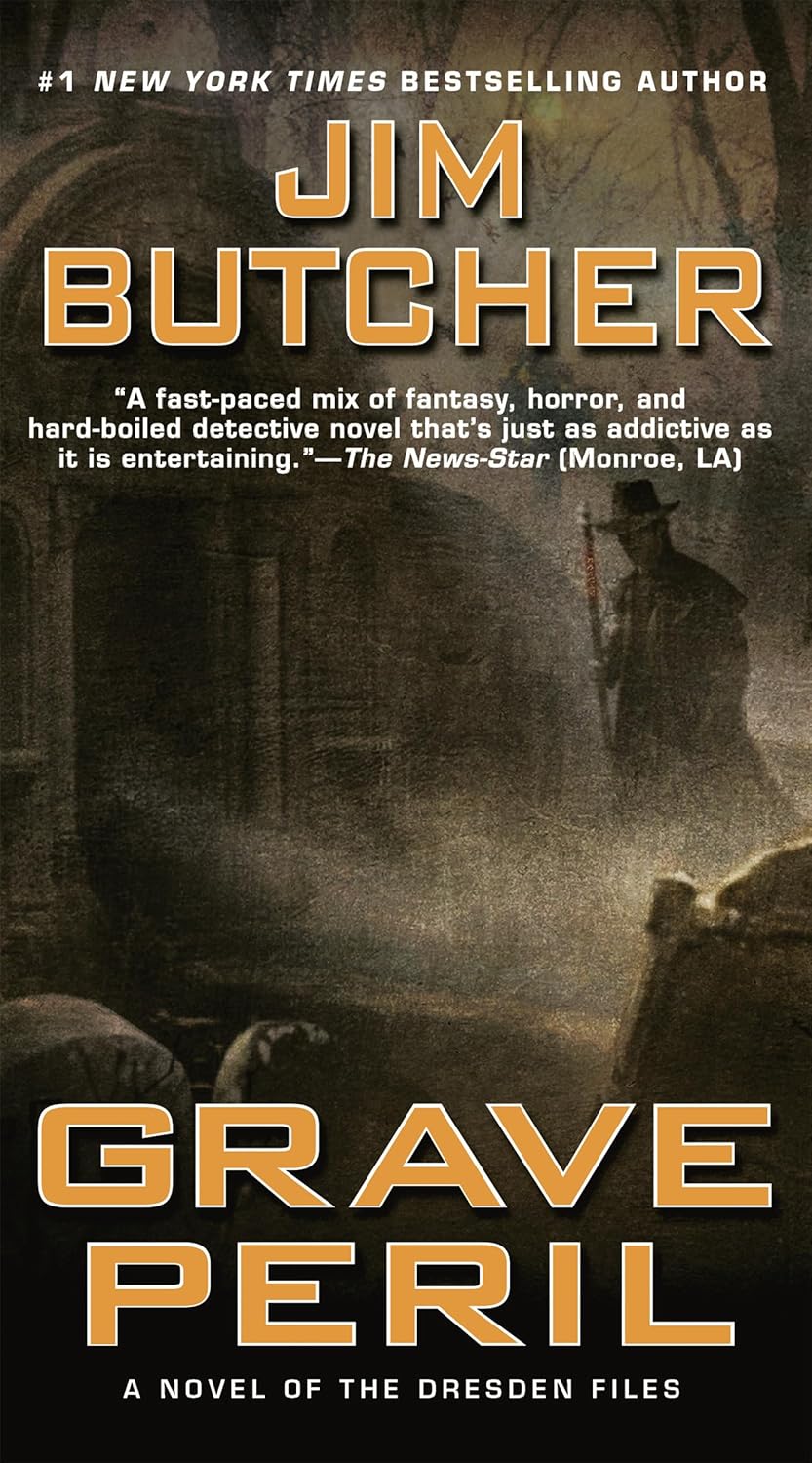
In Chicago, the barrier between the mortal world and the spirit realm is growing dangerously thin. Ghosts are no longer just whispers in the dark; they are a violent, tormented plague upon the city, and their chaos is escalating. For professional wizard Harry Dresden, this is more than just another case. The spectral attacks feel personal, and as he investigates, he discovers a malevolent force deliberately manipulating the restless dead, threatening to unleash an even greater darkness upon his city.
What begins as a ghost hunt quickly spirals into a desperate struggle for survival. A shadowy entity known as the Nightmare is stalking Harry and those he cares about, turning their dreams into hunting grounds. To save them, Harry must navigate a treacherous political landscape of vampire courts, honor ancient bargains with the fae, and forge alliances with holy knights. Every choice carries a devastating price, and this time, the forces aligned against him are not just aiming to kill him - they seek to destroy everyone he loves.
Chicago, a city perpetually cloaked in shadows and the mundane, finds its veil thinning, allowing the spectral and the sinister to bleed through. Harry Dresden, the city's lone professional wizard, finds himself amidst an escalating crisis as agitated ghosts, tormented by a mysterious "Nightmare," begin to wreak havoc. His investigations lead him to Cook County Hospital, where he and Michael Carpenter, a Knight of the Cross wielding the holy sword Amoracchius, confront the malevolent spirit of a long-dead nurse, her lullabies a harbinger of death for innocent newborns. This initial skirmish hints at a deeper, more insidious force at play, one that not only tortures the dead but also threatens to tear at the fabric of reality itself.
The attacks intensify, targeting those connected to a past case where Harry, Michael, and others had faced a dark sorcerer named Leonid Kravos. The Nightmare, a parasitic entity that feeds on fear and steals fragments of the soul, begins to stalk Harry and his allies, even infiltrating their dreams to drain their magical strength. Simultaneously, an ominous invitation arrives: a summons from Bianca St. Claire, a powerful Red Court vampire baroness with a personal vendetta against Harry, to attend a masquerade ball at her opulent mansion. Despite Harry's refusal to allow his girlfriend, reporter Susan Rodriguez, to accompany him into such peril, she is drawn into the unfolding supernatural maelstrom.
As the mystery deepens, Harry uncovers a chilling truth: the Nightmare is not merely a demon but the powerful ghost of Leonid Kravos himself, empowered by ritual suicide and manipulated by a Black Court sorceress named Mavra. Kravos seeks vengeance, and Mavra aims to ignite a war between the vampire Red Court and the White Council of wizards. The stakes rise dramatically when Susan, in her relentless pursuit of a story, becomes entangled in Bianca's deadly game. She is captured, partially turned into a Red Court vampire, her humanity hanging by a thread, her transformation irreversible should she succumb to the vampiric hunger for Harry's blood.
Harry, desperate to save Susan and prevent a full-scale supernatural war, finds himself making a perilous bargain with his faerie godmother, the Leanansidhe, a capricious and dangerous being who always extracts a steep price. Guided by grim necessity, Harry, Michael, and an unexpected ally - Thomas Raith, a White Court vampire with his own complex motivations - embark on a treacherous journey through the Nevernever, the spirit realm. They navigate its shifting landscapes, battling faerie creatures and evading Lea's cunning traps, all while knowing that every step brings them closer to Bianca's stronghold and the inevitable confrontation.
The masquerade ball at Bianca's mansion is a kaleidoscope of danger, a glittering trap laid for Harry and his companions. Amidst the seductive predators of the Red Court, the trio struggles to maintain their cover and locate Susan. The tension culminates in a brutal showdown, where Harry confronts Bianca and her allies. He battles not only the vampires but also the insidious influence of Kravos's ghost, which threatens to consume him. In a desperate act, Harry unleashes the tortured spirits of Bianca's many victims upon her, a raw, uncontrolled burst of power that devastates the mansion and allows for a frantic escape.
Though Harry manages to rescue Susan and Justine, Thomas's girlfriend, the victory is bittersweet and costly. Susan's partial transformation leaves her forever changed, a half-vampire teetering on the edge of a monstrous existence. Recognizing the danger she poses to Harry, she makes the agonizing decision to leave Chicago, rejecting his unspoken proposal, knowing that her love could become his undoing. The events at Bianca's ball shatter the fragile peace between the supernatural factions, plunging the wizarding world and the Red Court into open warfare, a conflict for which Harry Dresden now bears a heavy, personal burden.
What other readers say
Liked
Reviewers generally agree that this third installment marks a significant improvement in the series, often cited as the point where the narrative truly begins to gain momentum. The book is praised for its fast-paced action, engaging prose, and heightened sense of tension, making for an exciting and fun read. Many found the worldbuilding to be more developed, offering deeper insights into the supernatural elements and their intricate workings. The protagonist, Harry Dresden, is seen by some as growing more likable and genuinely striving to do good, even with his flaws. The introduction of new supporting characters, particularly a dedicated knight and a morally ambiguous figure, is widely welcomed, adding depth and delightful interactions to the cast, while existing favorites like Bob continue to provide consistent humor.
Disliked
Despite its strengths, the book draws considerable criticism, primarily concerning the main character's portrayal. Many reviewers express strong discomfort with Harry Dresden's frequent and explicit descriptions of female characters' physical appearance, finding it misogynistic, repetitive, and detracting from the story. His tendency to complain and a perceived unsuitability for his heroic role also frustrate some readers. The plot itself is often described as convoluted, overcrowded with too many subplots, or reliant on convenient resolutions that diminish the sense of peril. Some found the constant cycle of Harry facing near-death situations only to be suddenly re-energized repetitive. Additionally, recurring catchphrases are noted as irritating, and some new supporting characters, while generally positive, are occasionally seen as overly self-righteous. A few reviewers also felt that important background events were vaguely referenced, making them feel as though they had missed a previous installment.
In short
Overall, "Grave Peril" receives a mixed but generally more positive reception than its predecessors, with many reviewers acknowledging its potential and expressing a willingness to continue the series. It is often viewed as a pivotal entry that, despite its faults, propels the overarching narrative forward. This book would likely appeal to readers who enjoy action-packed urban fantasy with a blend of magic, humor, and a flawed but well-meaning protagonist. It is also recommended for those seeking an engaging, easy-to-read adventure, or a lighter read between more demanding fantasy series, especially if they are prepared to overlook some character quirks and occasional plot conveniences. Listeners of audiobooks may also find particular enjoyment due to the acclaimed narration.