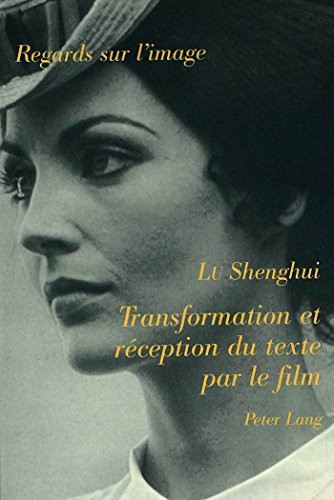
The act of adapting a literary text for the screen is often viewed through the narrow lens of fidelity, a constant weighing of how much the film "betrays" or "honors" its source. Yet, this framework proves to be an impasse, failing to capture the dynamic and complex interplay between two distinct artistic forms. There is a call to move beyond this limiting perspective, to embrace a new theoretical and methodological approach that recognizes adaptation not as mere translation, but as a profound act of "receptional transformation."
This fresh problematic delves into the heart of cinematic adaptation within a general semiotic framework, one that bridges cultural diversities and the various modes of expression, be they novel, play, or film. The inquiry unfolds across three fundamental questions: What precisely constitutes adaptation? How does this transformation manifest at the semio-narratological level? And, crucially, why do these transformations occur?
To unravel these complexities, a carefully constructed corpus of five films serves as the foundation for rigorous textual analysis. These works, chosen for the rich diversity of their origins and sources, span cultures from China, Japan, France, Russia, England, and the USA. Four are adaptations of novels: Akira Kurosawa's "The Idiot" from Dostoevsky, Zhang Yimou's "Red Sorghum" from Mo Yan, Robert Bresson's "Diary of a Country Priest" from Bernanos, and Jacques Bertuccelli's "Paulina 1880" from Jouve. Orson Welles's "Macbeth," drawn from Shakespeare's play, completes this insightful selection.
The theoretical approach posits adaptation as a receptional transformation, where the semiotic passage between text and film inevitably instigates structural changes. It acknowledges that the subjectivity inherent in the enunciation process profoundly influences spatio-temporal modifications. However, the filmic text is not merely a derivative; it reconstitutes itself through the active cooperation of a plural reader, engaging pragmatics in a paradoxical process of both writing and rewriting.
The notion of fidelity, therefore, loses its singular grip, for transformation is not about seeking simple equivalences. Instead, it involves a deeper exploration of the original text, a re-reading that unearths its fundamental "textemes" - those irreducible units of meaning and form that are then re-articulated within the cinematic language. This process of transformation becomes a dynamic operator, fostering dialogues not only between the source text and the adapted film, but also among the diverse speaking subjects within the broader textual landscape.
Ultimately, the goal is to understand adaptation as an active, creative process where the film, far from being a passive echo, engages in a vital dialogue with its literary predecessor. It is a reinterpretation, a re-imagining born from new perspectives and cinematic possibilities, offering an enriching experience that stands on its own while resonating with the echoes of its origin. The focus shifts from measuring likeness to appreciating the profound and often illuminating differences that emerge when a story transitions from one medium to another, shaped by the distinct visions of its creators and the diverse horizons of its audience.