
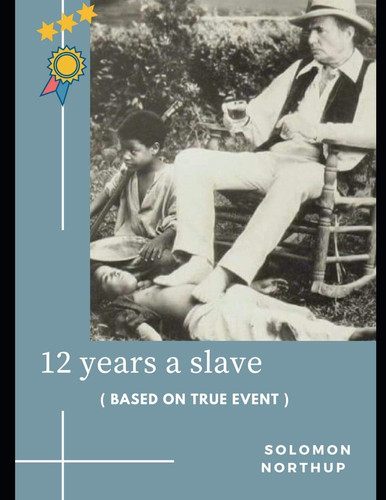
Twelve Years a Slave : With Original Illustrations
8.46 / 10 127K ratings
- Language
- English
- Published
- 2021
- Publisher
- Independently Published
- Pages
- 245
- ISBN
- 9798734589663
Solomon Northup, a free Black man living in New York, was a respected husband, father, and musician in 1841. Lured by the promise of work as a violinist, he traveled to Washington D.C., where he was drugged, kidnapped, and sold into slavery in the Deep South.
His firsthand account details the harrowing twelve years he spent in bondage on Louisiana plantations, enduring physical and psychological abuse, the constant threat of violence, and the profound struggle to maintain his identity and hope for freedom. This narrative stands as a crucial historical document, exposing the brutal realities of slavery and the systemic injustices faced by free Black individuals in antebellum America. It offers an unflinching look at the dehumanizing institution, making it an essential testament to resilience and the fight for human dignity.
His firsthand account details the harrowing twelve years he spent in bondage on Louisiana plantations, enduring physical and psychological abuse, the constant threat of violence, and the profound struggle to maintain his identity and hope for freedom. This narrative stands as a crucial historical document, exposing the brutal realities of slavery and the systemic injustices faced by free Black individuals in antebellum America. It offers an unflinching look at the dehumanizing institution, making it an essential testament to resilience and the fight for human dignity.
Subjects
- Reference
- Literature & Fiction
- Genre Fiction
- Subjects
- Literary
- Self-Help
- Health, Fitness & Dieting
- Action & Adventure
- Historical
- Self Service
- History
- Anthologies
- Biographies & Memoirs
- Leaders & Notable People
- Military
- Arborist Merchandising Root
- Creativity
- Children's Books
- Growing Up & Facts of Life
- Science & Math
- Education & Teaching
- Schools & Teaching
- Romance
- Memoirs
- Political
- Law
- United States
- Americas
- Essays
- Medical Books
- English & College Success
- English
- Essays & Correspondence
- World
- Education Theory
- Politics & Social Sciences
- Philosophy
- Kidnapping
- Specialty Boutique
- New, Used & Rental Textbooks
- Community & Culture
- Travelers & Explorers
- Architecture
- Social Sciences
- Fiction
- Biography & Autobiography
- Juvenile Fiction
- Biographies
- General Interests & Hobbies
- Arts & Literature
- Authors
- Classics
- Expeditions & Discoveries
- Politics & Government
- Psychology & Counseling
- Education
- Humorous
- Literary Collections
- Fiction, general
- Sociology
- Psychology
- African Americans
- North America
- Africa
- History & Criticism
- Race Relations
- Biography
- True Crime
- Social Science
- Biographical
- Administrative Law
- Regional U.S
- English as a Second Language
- Ancient & Medieval Literature
- Ancient & Classical
- Words, Language & Grammar
- Difficult Discussions
- Political Science
- Foreign Language Study
- American History
- 19th century
- South
- Mystery & Detective
- Anthologies (multiple authors)
- Juvenile Nonfiction
- Cultural, Ethnic & Regional
- Personal Memoirs
- Ethnic Studies
- Specific Topics
- Movements & Periods
- American
- Literary Criticism
- Drama
- 20th Century
- Modern
- Letters
- State & Local
- South (AL, AR, FL, GA, KY, LA, MS, NC, SC, TN, VA, WV)
- BIOGRAPHY
- Anthropology
- Civil Rights
- Slavery
- Adventurers & Explorers
- Rich & Famous
- UNITED STATES_HISTORY
- Large type books
- AFRICAN AMERICANS_BIOGRAPHY
- World Literature
- African American & Black
- African American & Black Studies
- Human Rights
- Regional Studies
- History and criticism
- Survival
- Black & African American
- Histoire
- Cultural Heritage
- Literary Figures
- African
- Civil War Period (1850-1877)
- 19th Century
- Americas (North, Central, South, West Indies)
- Discrimination
- Social History
- Philosophers
- Social Activists
- Historia
- SOCIAL SCIENCE
- HISTORY
- New York Times bestseller
- Native American
- Constitutional Law
- Ancient
- Historiography
- Civil Law
- Artists, Architects, Photographers
- Journaling
- Amish & Mennonite
- BIOGRAPHY & AUTOBIOGRAPHY
- History of the Americas
- Minority Studies
- Black Studies (Global)
- Indigenous
- Lawyers & Judges
- Personal narratives
- SLAVERY_UNITED STATES
- United states, history
- Personal memoirs
- Criminals & Outlaws
- Revolutions & Wars of Independence
- African American
- African American Studies
- Cultural & Ethnic Studies
Original edition
Twelve Years a Slave-Narrative of Solomon Northup: A Citizen of New-York, Kidnapped in Washington City in 1841, and Rescued in 1853, From a Cotton Plantation Near the Red River, in LouisianaOriginally published in 1853 English CreateSpace Independent Publishing Platform
Other editions (982)
Listen to the summary Narrated summary
In the quiet serenity of Saratoga, New York, Solomon Northup, a free man, lived a life rich with the melody of his violin and the laughter of his wife and three beloved children. He was a skilled carpenter and a respected member of his community, his days marked by honest labor and domestic contentment. Yet, this tranquil existence was shattered when two seemingly congenial white men, Merrill Brown and Abram Hamilton, approached him with an enticing offer: a lucrative engagement for his musical talents with their traveling circus in Washington, D.C. Blinded by the promise of good wages, Solomon accepted, unaware of the sinister plot unfolding.
Upon arriving in Washington, D.C., the men plied Solomon with drink, and he awoke to a nightmare: drugged, stripped of his papers, and bound in chains within a dark, cold cell. His fervent declarations of freedom were met with brutal beatings by the slave trader, James H. Burch, who insisted he was a runaway named "Platt." Along with other terrified captives, Solomon was shipped south, first to Richmond, then by steamboat to the notorious slave market in New Orleans. Here, under the watchful eye of trader Theophilus Freeman, his identity was further stripped away, and he was sold into the unforgiving world of Louisiana plantations.
His first master in Louisiana was William Ford, a man of surprising kindness for a slaveholder, whose moral compass seemed twisted by the institution he inherited. Solomon, now known as Platt, impressed Ford with his ingenuity, devising a system of rafts to transport lumber more efficiently, greatly increasing the plantation's profits. Despite this valuable contribution, Ford's financial woes led to Solomon's sale to John Tibeats, a cruel and quick-tempered carpenter. The animosity between them quickly escalated, culminating in a harrowing incident where Tibeats, enraged by Solomon's defiance, attempted to lynch him. Solomon dangled precariously, saved only by the intervention of an overseer and later by Ford himself, who, unable to reconcile his debt with Tibeats, sold Solomon to the brutal Edwin Epps.
The next decade of Solomon's life was a descent into a deeper hell under Edwin Epps, a master consumed by drink and a sadistic delight in tormenting his slaves. Each day was a relentless struggle in the cotton fields, under the merciless sun, with the constant threat of Epps's whip and arbitrary punishments. The most tragic figure on Epps's plantation was Patsey, a young woman of extraordinary beauty and skill, who endured unspeakable abuse and repeated rapes from Epps, fueling the jealous wrath of his wife, Mistress Epps. Solomon often found himself forced to participate in Patsey's torment, a command that tore at his soul. He learned to hide his literacy and intelligence, understanding that any sign of his former life could be a death sentence.
Hope, though flickering, never entirely died. Solomon made several perilous attempts to communicate with the outside world, once entrusting a letter to a seemingly sympathetic white laborer named Armsby, who cruelly betrayed him. His spirit was nearly broken, but then came Samuel Bass, a Canadian carpenter hired for work on the Epps plantation. Bass, an outspoken abolitionist, listened with growing conviction to Solomon's incredible story of kidnapping and unlawful enslavement. Risking his own safety, Bass agreed to mail a letter to Solomon's contacts in New York, a desperate plea for freedom that carried the weight of twelve stolen years.
The letter, against all odds, reached its destination. In Saratoga, Solomon's wife and friends, including the lawyer Henry B. Northup, set the wheels of justice in motion. An official state agent was dispatched to Louisiana. The day of reckoning arrived when two men, one of them Henry B. Northup, appeared at the Epps plantation. A tense confrontation ensued, with Epps vehemently denying Solomon's claims. But the evidence was undeniable. Solomon Northup, after twelve long years of bondage, was finally recognized as a free man. He bid a heartfelt farewell to Patsey, whose fate remained uncertain, and rode away from the nightmare that had consumed half his adult life. He returned home to the joyful, tearful embrace of his family - his wife, his grown daughters, and a grandson he had never known. Though he pursued legal action against his kidnappers, the complexities of the law and racial prejudice prevented him from achieving full justice. His narrative, however, became a powerful testament to the horrors of slavery and the enduring human spirit.
Upon arriving in Washington, D.C., the men plied Solomon with drink, and he awoke to a nightmare: drugged, stripped of his papers, and bound in chains within a dark, cold cell. His fervent declarations of freedom were met with brutal beatings by the slave trader, James H. Burch, who insisted he was a runaway named "Platt." Along with other terrified captives, Solomon was shipped south, first to Richmond, then by steamboat to the notorious slave market in New Orleans. Here, under the watchful eye of trader Theophilus Freeman, his identity was further stripped away, and he was sold into the unforgiving world of Louisiana plantations.
His first master in Louisiana was William Ford, a man of surprising kindness for a slaveholder, whose moral compass seemed twisted by the institution he inherited. Solomon, now known as Platt, impressed Ford with his ingenuity, devising a system of rafts to transport lumber more efficiently, greatly increasing the plantation's profits. Despite this valuable contribution, Ford's financial woes led to Solomon's sale to John Tibeats, a cruel and quick-tempered carpenter. The animosity between them quickly escalated, culminating in a harrowing incident where Tibeats, enraged by Solomon's defiance, attempted to lynch him. Solomon dangled precariously, saved only by the intervention of an overseer and later by Ford himself, who, unable to reconcile his debt with Tibeats, sold Solomon to the brutal Edwin Epps.
The next decade of Solomon's life was a descent into a deeper hell under Edwin Epps, a master consumed by drink and a sadistic delight in tormenting his slaves. Each day was a relentless struggle in the cotton fields, under the merciless sun, with the constant threat of Epps's whip and arbitrary punishments. The most tragic figure on Epps's plantation was Patsey, a young woman of extraordinary beauty and skill, who endured unspeakable abuse and repeated rapes from Epps, fueling the jealous wrath of his wife, Mistress Epps. Solomon often found himself forced to participate in Patsey's torment, a command that tore at his soul. He learned to hide his literacy and intelligence, understanding that any sign of his former life could be a death sentence.
Hope, though flickering, never entirely died. Solomon made several perilous attempts to communicate with the outside world, once entrusting a letter to a seemingly sympathetic white laborer named Armsby, who cruelly betrayed him. His spirit was nearly broken, but then came Samuel Bass, a Canadian carpenter hired for work on the Epps plantation. Bass, an outspoken abolitionist, listened with growing conviction to Solomon's incredible story of kidnapping and unlawful enslavement. Risking his own safety, Bass agreed to mail a letter to Solomon's contacts in New York, a desperate plea for freedom that carried the weight of twelve stolen years.
The letter, against all odds, reached its destination. In Saratoga, Solomon's wife and friends, including the lawyer Henry B. Northup, set the wheels of justice in motion. An official state agent was dispatched to Louisiana. The day of reckoning arrived when two men, one of them Henry B. Northup, appeared at the Epps plantation. A tense confrontation ensued, with Epps vehemently denying Solomon's claims. But the evidence was undeniable. Solomon Northup, after twelve long years of bondage, was finally recognized as a free man. He bid a heartfelt farewell to Patsey, whose fate remained uncertain, and rode away from the nightmare that had consumed half his adult life. He returned home to the joyful, tearful embrace of his family - his wife, his grown daughters, and a grandson he had never known. Though he pursued legal action against his kidnappers, the complexities of the law and racial prejudice prevented him from achieving full justice. His narrative, however, became a powerful testament to the horrors of slavery and the enduring human spirit.
What other readers say
Liked
The reviews overwhelmingly praise Twelve Years a Slave as a powerful, important, and essential firsthand account of American slavery. Readers found Solomon Northup's autobiography to be chilling, heartbreaking, and gut-wrenching, offering an unflinching and candid look into a dark chapter of history. Many highlight its unique perspective as a narrative from a free man kidnapped into bondage, providing a level of detail and authenticity that sheds new light on the subject. The writing is frequently described as eloquent, readable, and gripping, making the horrific experiences vivid and impactful. Reviewers commend Northup's courage and determination, finding his story both educational and inspiring, and many believe it should be mandatory reading for its historical significance and raw power.
Disliked
Despite its importance, some reviewers noted certain aspects that could make the reading experience challenging. The content itself is described as distressing, sad, and disturbing, requiring readers to take breaks. A few found the narrative style, typical of the 19th century, occasionally dry, stagnant, or one-note, particularly when detailing cultivation methods, which some felt detracted from the human story. There were observations that Northup's perspective, as a free man suddenly enslaved, could at times feel distant or almost anthropological, leading to less emotional immediacy compared to other slave narratives. Additionally, one reviewer expressed doubts about the veracity of some narrative details and found the ending somewhat rushed.
In short
Ultimately, the consensus is that this book is a profoundly significant and highly recommended read. It offers an invaluable, verifiable historical document that exposes the brutal realities of slavery and the psychological toll it inflicted, even if some found its emotional impact different from other narratives. This book is particularly suited for readers seeking a detailed, historically accurate, and straightforward account of slavery from a unique firsthand perspective. It is recommended for anyone wishing to deepen their understanding of this period in American history, appreciate the resilience of those who endured it, and confront the difficult truths it presents.
No reviews yet. Be the first.