
V for Vendetta
by Alan Moore
8.52 / 10 333K ratings
Classic- Language
- English
- Published
- 2025
- Publisher
- Dc Comics
- Pages
- 368
- ISBN
- 9781799503132
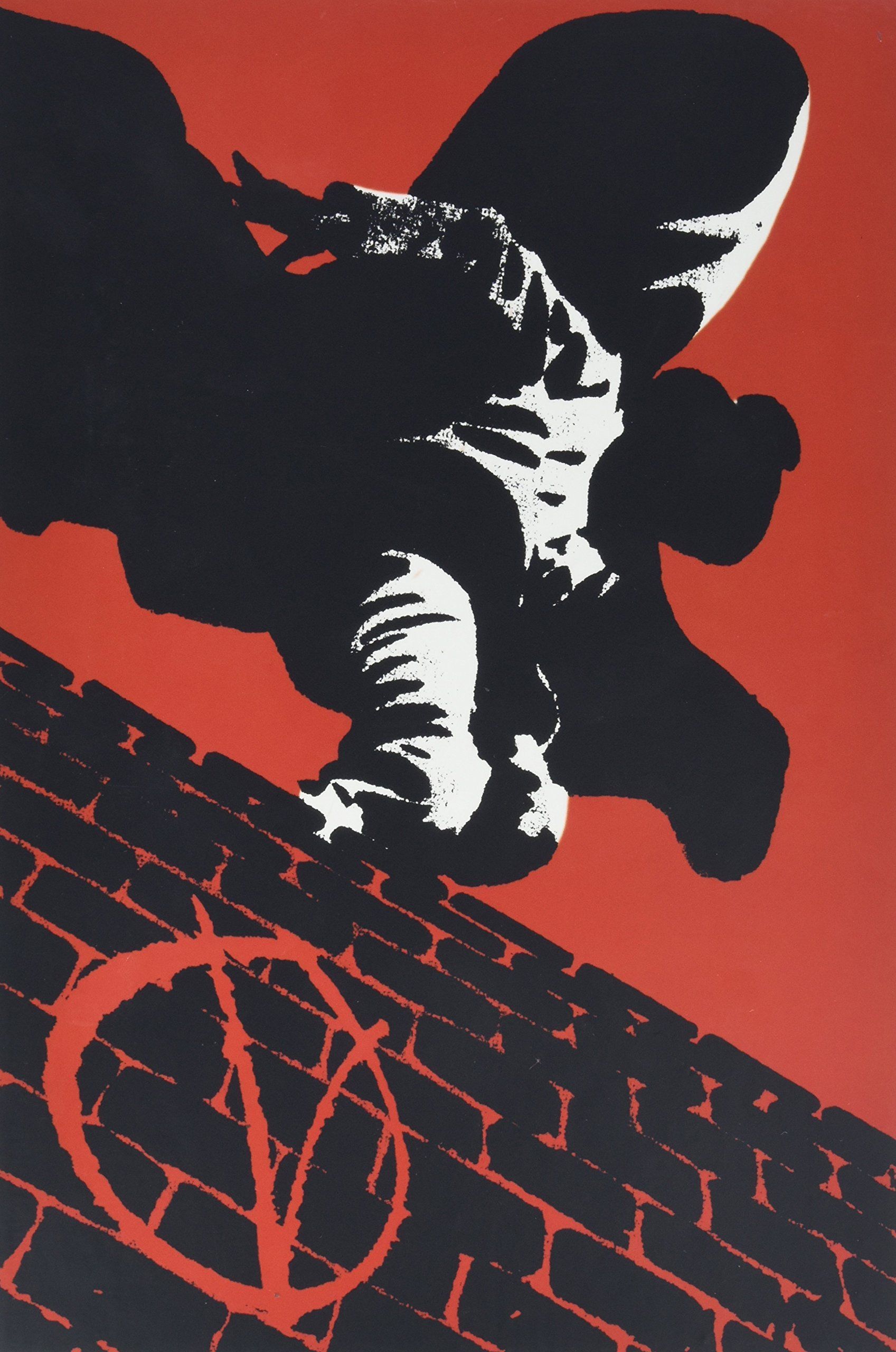
In a near-future Britain that has fallen to a fascist regime after a devastating war, all dissent is silenced and individuality is a crime. The government, known as Norsefire, rules through surveillance, propaganda, and fear, having eliminated anyone it deemed undesirable. From the shadows of this police state emerges a lone figure of rebellion: a charismatic, eloquent, and dangerously volatile man known only as V. Wearing a Guy Fawkes mask, he embarks on a theatrical and violent campaign to dismantle the apparatus of oppression and awaken the people from their controlled slumber.
V's mission of vengeance and revolution forces society to confront uncomfortable questions about the line between freedom fighter and terrorist. As he systematically targets the state's leaders, he draws a young woman named Evey Hammond into his world, challenging her own beliefs about justice and liberation. This graphic novel is a complex exploration of power, identity, and the potent idea that symbols can be more resilient than governments. It presents a stark vision of the future that examines the true cost of security and what it means to fight for an idea when all else is lost.
V's mission of vengeance and revolution forces society to confront uncomfortable questions about the line between freedom fighter and terrorist. As he systematically targets the state's leaders, he draws a young woman named Evey Hammond into his world, challenging her own beliefs about justice and liberation. This graphic novel is a complex exploration of power, identity, and the potent idea that symbols can be more resilient than governments. It presents a stark vision of the future that examines the true cost of security and what it means to fight for an idea when all else is lost.
Original edition
V Wie VendettaOriginally published in 1988 German Carlsen Verlag GmbH
Other editions (125)



Listen to the summary Narrated summary
The air hangs heavy in a dystopian England, a fractured reflection of the late 1990s, where the fascist Norsefire regime has seized absolute control following a global nuclear catastrophe. The government, led by the omnipresent "Leader" Adam Susan, maintains its iron grip through pervasive surveillance, propaganda broadcast by the "Mouth" (state television), and the ruthless "Fingermen" (secret police). Freedom is a forgotten word, replaced by a suffocating "order" where dissent is met with extermination in resettlement camps.
On a cold November 5th, a sixteen-year-old girl named Evey Hammond, desperate and alone, finds herself targeted by the Fingermen. Before they can enact their cruel intentions, a mysterious figure emerges from the shadows. Clad in a Guy Fawkes mask, a wide-brimmed hat, and a dark cloak, this enigmatic anarchist, known only as V, rescues her. He then leads her to witness his spectacular act of defiance: the bombing of the Old Bailey, a symbol of the corrupt justice system. This explosive beginning marks Evey's unwilling entry into V's elaborate vendetta against the totalitarian state.
V takes Evey to his subterranean sanctuary, the Shadow Gallery, a hidden haven filled with forbidden art, literature, and music – remnants of the culture Norsefire sought to erase. Here, he reveals his grand design: to dismantle the fascist government piece by piece, not merely through violence, but by inspiring the populace to reclaim their freedom and embrace anarchy. He systematically targets key figures within the Norsefire regime, those who were once his torturers and captors at the Larkhill resettlement camp, where he was subjected to horrific experiments that transformed him into the being he is now.
As V orchestrates a series of theatrical acts of rebellion, from assassinating corrupt officials like Lewis Prothero, the former voice of the state, to hijacking the government's propaganda broadcasts to deliver his own revolutionary messages, Evey remains a bewildered and often frightened observer. She grapples with V's extreme methods, questioning whether his path of destruction can truly lead to a better world. Her own past, marked by the loss of her parents to the regime's brutality, fuels a simmering resentment but also a deep-seated fear.
V, recognizing Evey's potential, decides she must undergo her own transformation. He orchestrates her brutal, simulated imprisonment, making her believe she has been captured and tortured by Norsefire. Stripped of her identity and forced to confront her deepest fears, Evey discovers a note from a former prisoner named Valerie, a lesbian actress who bravely faced her execution without compromise. Valerie's story of integrity and unwavering selfhood becomes a profound catalyst for Evey. This harrowing experience, though a lie, shatters Evey's illusions and frees her from fear, allowing her to understand V's philosophy of radical individual liberty.
Meanwhile, Inspector Eric Finch, head of Norsefire's police force, the "Nose," diligently investigates V's escalating campaign. Through his investigation, Finch uncovers the horrific truth behind Larkhill, the government's complicity in biological warfare, and the true identity of V as a survivor of those experiments. The more he delves, the more disillusioned he becomes with the regime he serves, slowly realizing the extent of its depravity and corruption.
As Guy Fawkes Night approaches once more, V distributes thousands of his iconic masks across the nation, igniting widespread masked dissent and riots among the populace. He prepares for his final, most audacious act: the destruction of the Houses of Parliament, the ultimate symbol of the oppressive state. In a poignant moment, V reveals his vulnerability to Evey, entrusting her with the decision to trigger the explosives.
After a final confrontation where he faces down the head of the secret police, Peter Creedy, V, mortally wounded, returns to the Shadow Gallery. He dies in Evey's arms, having completed his vendetta and passed on his legacy. Evey, transformed and empowered, dons V's mask, becoming the new V. She places V's body on a train laden with explosives, sending it hurtling towards Parliament, fulfilling his ultimate goal of bringing down the tyrannical government. With the old order crumbling, Evey stands ready to guide the nation towards a future of true liberty and self-governance, echoing V's dream of anarchy as the ultimate freedom.
On a cold November 5th, a sixteen-year-old girl named Evey Hammond, desperate and alone, finds herself targeted by the Fingermen. Before they can enact their cruel intentions, a mysterious figure emerges from the shadows. Clad in a Guy Fawkes mask, a wide-brimmed hat, and a dark cloak, this enigmatic anarchist, known only as V, rescues her. He then leads her to witness his spectacular act of defiance: the bombing of the Old Bailey, a symbol of the corrupt justice system. This explosive beginning marks Evey's unwilling entry into V's elaborate vendetta against the totalitarian state.
V takes Evey to his subterranean sanctuary, the Shadow Gallery, a hidden haven filled with forbidden art, literature, and music – remnants of the culture Norsefire sought to erase. Here, he reveals his grand design: to dismantle the fascist government piece by piece, not merely through violence, but by inspiring the populace to reclaim their freedom and embrace anarchy. He systematically targets key figures within the Norsefire regime, those who were once his torturers and captors at the Larkhill resettlement camp, where he was subjected to horrific experiments that transformed him into the being he is now.
As V orchestrates a series of theatrical acts of rebellion, from assassinating corrupt officials like Lewis Prothero, the former voice of the state, to hijacking the government's propaganda broadcasts to deliver his own revolutionary messages, Evey remains a bewildered and often frightened observer. She grapples with V's extreme methods, questioning whether his path of destruction can truly lead to a better world. Her own past, marked by the loss of her parents to the regime's brutality, fuels a simmering resentment but also a deep-seated fear.
V, recognizing Evey's potential, decides she must undergo her own transformation. He orchestrates her brutal, simulated imprisonment, making her believe she has been captured and tortured by Norsefire. Stripped of her identity and forced to confront her deepest fears, Evey discovers a note from a former prisoner named Valerie, a lesbian actress who bravely faced her execution without compromise. Valerie's story of integrity and unwavering selfhood becomes a profound catalyst for Evey. This harrowing experience, though a lie, shatters Evey's illusions and frees her from fear, allowing her to understand V's philosophy of radical individual liberty.
Meanwhile, Inspector Eric Finch, head of Norsefire's police force, the "Nose," diligently investigates V's escalating campaign. Through his investigation, Finch uncovers the horrific truth behind Larkhill, the government's complicity in biological warfare, and the true identity of V as a survivor of those experiments. The more he delves, the more disillusioned he becomes with the regime he serves, slowly realizing the extent of its depravity and corruption.
As Guy Fawkes Night approaches once more, V distributes thousands of his iconic masks across the nation, igniting widespread masked dissent and riots among the populace. He prepares for his final, most audacious act: the destruction of the Houses of Parliament, the ultimate symbol of the oppressive state. In a poignant moment, V reveals his vulnerability to Evey, entrusting her with the decision to trigger the explosives.
After a final confrontation where he faces down the head of the secret police, Peter Creedy, V, mortally wounded, returns to the Shadow Gallery. He dies in Evey's arms, having completed his vendetta and passed on his legacy. Evey, transformed and empowered, dons V's mask, becoming the new V. She places V's body on a train laden with explosives, sending it hurtling towards Parliament, fulfilling his ultimate goal of bringing down the tyrannical government. With the old order crumbling, Evey stands ready to guide the nation towards a future of true liberty and self-governance, echoing V's dream of anarchy as the ultimate freedom.
What other readers say
Liked
V for Vendetta is widely lauded as a powerful and enduring graphic novel, frequently cited as a classic and a masterpiece of the medium. Reviewers consistently praise its deep, sophisticated writing and its strong political and philosophical underpinnings, often drawing comparisons to seminal dystopian works like George Orwell's 1984. The character of V is celebrated as a compelling antihero, a complex and memorable figure who transcends mere personhood to embody an idea of resistance. Alan Moore’s prose is described as beautiful and compelling, enriched by literary allusions that create a unique cultural depth. David Lloyd's artwork also receives commendation for its impressive, ingenious use of visual elements. Many reviewers highlight the book's timeless relevance, noting its prescient warnings about surveillance, fascism, and media manipulation, and its lasting cultural impact, particularly how V's mask has become a symbol for real-world protest movements.
Disliked
However, the graphic novel is not without its criticisms. A common point of contention is its comparison to the film adaptation, with several reviewers finding the movie superior in conveying the oppressive atmosphere, enhancing character depictions, and delivering a more impactful climax. Some readers found the plot to be convoluted, repetitive, and at times slow-paced due to extensive dialogue and monologues, which could make it difficult to follow. Characterization also drew criticism, with V sometimes perceived more as a political ideology or mouthpiece than a fully fleshed-out individual, and Evey often described as a weak, naive, or unimpactful character. The overtly political nature of the book was a turn-off for some, who felt it was preachy, demagogic, or presented a naive view of anarchism. World-building elements, such as the rise of fascism in Britain or the state of a post-apocalyptic society, were occasionally deemed unbelievable or inconsistent. Specific criticisms of the artwork included issues with clarity in darker panels or in distinguishing character faces.
In short
Overall, V for Vendetta is widely considered an important and thought-provoking work, despite its divisive elements. It is highly recommended for readers who appreciate dystopian fiction and stories that delve into political and philosophical themes, challenging conventional notions of government, power, and freedom. Fans of Alan Moore's other works, such as Watchmen, and those who enjoy graphic novels that tackle serious, complex subjects are likely to find this a rewarding read. While some may prefer the film, the graphic novel offers a deeper, darker, and more intricate exploration of its central ideas, making it essential for those seeking a profound and intellectually stimulating experience.
No reviews yet. Be the first.