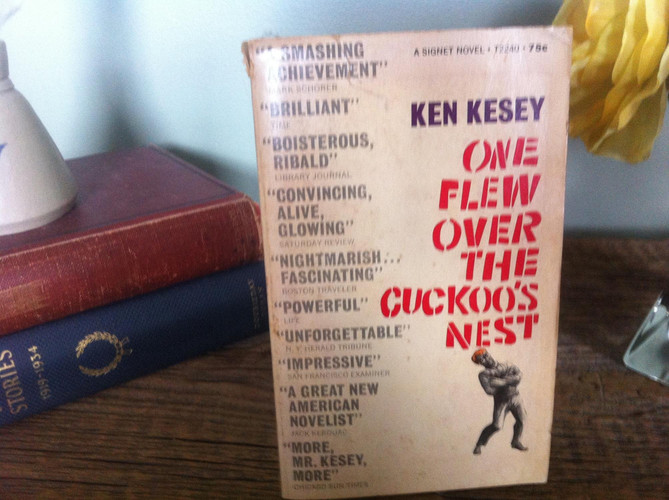
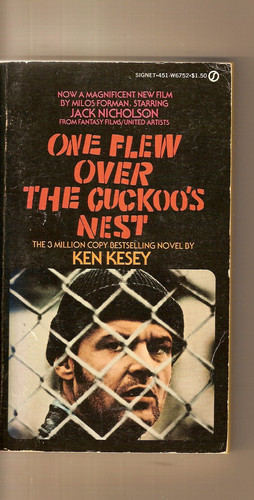
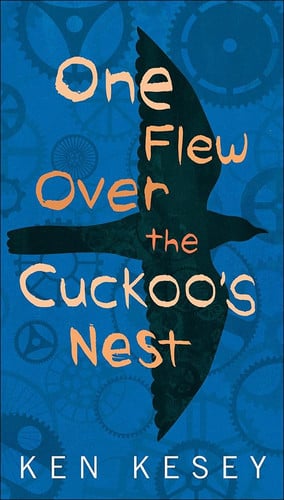
They call me Chief Broom, though I am anything but. For years, I have been a ghost in this place, a big, deaf-and-dumb Indian, watching the machines of the ward grind on, spitting out their fog that creeps into your mind and makes you forget who you are. The Big Nurse, she runs it all, her smile like a clip that holds things in place, her voice a soothing whir that masks the steel beneath. She has her Acutes and her Chronics, and she keeps us all locked into her schedule, her routines, her cruel little games that twist men into docile things. We are all afraid of her, of the shock shop, of the black machines that hum beneath the floor, waiting to fix anything that steps out of line.
Then he arrived, a man named Randle Patrick McMurphy, smelling of the outside, of whiskey and freedom. He was no quiet man, this McMurphy, with his boisterous laugh and his scarred hands. He'd faked being crazy to get out of the work farm, thinking this ward would be easy living, but he hadn't reckoned on the Big Nurse. From the moment he shook my hand, big and strong, a little spark ignited in the fog that had held me for so long. He saw past my act, I think, or maybe he just didn't care. He was a gambler, a brawler, and he made a bet that he could make the Big Nurse lose her cool.
He chipped away at her carefully constructed order, first with small acts of defiance, like singing in the showers or refusing his medication. He tried to get the men to watch the World Series on TV, even though it wasn't on the schedule. When the Big Nurse wouldn't turn it on, he sat there anyway, watching a blank screen, and one by one, the other men joined him, until we were all staring at nothing, a silent protest that spoke volumes. The Big Nurse, she raged inside, but she held her composure. McMurphy won his bet, but he learned a hard truth: unlike the others, he wasn't voluntarily committed. He was stuck here, at her mercy, and he started to pull back, to follow the rules, fearing he might never get out.
But it was too late. He had already opened something in us, something that had been buried under years of the Big Nurse's control and our own fear. When McMurphy began to conform, Cheswick, one of the more outspoken Acutes, drowned in the pool, a possible suicide, and the guilt gnawed at McMurphy. He punched through the glass of the nurses' station, a clear sign that the fight wasn't over. He arranged a fishing trip, a wild, improbable venture into the outside world for ten of us. Out on the ocean, with the sun on our faces and the salt spray in the air, we felt like men again, laughing and shouting, fishing like we were free.
The freedom, however, was fleeting. McMurphy, in an act of kindness and rebellion, snuck two prostitutes onto the ward one night, along with some liquor, for a party. Billy Bibbit, a young man with a crippling stutter and a domineering mother, finally shed his virginity with one of the girls. It was a moment of pure, unadulterated joy and defiance. But the morning came, and the Big Nurse found the chaos. She threatened to tell Billy's mother, and the fear in his eyes was terrible to see. He broke, his stutter returning worse than ever, and then, in a moment of despair, he took his own life, slitting his throat.
The sight of Billy's blood, and the Big Nurse's cruel satisfaction, snapped something in McMurphy. He lunged at her, his hands around her throat, ripping open her dress, trying to choke the life out of the machine that had destroyed us all. The orderlies pulled him off, but the damage was done. The Big Nurse's tyrannical power over the ward was broken, her composure shattered, her chest exposed for all to see.
They took McMurphy away. For days, the ward buzzed with whispers, with a new kind of silence. Then, one night, they brought him back. He was different, his eyes vacant, his body limp and unmoving. They had given him a lobotomy, turning the vibrant, rebellious McMurphy into a vegetable. He was a husk, a monument to the Big Nurse's victory. I looked at him, at what they had done, and I knew what I had to do. I couldn't let them keep him here, a symbol of their power, a defeated god.
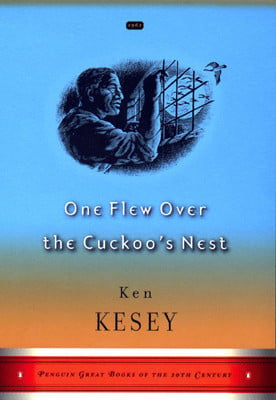
Under the cover of darkness, I smothered him with a pillow. It was an act of mercy, a release. With McMurphy finally free, truly free, I felt a strength I hadn't known in decades. I broke through the mesh screen of the window, a barrier that had held me captive for so long, and I ran. I ran out into the night, leaving the humming machines and the creeping fog behind, carrying the spirit of McMurphy with me, out into the vast, open country.