
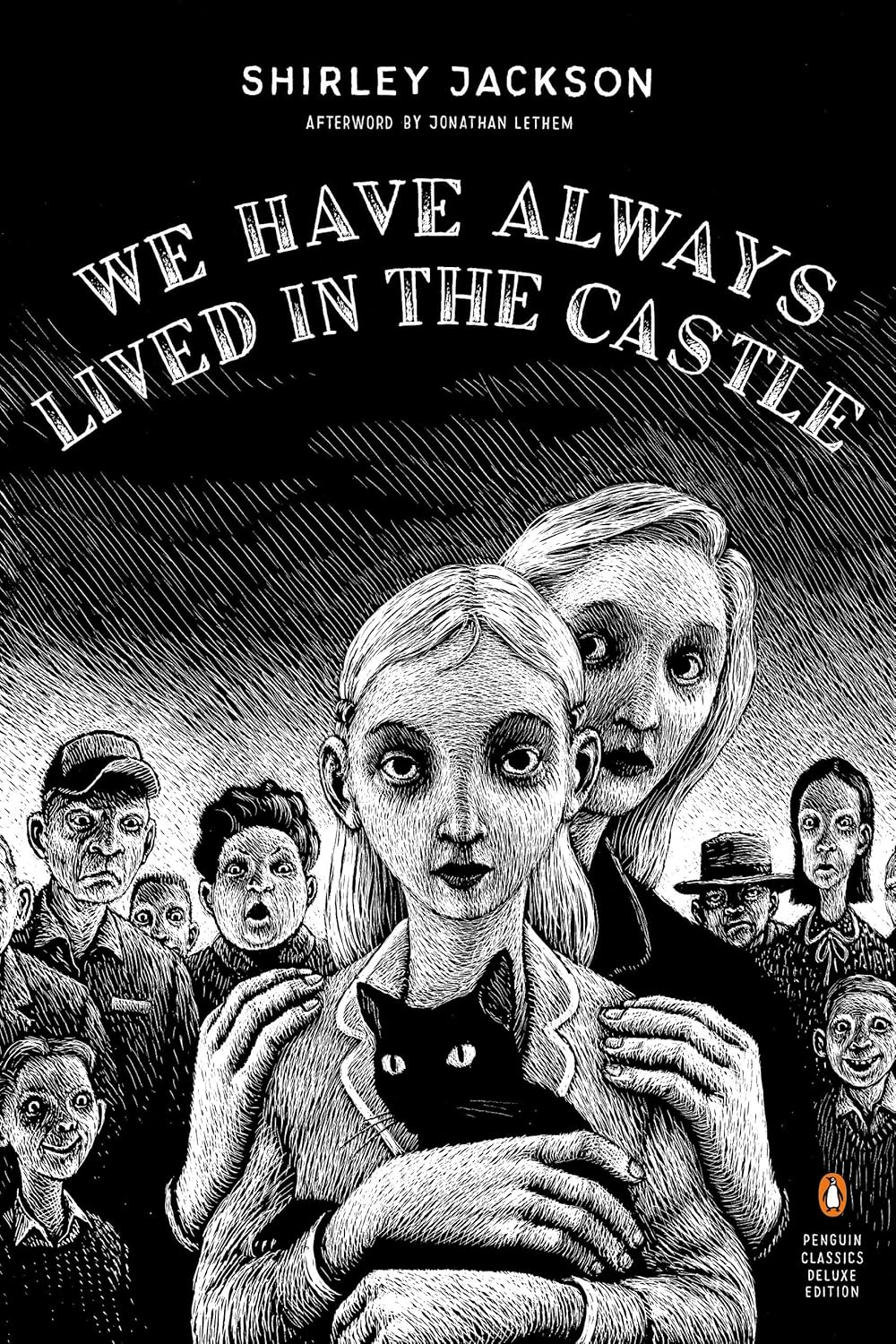
We Have Always Lived in the Castle
7.8 / 10 324K ratings
- Language
- English
- Published
- 2021
- Publisher
- Penguin Books, Limited
- Pages
- 152
- ISBN
- 9780143139973
Mary Katherine "Merricat" Blackwood lives on the family estate with her sister, Constance, and their ailing Uncle Julian. Six years ago, a family tragedy left the three of them survivors, isolated from the hostile nearby village. They have created a world of their own, governed by routine, superstition, and a deep-seated distrust of outsiders. Constance, who has not left the property since the incident, tends to her garden, while Merricat acts as their guardian, making tense weekly trips into town for supplies and protecting their home with buried charms and private rules.
This fragile, secluded existence is threatened by the arrival of their cousin Charles, who brings with him the unwelcome influence of the outside world and a greedy interest in the family fortune. His presence disrupts the sisters' carefully constructed reality, awakening long-buried secrets and challenging the very foundation of their life. The novel delves into the minds of its characters, exploring the unsettling effects of trauma, paranoia, and the strange, fierce love that binds the remaining Blackwoods together as they defend their castle against the world.
This fragile, secluded existence is threatened by the arrival of their cousin Charles, who brings with him the unwelcome influence of the outside world and a greedy interest in the family fortune. His presence disrupts the sisters' carefully constructed reality, awakening long-buried secrets and challenging the very foundation of their life. The novel delves into the minds of its characters, exploring the unsettling effects of trauma, paranoia, and the strange, fierce love that binds the remaining Blackwoods together as they defend their castle against the world.
Subjects
- Literature & Fiction
- Genre Fiction
- Horror
- Mystery, Thriller & Suspense
- Thrillers & Suspense
- Suspense
- Literary
- Fantasy
- Science Fiction & Fantasy
- Fiction
- Children's Books
- Mystery
- Crime
- Contemporary
- Psychological
- Women
- Juvenile Fiction
- Paranormal & Urban
- Fantasy & Magic
- Classics
- Humorous
- American fiction (fictional works by one author)
- Domestic
- Gothic
- Adult
- Royalty
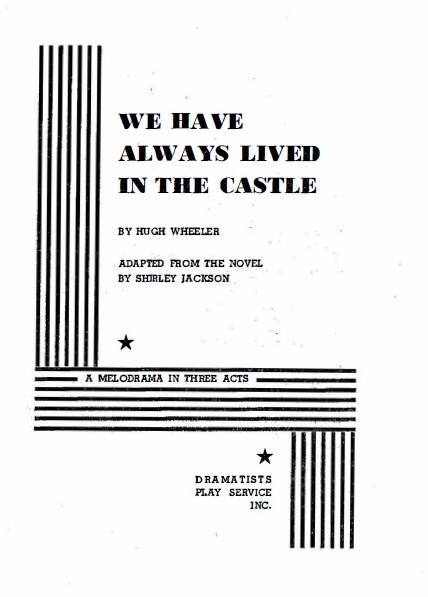
- Plays
- Black Humor
- Thriller
- Mystery & Detective
- Thrillers
- Book Club
Original edition
We Have Always Lived in the CastleOriginally published in 1970 English Viking
Other editions (42)


Listen to the summary Narrated summary
My name is Mary Katherine Blackwood. I am eighteen years old, and I live with my sister Constance. I like my sister Constance, and Richard Plantagenet, and Amanita phalloides, the death-cup mushroom. Everyone else in my family is dead, and the people of the village have always hated us. We live in the Blackwood house, shielded from the world by our father's fence and the trees he let grow wild. Our days follow a quiet, careful pattern. Constance never goes past her own garden, so on Tuesdays and Fridays, I must walk into the village for library books and groceries. I play a game to keep myself safe, moving from the library to the grocery to Stella's coffee shop, trying to avoid losing turns to the staring, hating faces and the mocking voices of the men on the benches. “Merricat, said Connie, would you like a cup of tea?” the children sing. “Oh no, said Merricat, you'll poison me.” But once I lock the gate behind me, I am home, and safe.
Our life is contained within the kitchen, the garden, and the back rooms of the house. Constance, who is beautiful and golden, presides over it all. She cooks and preserves, tending to the rows of jewel-colored jars in the cellar, a poem written by generations of Blackwood women. She tends to me, and she tends to our Uncle Julian, who lives in his wheelchair in a warm room off the kitchen. He spends his days sifting through his papers, trying to write a definitive account of the last day, six years ago, when everyone else was poisoned by arsenic in the sugar bowl. “My niece, after all, was acquitted of murder,” he tells visitors with a happy, terrible pride. “There could be no possible danger in visiting here now.” Constance and I never speak of it, but it is always there, a story Uncle Julian tells to himself, and to us, over and over.
One day, a change comes. A man arrives, a stranger who looks like our father. He calls himself our cousin Charles Blackwood. He says he has come to help us, but I know at once that he is a ghost, a demon sent to disrupt our world. He walks into our kitchen as if he belongs there, his heavy footsteps sounding where only our soft ones should be. He talks of money, of the safe in our father's study, of bringing us back into the world. He brings newspapers into the house, and the smell of his pipe smoke clings to the curtains. He wants to take Constance away from me.
I try to drive him away with my own magic. I bury my box of silver dollars by the creek to keep us safe, and nail our father's book to a tree in the woods. When Charles finds the book has fallen, he gets in. So I must use stronger magic. I take our father's gold watch chain from the drawer where Charles has been looking, and I nail it to the tree instead. When he finds it, his face twists with anger. “What kind of a house is this?” he shouts. I smash the mirror in his room and scatter leaves and dirt on the floor, trying to erase his presence, to make the house reject him. But he only grows stronger, turning Constance against me with his talk of the outside world. “It's all been my fault,” she says, her eyes clouded. “I've been hiding here.”
I know then that I must use the strongest magic of all. While they are at dinner, I go upstairs to his room. His pipe is burning on a saucer beside the bed, left on top of a pile of newspapers. It is a simple thing to brush the pipe and the saucer into the wastebasket. The fire starts quietly. Downstairs, I hear Charles say, “I smell smoke,” and then he is running, screaming, “Fire! The whole damn house is on fire!” He runs out into the night, shouting for help, but Constance and I only watch as the smoke pours down the stairs. The fire is ours, a clean, bright fire to burn away the poison of his presence.
The fire brings the village. They come not to help, but to watch. The fire engine arrives, and then all the cars, their lights turning our lawn into a stage. They stand outside, their faces lifted and hungry in the flickering light. When the fire is finally out, one of them, Jim Donell, picks up a rock and smashes one of our mother's tall drawing-room windows. A roar of laughter goes up, and then they move like a wave, pouring into our house, breaking and tearing and destroying everything they can touch. They smash our dishes, overturn our furniture, and throw our mother's Dresden figurines against the porch rail. Through the noise, they chant their song: “Merricat, said Connie, would you like to go to sleep? Down in the boneyard ten feet deep!”
Just as they close in on us, huddled on the lawn, a voice cuts through the chaos. “Julian Blackwood is dead.” The villagers fall back, suddenly silent and afraid. In the quiet, we slip away into the woods, to my secret hiding place by the creek. There, in the darkness, with the sounds of the ruined world fading behind us, the last silence is broken. “I am going to put death in all their food and watch them die,” I whisper. Constance stirs beside me. “The way you did before?” she asks. It has never been spoken between us. “Yes,” I say. “The way I did before.”
We return in the morning to a house that is a shell, the roof burned away to the sky, the inside a wasteland of shattered treasures. But the kitchen is mostly whole, and the cellar with its rows of preserves is untouched. We sweep the wreckage of the dining room and drawing room behind closed doors, sealing them away forever. We board up the windows and lock the doors, and the house becomes our fortress, a dark, quiet castle. We are all that is left of our family, and we are enough.
Slowly, the villagers begin to leave offerings on our front step. A roasted chicken, a blueberry pie, a basket of fresh eggs. They are baskets of apology, of fear. We take them in after dark, leaving the empty baskets on the porch for them to find. The children still play on our lawn, whispering stories about the ladies who live inside, who never come out except at night to hunt for bad children. They cannot see us, sitting quietly on either side of the locked front door, peering out through tiny cracks in the boards. They see only a ruined house, overgrown with vines. But inside, we are safe. We have our kitchen, and our garden, and each other. “Oh, Constance,” I say, “we are so happy.”
Our life is contained within the kitchen, the garden, and the back rooms of the house. Constance, who is beautiful and golden, presides over it all. She cooks and preserves, tending to the rows of jewel-colored jars in the cellar, a poem written by generations of Blackwood women. She tends to me, and she tends to our Uncle Julian, who lives in his wheelchair in a warm room off the kitchen. He spends his days sifting through his papers, trying to write a definitive account of the last day, six years ago, when everyone else was poisoned by arsenic in the sugar bowl. “My niece, after all, was acquitted of murder,” he tells visitors with a happy, terrible pride. “There could be no possible danger in visiting here now.” Constance and I never speak of it, but it is always there, a story Uncle Julian tells to himself, and to us, over and over.
One day, a change comes. A man arrives, a stranger who looks like our father. He calls himself our cousin Charles Blackwood. He says he has come to help us, but I know at once that he is a ghost, a demon sent to disrupt our world. He walks into our kitchen as if he belongs there, his heavy footsteps sounding where only our soft ones should be. He talks of money, of the safe in our father's study, of bringing us back into the world. He brings newspapers into the house, and the smell of his pipe smoke clings to the curtains. He wants to take Constance away from me.
I try to drive him away with my own magic. I bury my box of silver dollars by the creek to keep us safe, and nail our father's book to a tree in the woods. When Charles finds the book has fallen, he gets in. So I must use stronger magic. I take our father's gold watch chain from the drawer where Charles has been looking, and I nail it to the tree instead. When he finds it, his face twists with anger. “What kind of a house is this?” he shouts. I smash the mirror in his room and scatter leaves and dirt on the floor, trying to erase his presence, to make the house reject him. But he only grows stronger, turning Constance against me with his talk of the outside world. “It's all been my fault,” she says, her eyes clouded. “I've been hiding here.”
I know then that I must use the strongest magic of all. While they are at dinner, I go upstairs to his room. His pipe is burning on a saucer beside the bed, left on top of a pile of newspapers. It is a simple thing to brush the pipe and the saucer into the wastebasket. The fire starts quietly. Downstairs, I hear Charles say, “I smell smoke,” and then he is running, screaming, “Fire! The whole damn house is on fire!” He runs out into the night, shouting for help, but Constance and I only watch as the smoke pours down the stairs. The fire is ours, a clean, bright fire to burn away the poison of his presence.
The fire brings the village. They come not to help, but to watch. The fire engine arrives, and then all the cars, their lights turning our lawn into a stage. They stand outside, their faces lifted and hungry in the flickering light. When the fire is finally out, one of them, Jim Donell, picks up a rock and smashes one of our mother's tall drawing-room windows. A roar of laughter goes up, and then they move like a wave, pouring into our house, breaking and tearing and destroying everything they can touch. They smash our dishes, overturn our furniture, and throw our mother's Dresden figurines against the porch rail. Through the noise, they chant their song: “Merricat, said Connie, would you like to go to sleep? Down in the boneyard ten feet deep!”
Just as they close in on us, huddled on the lawn, a voice cuts through the chaos. “Julian Blackwood is dead.” The villagers fall back, suddenly silent and afraid. In the quiet, we slip away into the woods, to my secret hiding place by the creek. There, in the darkness, with the sounds of the ruined world fading behind us, the last silence is broken. “I am going to put death in all their food and watch them die,” I whisper. Constance stirs beside me. “The way you did before?” she asks. It has never been spoken between us. “Yes,” I say. “The way I did before.”
We return in the morning to a house that is a shell, the roof burned away to the sky, the inside a wasteland of shattered treasures. But the kitchen is mostly whole, and the cellar with its rows of preserves is untouched. We sweep the wreckage of the dining room and drawing room behind closed doors, sealing them away forever. We board up the windows and lock the doors, and the house becomes our fortress, a dark, quiet castle. We are all that is left of our family, and we are enough.
Slowly, the villagers begin to leave offerings on our front step. A roasted chicken, a blueberry pie, a basket of fresh eggs. They are baskets of apology, of fear. We take them in after dark, leaving the empty baskets on the porch for them to find. The children still play on our lawn, whispering stories about the ladies who live inside, who never come out except at night to hunt for bad children. They cannot see us, sitting quietly on either side of the locked front door, peering out through tiny cracks in the boards. They see only a ruined house, overgrown with vines. But inside, we are safe. We have our kitchen, and our garden, and each other. “Oh, Constance,” I say, “we are so happy.”
What other readers say
Liked
Reviews for the book consistently highlight its masterful command of psychological horror and atmospheric tension. Many readers praise the author's ability to craft a chilling and haunting narrative that creates a pervasive sense of unease without relying on traditional supernatural elements. The book is frequently lauded for its unique and compelling narrative voice, particularly that of the main character, Merricat, who is described as distinctive, captivating, and unsettlingly charismatic. Reviewers celebrate the exquisite, precise, and evocative prose, which contributes to a rich Gothic atmosphere and is often likened to literary masterpieces. The story is found to be gripping and addictive, drawing readers into a deep character study that explores themes of isolation, societal judgment, and the intricate workings of the human mind. Its dark humor and nuanced storytelling are also frequently commended.
Disliked
Despite widespread acclaim, some readers found aspects of the book less compelling. A recurring criticism is that the plot can feel slow, with some reviewers describing it as almost plotless or lacking significant events. For these readers, the central mystery or any potential "twist" was often found to be predictable or anticlimactic, diminishing its impact. Certain comments suggest that the story's overall premise or character archetypes were not original, having been encountered in other works. A few found the book's peculiar nature to be off-putting, leading to a feeling that it was "too weird" or "senseless" rather than genuinely disturbing or interesting. These opinions suggest that the book's unique style may not resonate with all tastes, particularly those preferring more explicit action or traditional plot structures.
In short
Overall, the book is widely regarded as a significant achievement in psychological Gothic fiction and a testament to the author's skill. It is highly recommended for readers who appreciate a subtle, slow-burn approach to horror, focusing on deep character studies and intricate literary prose rather than overt scares. Fans of Shirley Jackson's other works and those who enjoy exploring themes of otherness, societal pressure, and the unsettling aspects of the human psyche are likely to find this book profoundly impactful. While it may not appeal to readers seeking a fast-paced, plot-driven narrative with clear resolutions, many are captivated by its pervasive sense of dread and its lasting impression, considering it a masterpiece that continues to provoke thought and discussion.
No reviews yet. Be the first.