

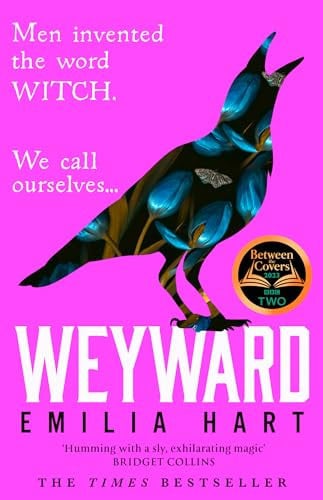
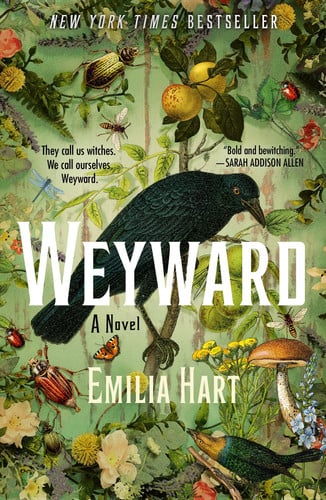


Weyward A Novel
by Emilia Hart
8.1 / 10 394K ratings
- Language
- English
- Published
- 2023
- Publisher
- St. Martin's Publishing Group
- Pages
- 336
- ISBN
- 9781250280800
In 2019, Kate flees an abusive relationship, seeking refuge in Weyward Cottage, a ramshackle inheritance from a great aunt she barely remembers. The cottage, with its overgrown garden, offers a sanctuary, but also holds secrets of a hidden legacy stretching back centuries. In 1942, Violet is confined to her family's grand estate, longing for a life beyond societal expectations and seeking answers about her deceased mother. Her only clues are a locket and the word "weyward" etched into her bedroom. Further back, in 1619, Altha awaits trial for witchcraft, accused of a local farmer's death. Her mother taught her a unique connection to the natural world, a power now deemed dangerous.
Across these timelines, these three women, bound by blood and the mysterious Weyward Cottage in Cumbria, navigate worlds that seek to control and suppress them. Each faces distinct challenges, from accusations of witchcraft to the constraints of patriarchy and domestic abuse, yet they share an inherent strength and a deep, often untamed, connection to nature. Discover how their individual struggles and a shared, subtle magic intertwine, revealing a lineage of resilience and self-discovery that defies the limitations imposed upon them.
Across these timelines, these three women, bound by blood and the mysterious Weyward Cottage in Cumbria, navigate worlds that seek to control and suppress them. Each faces distinct challenges, from accusations of witchcraft to the constraints of patriarchy and domestic abuse, yet they share an inherent strength and a deep, often untamed, connection to nature. Discover how their individual struggles and a shared, subtle magic intertwine, revealing a lineage of resilience and self-discovery that defies the limitations imposed upon them.
Subjects
Other editions (8)
Listen to the summary Narrated summary
The scent of damp earth and ancient wood clung to Weyward Cottage, a refuge for those touched by an old, wild magic. In its shadowed corners, across centuries, three women found their lives inextricably bound by blood and an inheritance of power that pulsed with the natural world. Their stories, though separated by time, echoed a shared struggle against a world that sought to tame them.
In 2019, Kate Ayres arrived at the cottage under the cloak of night, a desperate escape from the suffocating grip of an abusive partner in London. Pregnant and weary, she sought solace in the dilapidated walls and overgrown garden, a legacy from a great-aunt she barely remembered. As she began to piece together a new life, the cottage whispered secrets, revealing hidden documents and a lineage of women who spoke to birds and commanded the insects. Kate, too, felt a stirring within her, an innate connection to the wildness around her, a power she would soon need to claim as her own when the shadow of her past inevitably caught up.
Decades earlier, in 1942, a young Violet Ayres chafed under the strictures of Orton Hall, her family's grand, yet crumbling, estate. Her father, Lord Rupert, a man of rigid expectations, offered little comfort or explanation for her mother's mysterious death, dismissing her as having gone "mad." Violet yearned for the education and freedom afforded her brother, her spirit restless and drawn to the untamed woods surrounding her. A locket bearing the initial "W" and a single word, "weyward," scratched into her bedroom baseboard, were her only clues to a hidden heritage. When a devastating betrayal left her pregnant and banished to the isolated Weyward Cottage, she stumbled upon a journal, a voice from the distant past that would begin to unravel the mysteries of her lineage and the true nature of her mother's "madness."
The earliest echo belonged to Altha Weyward, living in Crows Beck in 1619. Her story unfolded as she faced trial for witchcraft, accused of causing a local farmer's death by stampeding cattle. Altha, like her mother before her, was a folk healer, her methods rooted in a deep understanding of herbs and the whispers of the natural world. This knowledge, coupled with her independent spirit and ability to communicate with creatures, marked her as dangerous in a society quick to condemn unconventional women. The misogyny of her time cast a long shadow, threatening to extinguish the light of her ancestral power.
As the narratives wove through time, a tapestry of female resilience began to emerge. Each woman, in her own century, confronted systemic patriarchal oppression that sought to control and silence them. Altha's trial, Violet's confinement and subsequent banishment, and Kate's abusive relationship were all manifestations of a society that feared women who dared to defy expectations and wield their own power.
Yet, within the walls of Weyward Cottage and the wild embrace of nature, they discovered their strength. Altha's detailed journal, passed down through generations, became a beacon, guiding Violet to understand her gifts and providing Kate with the courage to confront her tormentor. The cottage itself, far from being just a dwelling, was a sanctuary, a place where the Weyward women could connect with their unique abilities and with each other across the chasm of time.
The culmination of their intertwined journeys revealed that the "witchcraft" they were accused of was, in truth, a profound connection to the earth and its creatures, a power that blossomed when nurtured and embraced. Kate, armed with the knowledge of her ancestors, ultimately faced her abuser. In a moment of raw, ancestral power, she unleashed a swarm of birds and insects, a testament to the wildness that ran in her veins, turning the tables on her oppressor and reclaiming her freedom. Their stories converged as a powerful testament to female solidarity, the enduring strength of women, and the transformative power of choosing love and self-preservation over fear.
In 2019, Kate Ayres arrived at the cottage under the cloak of night, a desperate escape from the suffocating grip of an abusive partner in London. Pregnant and weary, she sought solace in the dilapidated walls and overgrown garden, a legacy from a great-aunt she barely remembered. As she began to piece together a new life, the cottage whispered secrets, revealing hidden documents and a lineage of women who spoke to birds and commanded the insects. Kate, too, felt a stirring within her, an innate connection to the wildness around her, a power she would soon need to claim as her own when the shadow of her past inevitably caught up.
Decades earlier, in 1942, a young Violet Ayres chafed under the strictures of Orton Hall, her family's grand, yet crumbling, estate. Her father, Lord Rupert, a man of rigid expectations, offered little comfort or explanation for her mother's mysterious death, dismissing her as having gone "mad." Violet yearned for the education and freedom afforded her brother, her spirit restless and drawn to the untamed woods surrounding her. A locket bearing the initial "W" and a single word, "weyward," scratched into her bedroom baseboard, were her only clues to a hidden heritage. When a devastating betrayal left her pregnant and banished to the isolated Weyward Cottage, she stumbled upon a journal, a voice from the distant past that would begin to unravel the mysteries of her lineage and the true nature of her mother's "madness."
The earliest echo belonged to Altha Weyward, living in Crows Beck in 1619. Her story unfolded as she faced trial for witchcraft, accused of causing a local farmer's death by stampeding cattle. Altha, like her mother before her, was a folk healer, her methods rooted in a deep understanding of herbs and the whispers of the natural world. This knowledge, coupled with her independent spirit and ability to communicate with creatures, marked her as dangerous in a society quick to condemn unconventional women. The misogyny of her time cast a long shadow, threatening to extinguish the light of her ancestral power.
As the narratives wove through time, a tapestry of female resilience began to emerge. Each woman, in her own century, confronted systemic patriarchal oppression that sought to control and silence them. Altha's trial, Violet's confinement and subsequent banishment, and Kate's abusive relationship were all manifestations of a society that feared women who dared to defy expectations and wield their own power.
Yet, within the walls of Weyward Cottage and the wild embrace of nature, they discovered their strength. Altha's detailed journal, passed down through generations, became a beacon, guiding Violet to understand her gifts and providing Kate with the courage to confront her tormentor. The cottage itself, far from being just a dwelling, was a sanctuary, a place where the Weyward women could connect with their unique abilities and with each other across the chasm of time.
The culmination of their intertwined journeys revealed that the "witchcraft" they were accused of was, in truth, a profound connection to the earth and its creatures, a power that blossomed when nurtured and embraced. Kate, armed with the knowledge of her ancestors, ultimately faced her abuser. In a moment of raw, ancestral power, she unleashed a swarm of birds and insects, a testament to the wildness that ran in her veins, turning the tables on her oppressor and reclaiming her freedom. Their stories converged as a powerful testament to female solidarity, the enduring strength of women, and the transformative power of choosing love and self-preservation over fear.
What other readers say
Liked
The book "Weyward" is widely praised for its beautiful writing, vivid imagery, and atmospheric setting, drawing readers into a world of nature and hidden power. Many reviewers found the exploration of three women across different centuries to be sublime, highlighting their deep connection to the natural world and their individual journeys of discovering strength against patriarchal forces. The narrative is often described as well-crafted, with intricate characters and seamless interweaving of three equally compelling storylines. Readers appreciated the subtle integration of magical realism, which enhances the themes of healing, resilience, and female empowerment without resorting to traditional "witchy" tropes. The novel is celebrated as an impressive debut, showcasing a confident hand in storytelling and creating a captivating experience about family, legacy, and courage.
Disliked
Despite its strengths, "Weyward" also garnered significant criticism, particularly regarding its intense and often graphic content. Many reviewers found the book's pervasive themes of misogyny, abuse, and violence against women to be confronting and, for some, overly repetitive and gratuitous, leading to discomfort or even boredom. Concerns were raised that the book's portrayal of female resilience felt undermined by the constant brutalization of its characters, with some feeling there was insufficient catharsis or meaningful commentary to justify the discomfort. The focus on pregnancy and motherhood as central to womanhood also alienated some readers, who found it to be an exclusive and potentially objectifying theme. Additionally, some critics felt the plot was cliched, the writing bland, and the characters lacked depth, arguing that the magical elements sometimes detracted from, rather than enhanced, the message of internal female strength.
In short
Overall, "Weyward" emerges as a polarizing but often highly-rated debut that blends historical fiction, women's fiction, and magical realism. It is recommended for readers who appreciate atmospheric storytelling, multi-generational narratives, and themes of female empowerment and resilience. Those who enjoy a subtle touch of magic intertwined with grounded historical struggles, and who are prepared for emotionally challenging content, may find it a compelling and immersive read. However, potential readers should be aware of the extensive depictions of abuse and violence, and may want to check content warnings if sensitive to such topics. The book aims to resonate with those who believe in the enduring strength of women and the power of ancestral connections, particularly in overcoming adversity.
No reviews yet. Be the first.
Readers also liked

A Christmas Carol (Chump Change Edition): Illustrated by John Leech
Charles Dickens

The Scarlet Letter (Chump Change Edition)
Nathaniel Hawthorne

Jane Eyre
Charlotte Brontë
Free to read

The Ego and Its Own The Case of The Individual Against Authority
John Carroll

Forbidden Forest The Legends of Regia
Tenaya Jayne

Gone with the Wind
Margaret Mitchell

Sword of the Gods: The Chosen One (Book 1 of the Sword of the Gods saga)
Anna Erishkigal