
Add to library
You don't have any lists yet. Create one in My Library.
Go to My LibraryAdd to library
You don't have any lists yet. Create one in My Library.
Go to My LibraryWhat If? Serious Scientific Answers to Absurd Hypothetical Questions
- Language
- English
- Published in
- Publisher
- Hodder & Stoughton
- ISBN
- 9781473612044
Each question is explored with clarity and humor, often accompanied by the simple stick-figure comics that have become Munroe's trademark. The book doesn't just provide answers; it embarks on an intellectual journey that breaks down complex problems and explores their often catastrophic, but always fascinating, consequences. It is an accessible and entertaining exploration of science that explains the laws of the universe in a way that will satisfy the intensely curious and anyone who loves to ponder the strange and improbable.
Subjects
Original edition details
Other editions (39)

What If? 2 Additional Serious Scientific Answers to Absurd Hypothetical Questions
2022 • Penguin
English

What If? 2 Additional Serious Scientific Answers to Absurd Hypothetical Questions
2023 • John Murray Press
English

What If? 2
2022 • Penguin US
English
What If? 10th Anniversary Edition Serious Scientific Answers to Absurd Hypothetical Questions
2024 • HarperCollins
English

What If? Serious Scientific Answers to Absurd Hypothetical Questions
2014 • Houghton Mifflin Harcourt
English
Other editions
What If? 2 Additional Serious Scientific Answers to Absurd Hypothetical Questions
2022 • Penguin
English
What If? 2 Additional Serious Scientific Answers to Absurd Hypothetical Questions
2023 • John Murray Press
English
What If? 2
2022 • Penguin US
English
What If? 10th Anniversary Edition Serious Scientific Answers to Absurd Hypothetical Questions
2024 • HarperCollins
English
What If? Serious Scientific Answers to Absurd Hypothetical Questions
2014 • Houghton Mifflin Harcourt
English

What If? 10th Anniversary Edition Serious Scientific Answers to Absurd Hypothetical Questions
2024 • Hodder And Stoughton Limited
English

What If? 10th Anniversary Edition Serious Scientific Answers to Absurd Hypothetical Questions
2024 • HarperCollins Publishers
English
What If? Serious Scientific Answers to Absurd Hypothetical Questions
2014 • Blackstone Audio, Inc.
English
What If? Serious Scientific Answers to Absurd Hypothetical Questions
2014 • Blackstone Audio, Inc.
English

Hoe dan? bizarre wetenschappelijke adviezen voor alledaagse problemen
2021 • Unieboek | Het Spectrum
Dutch

Co kdyby? vážné vědecké odpovědi na absurdní hypotetické otázky
2014 • Práh
Czech

A co, gdyby?
2015 • Wydawnictwo Czarna Owca
Polish

What if? wirklich wissenschaftliche Antworten auf absurde hypothetische Fragen
2016 • Knaus
German
What If?: Serious Scientific Answers to Absurd Hypothetical Questions Complete 2 Books Collection by Randall Munroe
2022 • STEMCOOL
English

What If? Special Sales Serious Scientific Answers to Absurd Hypothetical Questions
2014 • Hodder & Stoughton
English
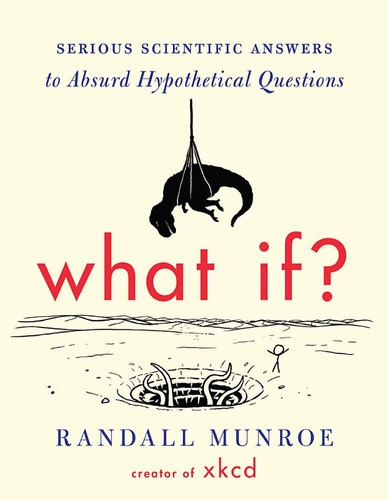
What If? Serious Scientific Answers to Absurd Hypothetical Questions
2014 • John Murray
English

What If? Serious Scientific Answers to Absurd Hypothetical Questions
2014 • John Murray
English
What If? Lib/E: Serious Scientific Answers to Absurd Hypothetical Questions
2014 • Blackstone Publishing
English
What If? Signed Edition Serious Scientific Answers to Absurd Hypothetical Questions
2016 • HarperCollins Publishers
English

What If?: Serious Scientific Answers to Absurd Hypothetical Questions
2014 • Blackstone Pub
English
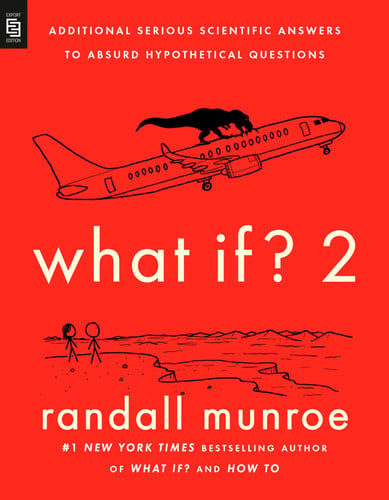
What If? Additional Serious Scientific Answers to Absurd Hypothetical Questions. 2
2022 • Riverhead Books
English
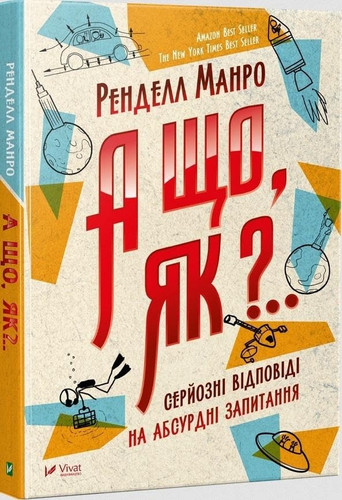
What if? 2018: What if?
2018 • VIVAT
Ukrainian
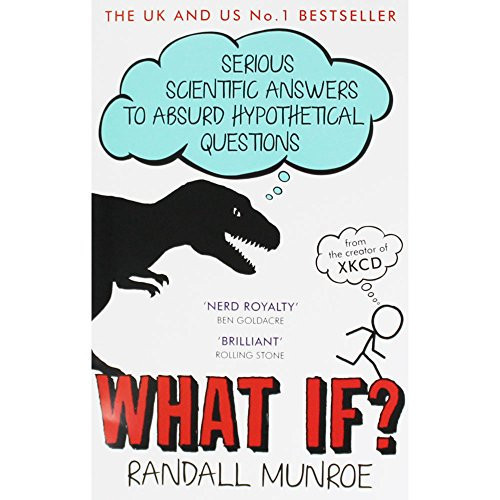
What If? Special Sales Serious Scientific Answers to Absurd Hypothetical Questions
2015 • Hodder & Stoughton
English

What If? 2 Additional Serious Scientific Answers to Absurd Hypothetical Questions
2022 • John Murray Press
English
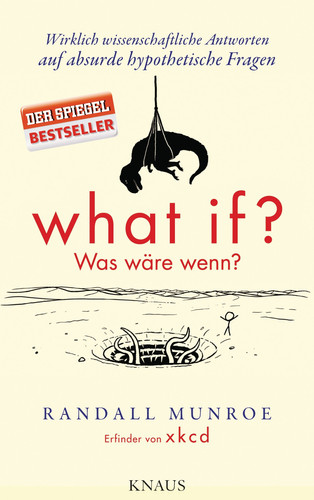
What if? Was wäre wenn? wirklich wissenschaftliche Antworten auf absurde hypothetische Fragen
2014 • Knaus
German

What If? Serious Scientific Answers to Absurd Hypothetical Questions
2015 • Hodder & Stoughton
English

What If? Serious Scientific Answers to Absurd Hypothetical Questions
2014 • John Murray Press
English
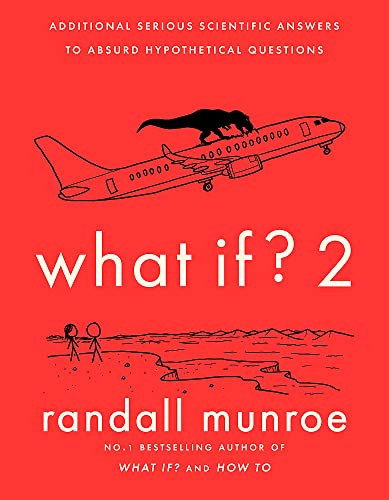
What If? 2 Additional Serious Scientific Answers to Absurd Hypothetical Questions
2022 • John Murray Press
English

¿Qué pasaría si?? / What If?: Serious Scientific Answers to Absurd Hypothetical Questions
2015 • National Geographic Books
Spanish
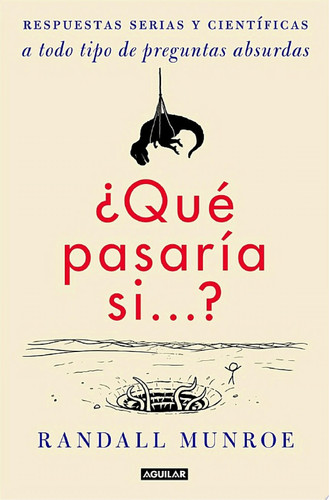
¿Qué pasaría si...? Respuestas serias y científicas a todo tipo de preguntas absurdas
2015 • AGUILAR
Spanish
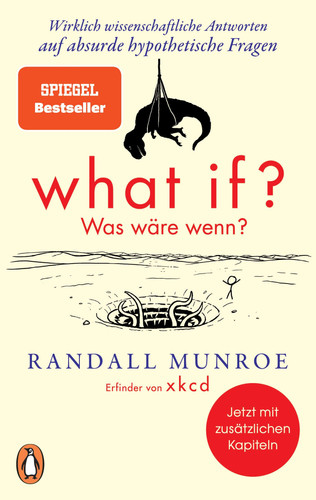
What if? Was wäre wenn? Wirklich wissenschaftliche Antworten auf absurde hypothetische Fragen - Erweiterte Ausgabe
2020 • Penguin
German

Farz Edelim Ki Absürt Sorulara Ciddi Blimsel Yanitlar
2016 • Pegasus Yayincilik
Turkish

Cosa accadrebbe se? Risposte scientifiche a domande ipotetiche assurde
2015 • Bompiani
Italian

Et si... ? Les réponses les plus scientifiques aux questions que vous ne vous êtes jamais posées
2015 • Flammarion
French
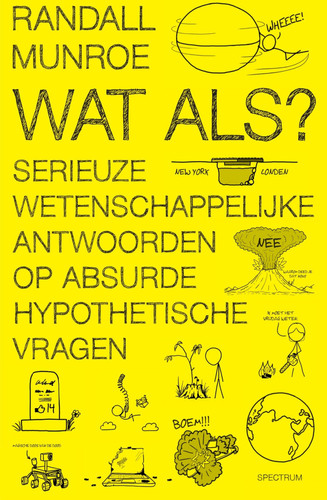
Wat als? serieuze wetenschappelijke antwoorden op absurde hypothetische vragen
2014 • Spectrum
Dutch

那些古怪又让人忧心的问题 珍藏版
2016 • 北京联合出版公司
Chinese
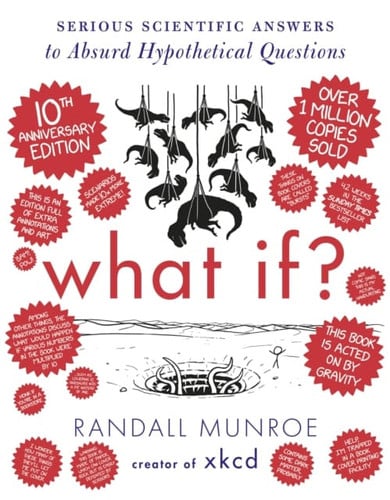
What If? 10th Anniversary Edition Serious Scientific Answers to Absurd Hypothetical Questions
2024 • John Murray Press
English

What If?: Serious Scientific Answers to Absurd Hypothetical Questions
2014 • Houghton Mifflin Harcourt Trade & Reference Publishers
English
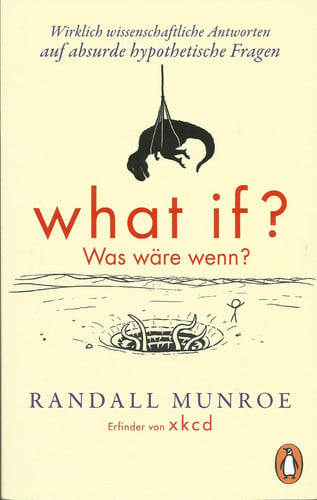
What if? Was wäre wenn?: Wirklich wissenschaftliche Antworten auf absurde hypothetische Fragen
2016 • Penguin Verlag
German
What if the Earth and everything on it suddenly stopped spinning, but the atmosphere kept its thousand-mile-per-hour velocity? The answer is that nearly everyone would die, and then things would get interesting. A supersonic wind would scour the surface of the planet, reducing virtually all human structures to ruins. In Boston, the winds would be twice as strong as a tornado, tearing skyscrapers from their foundations. Anyone caught on the surface would be pulverized by flying debris. The only survivors would be those deep underground - in subway tunnels or scientific bunkers - and the researchers at the South Pole, who would first notice the trouble when the outside world went completely, unnervingly silent.
The aftermath would be even stranger. The friction of the wind would generate a global heat blast, igniting thunderstorms and churning the oceans into a chaotic mix of spray and frigid, upwelled water. The day-night cycle would end, leaving one half of the planet to bake for six months while the other froze. And yet, our faithful companion, the Moon, would begin to gently tug on the silent Earth, its gravity slowly, patiently, starting our world's spin once more.
Consider another scenario: a baseball pitched at 90 percent the speed of light. The air molecules in its path wouldn't have time to get out of the way. The ball would slam into them so hard that their atoms would fuse, releasing a burst of gamma rays. An expanding bubble of incandescent plasma would race toward the batter, only slightly ahead of the ball itself. By the time it reached home plate - a mere 70 nanoseconds later - the ball would be a cloud of disintegrating particles. It would hit the bat, the batter, and the catcher, carrying them all backward as they vaporized. From a hilltop outside the city, you would see a blinding light, followed by a mushroom cloud. Everything within a mile of the park would be leveled. Major League Baseball Rule 6.08(b) suggests that the batter would be considered “hit by pitch” and would be eligible to advance to first base.
Some questions are less about explosive destruction and more about invisible, creeping dread. What if you went for a swim in a spent nuclear fuel pool? Assuming you're a good swimmer, you could tread water for hours. The water is an excellent radiation shield. As long as you stay near the surface, you might actually receive a lower dose of radiation than you would walking around on the street. The danger comes from diving. Swim down to the bottom, touch one of the fresh fuel canisters, and you'd receive a fatal dose. But as long as you don't dive deep or pick up any strange metal tubes you find lying around, you'd probably be fine. When I asked a friend who works at a research reactor what would happen, he thought for a moment. “In our reactor?” he said. “You'd die pretty quickly, before reaching the water, from gunshot wounds.”
The questions can also pull you across the vastness of time. Step into a time machine in Times Square and go back 1,000 years, and you would find yourself in a forest of chestnut and oak, stalked by wolves and mountain lions. Go back 100,000 years, and you might meet the terrifying short-faced bear or the saber-toothed cat. A billion years, and you'd arrive on the supercontinent of Rodinia, a world without plants or animals, where mats of blue-green algae were pumping toxic oxygen into the atmosphere, triggering the greatest extinction in history. And a million years in the future? The glaciers will have advanced again, grinding our cities to dust. Our most lasting relic will likely be a thin, out-of-place layer of processed hydrocarbons - the fossilized fragments of our shampoo bottles and shopping bags.
Sometimes, a simple pun can lead to planetary-scale horror. What if you gathered a mole (the unit of measurement) of moles (the furry critter)? That's 6.022 x 10²³ animals. Their combined mass would be more than half that of the Moon. Pulled together by gravity in deep space, they would form a sphere of meat, a new planet with a surface gravity like Pluto's. The pressure in the interior would be high enough to kill all bacteria, sterilizing the mole remains. Near the surface, anaerobic decomposition would generate heat and methane, which would erupt in geysers of death, blasting mole bodies into space. Eventually, the planet would cool and freeze solid, a silent, furry monument to a terrible idea.
From building a jetpack out of downward-firing machine guns to calculating the lethal dose of neutrinos from a nearby supernova, the universe is full of fascinating possibilities. Exploring them reveals the beautiful, strange, and often terrifying consistency of the laws of physics. They show us that if you drop a steak from orbit, it will be charred on the outside but raw on the inside, and that if everyone on Earth jumped at once, the planet wouldn't budge, but our civilization would collapse as seven billion people found themselves stranded in Rhode Island. The world is a wondrous place, and it's even more wondrous when you apply a little math.
No discussions yet for this book.
Delete Discussion
Are you sure you want to delete this discussion? This action cannot be undone.
Rating Sources
Randall Munroe's book is widely praised as a highly entertaining and engaging read that effortlessly blends humor with serious scientific inquiry. Reviewers consistently highlight its cleverness, wit, and the author's remarkable ability to simplify complex scientific concepts, making them accessible even to those not typically interested in science. Many found the book surprisingly easy to read and difficult to put down, devouring it in a single sitting or over a few days, a rare feat for non-fiction. The distinctive tone, hilarious deadpan humor, and accompanying stick-figure illustrations are frequently commended for enhancing the reading experience and prompting genuine laughter. Readers appreciate how the book takes absurd hypothetical questions and uses scientific rigor to explore them, turning potentially brain-taxing subjects into a fun and informative journey.
Despite the widespread enjoyment, some readers found the book's format better suited for casual browsing rather than continuous reading, suggesting that consuming too many "what if" scenarios at once could become repetitive or annoying. A few reviewers felt that certain questions were either uselessly absurd or led to overly complicated answers that caused them to lose interest. Another point of contention for some was the book's frequent exploration of scenarios resulting in death, destruction, or apocalyptic outcomes, which a subset of readers found disturbing or anxiety-inducing rather than humorous. While the scientific explanations are generally lauded, a small number of readers occasionally found the technical details overwhelming or that the focus on absurdity sometimes overshadowed truly interesting and informative answers.
Overall, the book is overwhelmingly recommended as a unique and delightful exploration of science through the lens of extreme hypotheticals. It is considered a must-read for fans of Randall Munroe's webcomic XKCD, as well as for geeks, science enthusiasts, and anyone who appreciates a blend of humor, wit, and intellectual curiosity. The book particularly appeals to readers who enjoy imaginative questions and learning about the world through unconventional and entertaining scientific explanations. While some may prefer to dip into it rather than read it cover-to-cover, its ability to make science fun and spark wonder makes it an ideal choice for curious minds, including younger readers, looking for an engaging and thought-provoking non-fiction experience.
No reviews yet. Be the first to review this book!
Delete Review
Are you sure you want to delete this review? This action cannot be undone.


