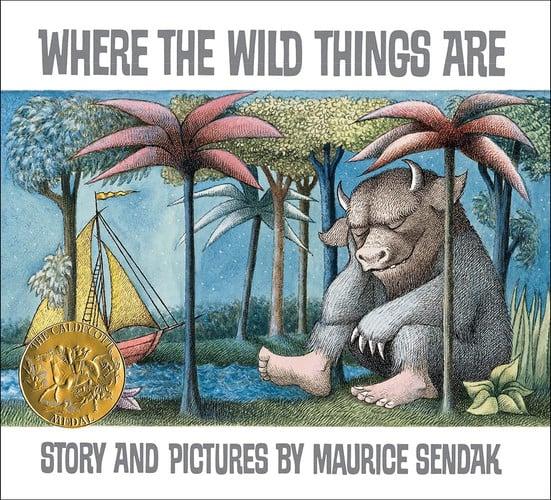
Where The Wild Things Are
- First published 1971
- 37 pages
- English
- Classic
When Max, dressed in his wolf suit, makes mischief through his house, his mother calls him a "WILD THING" and sends him to bed without his supper. That very night, a forest begins to grow in Max's room, an ocean tumbles by with a private boat, and he sails off through night and day to where the wild things are. Instead of being frightened by their terrible roars and gnashing teeth, Max tames them with a simple trick and is made the king of all wild things.
This classic story explores the imaginative journey of a boy confronting his own powerful feelings of anger. It is a tale that gives voice to the frustrations of childhood and the comforting pull of home, acknowledging that even the wildest of things can feel lonely and want to be where someone loves them best of all. The journey to the land of the wild things and back again is a testament to the power of imagination to navigate complex emotions and the ultimate security found in a parent's love.
This classic story explores the imaginative journey of a boy confronting his own powerful feelings of anger. It is a tale that gives voice to the frustrations of childhood and the comforting pull of home, acknowledging that even the wildest of things can feel lonely and want to be where someone loves them best of all. The journey to the land of the wild things and back again is a testament to the power of imagination to navigate complex emotions and the ultimate security found in a parent's love.
What readers say
4.26
1.1M ratings across the web 8 in 10 readers loved it, 1 didn't like it
The book is widely celebrated as a timeless classic, often passed down through generations and cherished for its powerful impact on young readers. Reviewers consistently praise its imaginative story, which vividly portrays a child's inner world and encourages a sense of wild adventure and wonder. The artwork is frequently highlighted as exceptional, with its unique style and growing presence across the pages adding significantly to the magical experience. Many find the narrative deeply resonant, appreciating how it acknowledges and explores complex childhood emotions, providing a safe space for children to process feelings of anger or frustration. Furthermore, the underlying message of unconditional love, where a child is always welcomed back home, is a comforting and vital aspect for many readers. Its engaging text also makes it a favorite for read-aloud sessions, allowing for interactive and joyful storytelling.
However, the book also draws criticism, primarily regarding the protagonist's behavior and the perceived lack of a clear moral lesson. Several reviewers express concern that the main character is portrayed as unruly and disrespectful, with no apparent consequences for his actions, leading some to question the parenting message conveyed. This has led to strong reactions from some who believe the story might inadvertently endorse misbehavior or that the mother is depicted as a "pushover." A few reviewers also shared personal experiences of finding the book unsettling or even psychologically impactful during childhood, citing elements they found creepy or fear-inducing. Some adult readers, without the benefit of childhood nostalgia, found the story good but not overwhelmingly compelling, suggesting certain themes might require further discussion to be fully grasped by young audiences.
Despite these varying perspectives, the book undeniably holds a significant place in children's literature, consistently lauded for its innovative storytelling and artistic merit. It is an ideal read for children with vibrant imaginations and those who enjoy stories that delve into the complexities of childhood emotions. Parents seeking an interactive and memorable read-aloud experience, or those looking for a book that can spark conversations about feelings and behavior, will likely find it rewarding. Ultimately, this enduring classic appeals to readers who appreciate artful illustrations and narratives that respect a child's inner world, offering both comfort and a thrilling journey into the fantastical.
Reviews
No reviews yet. Be the first.
Details & editions
- This edition
- Bodley Head, 1967
- ISBN
- 9780370007724
- Language
- English
Original edition Where the Wild Things Are (Puffin Picture Books) Originally published in 1971 · English · Puffin