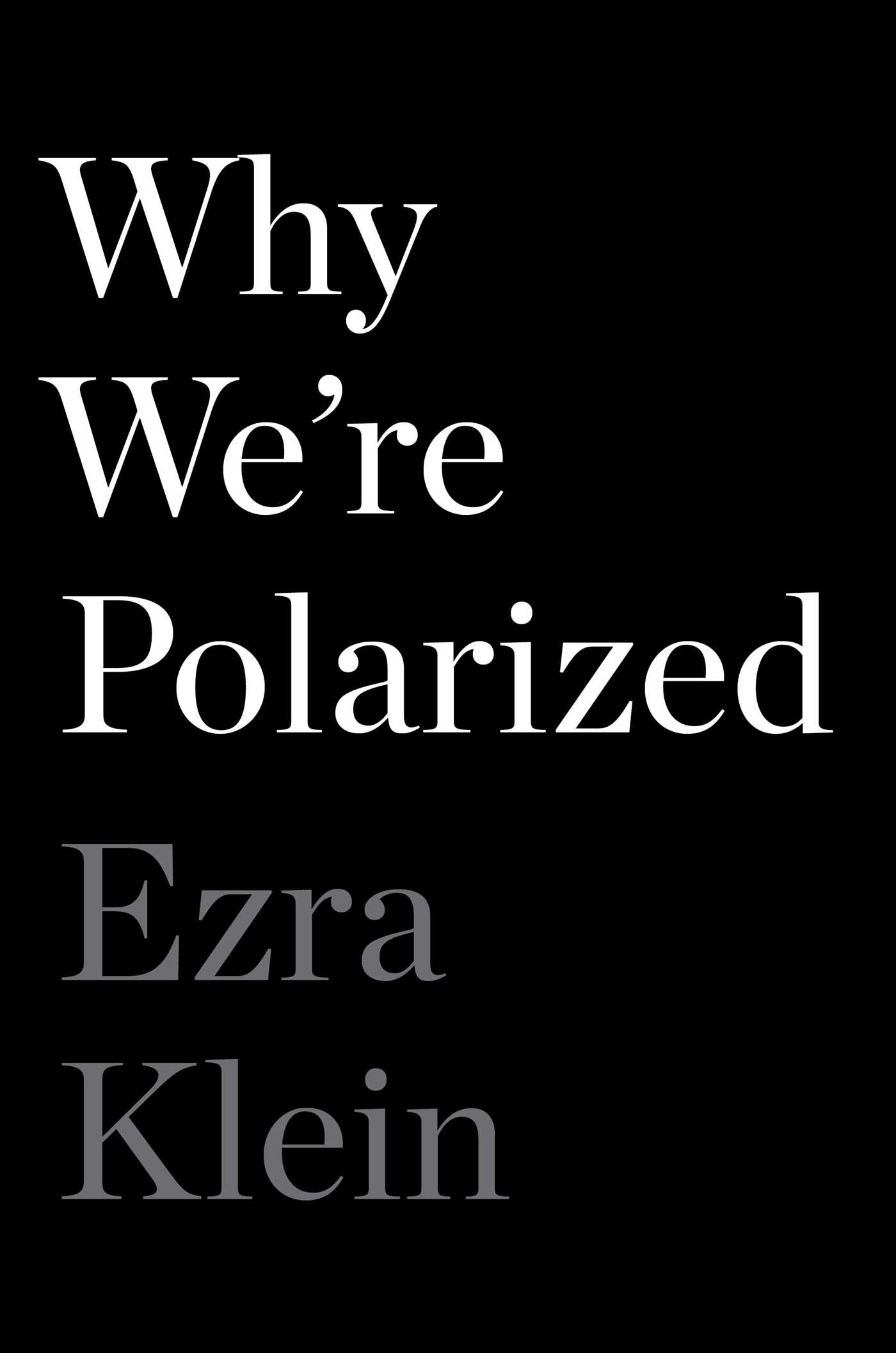
Why We're Polarized
by Ezra Klein
- First published 2020
- 352 pages
- English
What readers say
4.20
21K ratings across the web 8 in 10 readers loved it
The book is widely praised for its thorough and well-researched examination of political polarization in the United States. Reviewers highlight its engaging, accessible, and often thought-provoking style, making complex social science literature from fields like political science, psychology, and history understandable for a broad audience. The author is commended for providing a comprehensive historical analysis of how the American two-party system evolved and how partisan identities became deeply intertwined with racial, religious, geographic, ideological, and cultural affiliations, leading to what he terms "political mega-identities." Many appreciate the book's emphasis on systemic causes of polarization, delving into the psychological underpinnings of group thinking, motivated reasoning, and "negative partisanship," where dislike for the opposing party outweighs positive feelings for one's own. It is frequently described as a timely and essential read for gaining insight into the current state of American politics.
Despite its strengths, several reviewers point out a discernible liberal or center-left bias, particularly in the latter half of the book, where the analysis of one political party is perceived as more critical than the other. Critics suggest that the author sometimes overlooks or underemphasizes alternative drivers of polarization, such as economic factors, campaign finance, or broader societal inequalities. Some found the proposed solutions for addressing polarization to be either impractical, lacking in depth, or not fully exploring potential downsides, such as the instability associated with multi-party systems. A few reviewers also felt that the book, while dense with information, could be repetitive or that its core arguments were already familiar from the author's other work. Additionally, some question whether the current level of polarization is uniquely problematic compared to historical periods, or if the solutions offered are overly simplistic in their call for "more democracy" without addressing potential complexities.
Overall, the book receives strong recommendations as an important and insightful contribution to understanding contemporary American political dynamics. It is considered a valuable resource for concerned citizens, policymakers, and anyone seeking a deeper, non-academic yet rigorously researched explanation of why the nation has become so divided. Readers who appreciate a structural analysis of political behavior, are interested in the interplay of identity and politics, and are willing to engage with a perspective that, while generally fair, carries an acknowledged liberal leaning, will likely find this book highly illuminating. It is particularly recommended for those who want to understand the systemic roots of political conflict and explore potential adaptive strategies, even if the proposed solutions are viewed as ambitious.
Reviews
No reviews yet. Be the first.
Details & editions
- This edition
- Profile Books, 2021
- ISBN
- 9781788166799
- ISBN-10
- 1788166795
- Language
- English
Original edition Why We're Polarized Originally published in 2020 · English · Avid Reader Press / Simon & Schuster
Other editions (12)
- Hoffmann Und Campe · 2020

- Avid Reader Press / Simon & Schuster · 2020

- Avid Reader Press / Simon & Schuster · 2021

- Simon & Schuster Audio · 2020

- Avid Reader Press / Simon & Schuster · 2020
- Profile Books · 2020

- Profile Books · 2020

- Capitán Swing · 2021

- Capitán Swing Libros · 2021

- Hoffmann Und Campe · 2020
