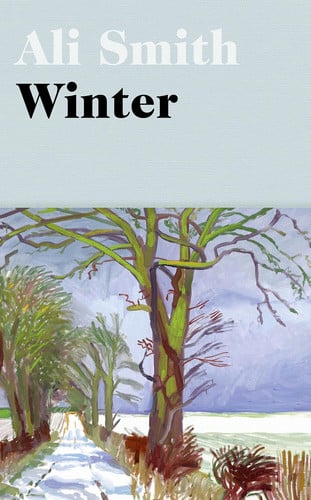
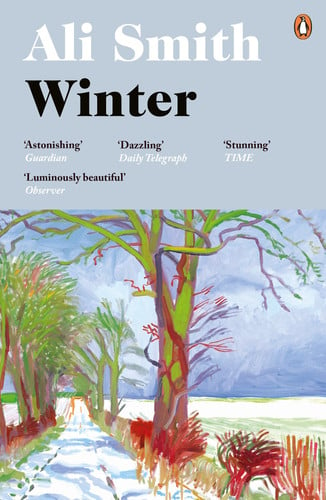
The world shivers under a sky the color of old pewter, the trees stripped bare, their branches clawing at the cold air. In a sprawling, somewhat derelict house in Cornwall, Sophia, a retired businesswoman, finds herself increasingly isolated, her days marked by a peculiar hallucination: a disembodied child's head that floats and bobs, a silent, unsettling companion. She is adrift, disconnected from a rapidly changing world, and deeply estranged from her sister, Iris.
As Christmas approaches, Sophia anticipates the arrival of her son, Art, a man who curates a popular online blog about nature, though his connection to the natural world is largely theoretical and his stories often fabricated. Art, however, is in a bind. His real girlfriend, Charlotte, a woman of fierce political conviction, has recently left him after a bitter argument about the state of the world. Unable to face his mother's scrutiny or the truth of his solitude, he makes a desperate decision: he hires Lux, a young Croatian woman he met at a bus stop, to impersonate Charlotte for the holiday.
Lux, with her quiet perceptiveness and an unexpected depth of knowledge, steps into this fractured family tableau. She is an outsider, yet she possesses an uncanny ability to see through the carefully constructed facades of Sophia and Art. Her presence, like a sudden shaft of winter sunlight, begins to illuminate the unspoken truths and long-buried resentments that permeate the house.
The fragile Christmas charade quickly unravels with the unexpected arrival of Iris, Sophia's sister. Iris, a lifelong social activist and Sophia's ideological opposite, reignites decades of sibling rivalry and political clashes. Their reunion is a tempest of old wounds, sharp words, and fiercely held beliefs, mirroring the wider divisions that fracture the country.
Amidst the familial discord, Lux serves as a quiet catalyst, her questions and observations gently prodding at the hardened shells of Sophia, Art, and Iris. She speaks of Shakespeare's Cymbeline, a play about lies, bitterness, and eventual reconciliation, drawing parallels to their own fractured lives. Through her, snippets of the past begin to surface: Sophia's early life, Iris's unwavering commitment to activism, and the events that drove a wedge between the two sisters.
The narrative weaves through time, offering glimpses into Sophia and Iris's shared childhood and the divergent paths they chose. Memories of Greenham Common protests and political awakenings clash with recollections of a more conventional life. The stark differences in their experiences and worldviews, exacerbated by the current political climate, are laid bare.
As the winter days unfold, the boundaries between reality and hallucination blur for both Sophia and, at times, Art. The floating head becomes a symbol of Sophia's loneliness and disconnection, a manifestation of her internal landscape. Lux, whose very name means "light," acts as an illuminator, a force that encourages connection and understanding in a world that often feels cold and divided.
By the time Christmas Day dawns, the forced gathering has become something unexpected. The initial pretense has shattered, revealing the raw, complicated heart of a family. Lux's presence has, against all odds, fostered a tentative thawing, a glimmer of empathy and renewed connection between the estranged sisters and the distant son. It is a season of stark visibility, where the cold makes things clear, and even in the bleakest winter, there remains the potential for warmth, art, and the enduring power of human connection.