
Add to library
You don't have any lists yet. Create one in My Library.
Go to My LibraryAdd to library
You don't have any lists yet. Create one in My Library.
Go to My Library不存在的女兒
- Language
- Chinese
- Published in
- Publisher
- 木馬文化事業股份有限公司
- Pages
- 415
- ISBN
- 9789866973314
As one family is quietly torn apart by a grief that is not what it seems, another is built on a compassionate lie. The novel follows the parallel lives of the son who grows up in the shadow of a phantom sister and the daughter who is raised in secret by a loving caregiver. It is a story that explores the intricate anatomy of a secret, the complexities of love and loss, and how the choices we make can reverberate through generations. This book examines the heavy burden of the past and the enduring power of truth to ultimately define a family.
Subjects
Original edition details
Other editions (21)

The Memory Keeper's Daughter CD
2005 • HarperAudio
English

The Memory Keeper's Daughter A Novel
2006 • Penguin
English

The Memory Keepers Daughter
2007 • Penguin Books
English

The Memory Keeper's Daughter
2006 • Thomson Gale
English
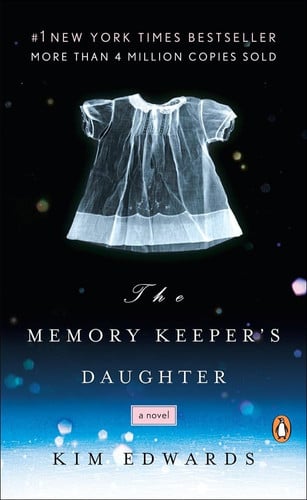
The Memory Keeper's Daughter
2006 • Perfection Learning Corporation
English
Other editions
The Memory Keeper's Daughter CD
2005 • HarperAudio
English
The Memory Keeper's Daughter A Novel
2006 • Penguin
English
The Memory Keepers Daughter
2007 • Penguin Books
English
The Memory Keeper's Daughter
2006 • Thomson Gale
English
The Memory Keeper's Daughter
2006 • Perfection Learning Corporation
English
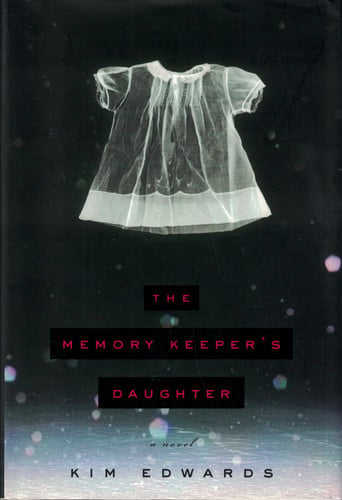
The Memory Keeper's Daughter
2005 • Viking
English

The Memory Keeper's Daughter
2008 • Penguin Group USA, Inc.
English

Memory Keeper's Daughter
2006 • Penguin
Spanish

The Memory Keeper's Daughter
2005 • Penguin
English
The Memory Keeper's Daughter
2009 • Penguin
English

The Memory Keeper's Daughter
2010 • Penguin Books Limited
English
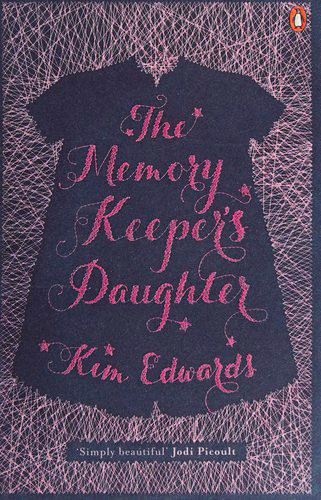
The Memory Keeper's Daughter
2015 • Penguin Books, Limited
English

The Memory Keeper's Daughter
2008 • Ulverscroft Large Print Books Ltd
English

Hija de la memoria
2007 • RBA
Spanish

L'enfant de tous les silences
2008 • France loisirs
French

The Memory Keeper's Daughter
2005 • Viking
English

Córka opiekuna wspomnień
2007 • Videograf II
Polish

Die Tochter des Fotografen Roman
2008 • Aufbau Taschenbuch
German

Gebroken licht
2009 • Archipel
Dutch

L'enfant De Tous Les Silences (French Edition)
2010 • Distribooks Inc
French

Gebroken licht
2005 • Archipel
Dutch
Caroline Gill drove through the disorienting white world with the infant, whom Norah had named Phoebe, asleep in a cardboard box beside her. The address David had given her led to a grim, understaffed home where the air was thick with the scent of boiled vegetables and despair. In a cold room, she witnessed a young woman's long hair being sheared away, falling in dark piles on the linoleum floor. In that instant, Caroline knew she could not leave Phoebe here. Fleeing the institution, she drove on, a new and terrifying freedom opening before her. A dead car battery in a grocery store parking lot led to a chance encounter with a kind-hearted truck driver named Al, who gave her a ride to Pittsburgh and, in doing so, offered her a glimpse of a different future. In this new city, with this secret child, Caroline began to build a life from scratch, a life founded on a lie as profound as David's, yet born of a fierce, protective love.
Back in Lexington, the secret became a silent, corrosive presence in the Henrys' marriage. Norah, haunted by dreams of lost things, struggled with a grief she could not name or share, a sorrow for a daughter she had never held. David, unable to speak of the choice he had made, retreated into the cool, precise world of photography. He became an observer of his own life, his camera a barrier between himself and the world, between himself and his wife. He documented their son, Paul, growing up in a house filled with a quiet, unspoken tension, a boy who sensed a void he could not understand and who would eventually turn to the pure, emotive language of music to express the anger and confusion he felt. David, the memory keeper, filled his darkroom with images, trying to capture and control the moments that were slipping away, even as the most crucial one remained locked in his heart.
In Pittsburgh, Phoebe grew. Raised by Caroline, and later by Al, who became a steady and loving father, she was a child of surprising joy and deep affection. Caroline, discovering a strength she never knew she possessed, became a fierce advocate for her daughter. She connected with other parents of children with Down's syndrome, forming a community that fought for their children's right to an education, to a place in the world. Phoebe learned to read, to sing, to weave. She loved brightly colored paper, butterflies, and the music of The Beatles. Her life, which David had imagined as a burden and a tragedy, was instead full of light and love and the ordinary triumphs of a girl growing into a woman, a life he and Norah could not even begin to imagine.
Years turned into decades. The two families, bound by a secret, lived in separate universes. Norah, feeling the distance from David widen into an uncrossable chasm, sought solace first in travel, building a successful agency that took her around the world, and then in the arms of other men. The affairs were fleeting, attempts to fill an emptiness that remained. David's photography earned him acclaim, but his work grew more abstract, his focus turning from the human form to the hidden patterns of the natural world - veins in a leaf that mirrored a river delta, the structure of a bone that echoed a winter tree. He was a man held captive by a single moment, a ghost in his own life, while his son, Paul, grew into a gifted but troubled young musician, his talent forged in the silence of their home.
The fragile structure of their lives finally shattered when David, after a mysterious three-day disappearance, returned home. He was disheveled, bearded, and accompanied by a pregnant, sixteen-year-old runaway named Rosemary whom he'd found living in his abandoned childhood home. This final, inexplicable act was more than Norah could bear, and their marriage ended. Paul, now a young man, watched his family disintegrate, the long-hidden tensions finally erupting. In the aftermath, he stole a car and fled, a desperate act of rebellion against a home that had never truly felt whole. The lie David had told on that snowy night had finally borne its bitter fruit, leaving them all adrift.
It was not until a year after David's sudden death from a heart attack that the truth finally came to light. Caroline, having seen his obituary, traveled to Lexington and appeared on Norah's doorstep. In the quiet of the kitchen, surrounded by moving boxes, Caroline finally spoke the words that upended Norah's world. “Phoebe did not die.” She slid two photographs across the table - a smiling girl in a confirmation dress, a young woman poised to shoot a basketball. Norah stared at the images of her daughter, alive, and the carefully constructed narrative of her life collapsed. A storm of grief and rage washed through her, and in the backyard, she built a fire. One by one, she burned David's photographs, his carefully preserved memories, turning the images of their life together into smoke and ash, a desperate act to reclaim a history that had been stolen from her.
The meeting, when it happened, was in a small, hot garden in Pittsburgh. Norah and Paul stood across a patch of grass from a young woman with their family's dark hair and a shy, open smile. Phoebe. The reunion was not a storybook fantasy of instant recognition, but an awkward, tentative meeting of strangers. There was no shared history, only the biological fact of their connection and the vast, silent expanse of twenty-five lost years. Phoebe, who had a job and a boyfriend and a life she loved, was wary of these people who called themselves her mother and brother. For Norah and Paul, seeing her was a collision of joy and profound, heartbreaking loss for the life they had never known.
In the end, there was only the quiet work of acceptance. At Norah's wedding to a new man, under a clear September sky, Paul stood beside his sister. He had decided to move to Pittsburgh, not to fix the past, but to get to know this woman who was his twin. Later, they drove to the cemetery and stood before their father's grave. As the wind stirred the leaves, Phoebe began to sing a hymn, her voice pure and clear. Paul listened, his heart aching with all that had been lost and all that was now, impossibly, found. Then, he joined her, his harmony blending with her melody. Their voices rose together in the quiet afternoon, a fragile, uncertain, but beautiful music weaving a new story from the threads of the old.
No discussions yet for this book.
Delete Discussion
Are you sure you want to delete this discussion? This action cannot be undone.
Rating Sources
Many readers found "The Memory Keeper's Daughter" to be a deeply engrossing and emotionally impactful story, often described as unputdownable. Reviewers praised the author's skilled writing, noting beautiful prose, captivating metaphors, and vivid descriptions that immerse the reader in the characters' experiences and settings. The novel's premise, centered around a life-altering decision and its long-term consequences, was frequently cited as fascinating and thought-provoking, prompting readers to reflect on complex moral issues and the nature of secrets. The book is lauded for its realistic portrayal of characters grappling with difficult emotions and the societal attitudes towards individuals with Down syndrome in the 1960s, offering valuable insights into a historical context. Many appreciated the seamless storytelling, clear chronology over 25 years, and the way it explores themes of love, loss, and the intricate dynamics of family relationships, making it a strong choice for book club discussions.
Despite its strengths, the book drew significant criticism from other readers. A common complaint was the excessive and often unnecessary descriptive detail, which some felt slowed the pace and detracted from character development, leading to a tedious reading experience. Several reviewers found the plot to be contrived, predictable, or melodramatic, with events and coincidences feeling unrealistic or forced. Characters were often described as unlikeable, shallow, or clichéd, with their actions and emotional responses sometimes perceived as repetitive or frustrating. A notable point of contention was the lack of voice or perspective for the daughter with Down syndrome, which some felt reduced her to a mere plot device and missed an opportunity to challenge stereotypes. Some also criticized the writing for being trite, lacking subtlety, or overly sentimental, with an ending that felt rushed or unsatisfying.
"The Memory Keeper's Daughter" is a divisive novel, eliciting strong emotional responses ranging from profound appreciation to intense frustration. While some readers deeply connect with its emotional depth, skilled prose, and exploration of moral dilemmas, others find it weighed down by excessive description, predictable plotting, and underdeveloped characters. Ultimately, this book would appeal to readers who enjoy character-driven stories that delve into the lasting impact of secrets and difficult decisions, particularly those interested in historical context regarding disability and family dynamics. It is likely to resonate with those who appreciate lyrical writing and are prepared for a somber, thought-provoking narrative that examines human flaws and the complexities of relationships, even if the resolutions are not always tidy or triumphant.
No reviews yet. Be the first to review this book!
Delete Review
Are you sure you want to delete this review? This action cannot be undone.