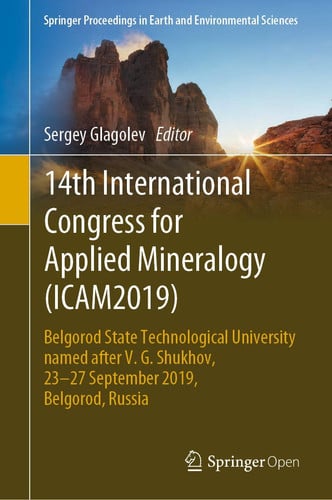
The halls of Belgorod State Technological University hummed with the convergence of global minds, as the 14th International Congress for Applied Mineralogy (ICAM2019) unfolded from September 23rd to 27th, 2019. This gathering served as a vital nexus, fostering an exchange of groundbreaking research and practical applications across the vast landscape of mineralogy, bridging the gap between scientific inquiry and industrial needs.
Throughout the congress, a rich tapestry of subjects was explored, reflecting the multifaceted nature of applied mineralogy. Discussions delved deep into advanced and construction materials, examining their mineralogical compositions and performance enhancements. The intricate world of ore and industrial minerals was meticulously analyzed, from their genesis and extraction to their processing and utilization in various industries.
Exploration mineralogy took center stage, with presentations highlighting innovative techniques and methodologies for discovering new mineral deposits, crucial for sustaining global resource demands. Geometallurgy, a discipline at the intersection of geology and metallurgy, showcased its critical role in optimizing mineral processing and recovery, ensuring efficiency and sustainability in the mining sector.
The congress also cast its gaze upon the vital role of mineralogy in the energy sector, with dedicated sessions exploring the mineralogical characteristics of oil and gas reservoirs. Understanding these properties is paramount for efficient hydrocarbon extraction and reservoir management. Furthermore, the delicate balance of preserving cultural heritage was addressed, with insights into the mineralogical study and conservation of stone artifacts, ensuring the longevity of historical treasures.
Specific research presented illuminated the practical impact of applied mineralogy. One such contribution detailed the mineral composition of titanium minerals found in modern coastal-marine placers and ancient paleoplacers, showcasing their physical features and methods for modification. This research extended to the development of photocatalysts derived from leucoxene for water purification, demonstrating innovative environmental applications.
Another compelling area of study focused on the improvement of reinforced soil. Investigations revealed the intricate dependence of stabilizing additive effectiveness on the structural and chemical characteristics of clay rocks. It was established that efficiency diminishes from montmorillonite and X-ray amorphous phases to kaolinite, with illite and chlorite acting as intermediate minerals. Aluminosilicates, in this context, serve as fillers, distinct from the stabilizer's interaction.
A key hypothesis explored was the enhancement of stabilized soil's hydrophobicity by blocking hydrophilic centers within clay rocks. This critical insight offers a pathway to reduce cement consumption in reinforced soil while maintaining or even improving its operational and physical-mechanical properties, a significant advancement for construction and civil engineering.
The diverse range of topics and the depth of research presented underscored the congress's objective: to fortify the essential connection between cutting-edge applied mineralogy research and its practical implementation within industry. The insights shared and the collaborations forged during these days aimed to propel the field forward, addressing contemporary challenges and paving the way for future innovations in materials science, resource management, and environmental protection.