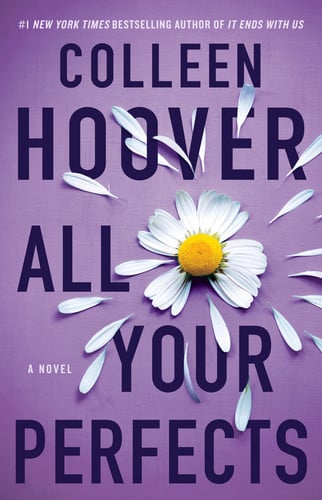
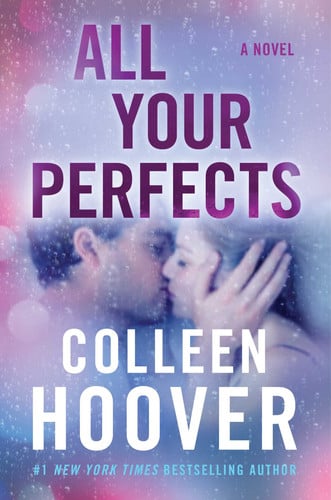
Quinn and Graham's perfect love is threatened by their imperfect marriage. The memories, mistakes, and secrets they have built up over the years are now tearing them apart. What began as an unshakeable bond has devolved into a silent battle of resentment and heartbreak, leaving them feeling like strangers in their own home. The foundation of their relationship is cracking under the weight of everything they are not saying to each other.
Told through alternating timelines, the story juxtaposes the magical beginning of their relationship with the painful reality of their present. The contrast between the passionate, hopeful couple they once were and the fractured individuals they have become creates a powerful and emotional narrative. It is a raw exploration of a damaged couple whose future hinges on promises made in the past, asking whether a love with a perfect start can survive a lifetime of imperfections.
The story unfolds across two distinct timelines, "Then" and "Now," weaving together the exhilarating genesis of a love story with the agonizing unraveling of a marriage. In the "Then," we meet Quinn, arriving at her fiancé Ethan's apartment only to find him engaged in an intimate act with another woman. Outside, pacing with a furious despair that mirrors her own, is Graham, the other woman's boyfriend. A shared betrayal ignites an unexpected spark between them, a raw, undeniable connection forged in the crucible of heartbreak. They talk for hours, eating cold Chinese food ordered by their cheating partners, and though Quinn doesn't call him for months, fate intervenes, drawing them back together. Their romance blossoms swiftly, intensely, a whirlwind of passion and perfect moments that feels destined.
As the "Then" chapters paint a picture of burgeoning love, the "Now" chapters plummet into the stark reality of their present-day marriage, seven years later, a landscape scarred by silence and unspoken pain. Quinn and Graham, once so vibrant and connected, now exist in a quiet agony, their home filled with the echoes of what they desperately want but cannot have. The dream of children, once a shared vision, has become a relentless nightmare. Quinn suffers from infertility due to endometriosis, and repeated, agonizing rounds of IVF have failed, leaving her hollowed out by grief and shame.
The immense pressure of their inability to conceive has created a chasm between them. Quinn, consumed by feelings of inadequacy and failure, withdraws into herself, her once-bright spirit dimmed. She struggles with self-loathing, believing her inability to give Graham a family makes her less of a woman, less of a wife. Intimacy becomes a source of dread, another potential reminder of their unfulfilled longing, and she pushes Graham away, often lashing out in her despair.
Graham, for his part, watches the woman he loves transform, becoming a shadow of her former self. He feels her distance, her coldness, and the weight of her unhappiness, yet he struggles to break through the wall she has built. His own desire for a family, coupled with a past criminal conviction that prevents them from adopting, adds to the crushing burden. He tries to reach her, to remind her of the love that once defined them, but the constant disappointments and Quinn's increasing isolation make every attempt feel futile.
The narrative masterfully alternates between their perfect beginning and their fractured present, highlighting the stark contrast and the devastating toll that years of unspoken grief and unmet expectations have taken. The vibrant memories of their early, effortless connection only underscore the profound silence and emotional chasm that now exists between them. Moments of tenderness in the past are juxtaposed with the harsh realities of their current estrangement, showing how two people who loved each other so deeply could drift so far apart.
A pivotal moment arises from a box, a relic from their earlier, hopeful days, containing letters Graham wrote to Quinn, meant to be opened only if their marriage was truly on the brink of collapse. These letters become a conduit, a raw, honest outpouring of Graham's heart, revealing his pain, his unwavering love, and his perspective on their shared struggles. Reading them, Quinn begins to see the depth of his suffering, the ways in which her own grief had blinded her to his.
The letters force them to confront the unspoken truths and the mistakes they've both made. It's a painful, necessary reckoning, stripping away the layers of resentment and misunderstanding that have accumulated over years. They begin the arduous journey of communication, of truly seeing and hearing each other again, not as the failures they perceive themselves to be, but as two imperfect people still deeply in love, trying to navigate an imperfect life.
Through this arduous process, they start to understand that "perfect" isn't about the absence of flaws or hardship, but about finding a way to love and accept each other, imperfections and all. It's about fighting for the love that began so perfectly, even when life delivers the most devastating blows. The path to healing is long, fraught with tears and difficult conversations, but it is a path they choose to walk together, slowly rediscovering the enduring power of their initial, undeniable connection and the profound resilience of their love.
What other readers say
Liked
Reviewers widely praise this book for its intense emotional impact and raw portrayal of a marriage facing significant challenges. Many found it to be a deeply moving and unforgettable reading experience, with some calling it one of their best reads of the year. The author's ability to blend romance with sensitive and often undiscussed topics, particularly relating to life's hardships and hope, resonated strongly with readers. The alternating past and present narrative structure was frequently highlighted as a brilliant technique, offering both glimpses into the couple's initial love story and a stark view of their current struggles, creating a unique and compelling reading journey that many described as incredibly real and poignant.
Disliked
However, the book also elicited strong negative reactions from some readers. Criticisms included the perception of excessive angst, sadness, and suffering, with some feeling the resolution was rushed after prolonged emotional turmoil. A significant point of contention for several reviewers was the lack of effective communication between the main characters, leading to frustration. The female protagonist was described by some as selfish, uncaring, and unlikeable at times, while the male protagonist was considered boring or one of the author's weaker heroes by others. Certain character actions and motivations were found to be controversial, and some felt the story was manipulative in its attempt to evoke tears. The alternating timeline was also a detractor for some, disrupting the narrative flow and momentum.
In short
Ultimately, this book is described as an emotionally demanding experience that leaves a lasting impression, for better or worse. While it has the potential to break hearts, many reviewers also found it offered profound insights into love, forgiveness, and resilience within a marriage, particularly when facing difficult circumstances like infertility. It is highly recommended for readers who appreciate intense, raw, and realistic explorations of relationships grappling with significant life challenges, and who are prepared for a story that challenges emotions and encourages introspection. However, readers seeking a lighter romance, or those sensitive to heavy themes, prolonged angst, and controversial character choices, should approach with caution.