Add to library
You don't have any lists yet. Create one in My Library.
Go to My LibraryAdd to library
You don't have any lists yet. Create one in My Library.
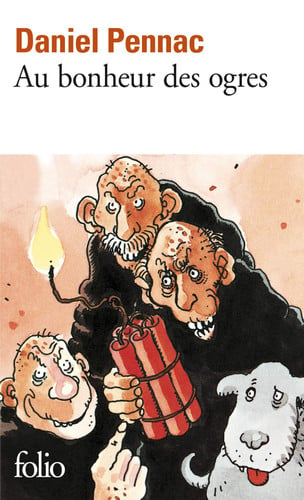
Go to My LibraryAu bonheur des ogres (French Edition)
- Language
- French
- Published in
- Publisher
- Assimil Gmbh
- Pages
- 286
- ISBN
- 9782070403691
This precarious stability is shattered when a series of bombs begins to detonate throughout the store, always with Benjamin nearby. As the body count rises, he becomes the primary suspect in a police investigation and the target of his colleagues' fear. To save his job and his freedom, Benjamin must navigate the mayhem of his family life while trying to uncover who is planting the bombs and why they seem to have marked him as the perfect culprit. The novel introduces a unique hero and an unforgettable family, blending crime fiction with a sharp, satirical wit to explore the nature of guilt, innocence, and the complex bonds of kinship.
Subjects
Original edition details
Other editions (1)
Other editions
It was the 24th of December, and the store was a frantic sea of last-minute shoppers. I had just finished a session in the Complaints office - a refrigerator sold by my department had inexplicably incinerated a family's Christmas Eve dinner - when the first bomb went off. It was a dull, gut-wrenching thud that rose from the belly of the Magasin, followed by a tidal wave of screams. The explosion had come from the toy department, just minutes after I had passed through. Amid the chaos and the slow, beautiful ascent of thousands of colored balloons released by the blast, we found what was left of a man. The police arrived, and then the questions began. Why was I always there? It was my job, I tried to explain. My job is to be where things go wrong.
Life settled back into its peculiar rhythm, a frantic dance between the demands of my job and the beautiful chaos of my family. My sister Louna called, agonizing over whether to keep the baby she was carrying, the child of the only man she'd ever truly loved. My mother called, cooing about her new life. And in our sprawling apartment, a converted hardware store, I would transform the day's grim realities into fantastical bedtime stories for the children. I invented two heroic cops, the hulking Pat les Pattes and the ferocious Jib la Hyène, to solve the case, turning my grim interrogations into thrilling adventures. But the real police were less heroic and far more suspicious. Then, fifteen days later, it happened again. I was helping a magnificent, lion-maned woman I mentally christened “Tante Julia” after saving her from a shoplifting charge when the second bomb exploded, right before my eyes. It was hidden in a shopping bag clutched between two ancient lovers, who were sealed in a final, passionate kiss as they were blown apart.
The blast left me temporarily deaf, adrift in a silent, slow-motion world of panic. In the aftermath, Tante Julia found me and swept me away in her tiny yellow car. She was a journalist, a whirlwind of theories about primitive desire and revolutionary lovers, and she spoke of Sandinistas and Amazonian tribes with a fiery passion that left me breathless. Our night ended in a tangle of limbs on my bed, a spectacular failure of nerve on my part, surrounded as I felt by the ghosts of her far more virile lovers. The scene was interrupted by my entire family, who, in their worry, had enlisted my friend Théo to find me. He arrived not only with my siblings but with a troupe of Brazilian transvestites he was friends with, turning my apartment into a surreal, joyous festival that lasted until dawn.
The police, however, were not celebrating. I was summoned to the quai des Orfèvres for a formal interrogation with Commissaire Coudrier, a man as polished and unreadable as the Empire furniture in his office. It was there I finally explained the truth of my profession. “I am a Scapegoat, Monsieur le Commissaire.” The suspicion didn't lift; it solidified. My colleagues at the Magasin, led by the store detective Cazeneuve, began to look at me with a mixture of fear and hatred. I was the common denominator in every tragedy, the thread of misfortune weaving through the store. Their conviction needed no proof. One night, after work, they cornered me in the street and beat me, their fear exploding into violence. I was no longer just playing a role; I had become the thing itself, the cause of all evil.
The third bomb went off in a photo booth, killing a monstrous academic named Professor Léonard, a man whose face I recognized from a conference Julia had dragged me to. My friend Théo, who had been waiting to use the booth, was caught in the blast. He survived, but in the wreckage, he found a horrifying photograph clutched in the dead man's hand: Léonard, years younger, standing naked and triumphant over the body of a murdered child. The mystery deepened, twisting into something ancient and dark. At home, my own family was conducting its own strange investigation. Thérèse's astrological charts predicted the victims' deaths with chilling accuracy. Jérémy, trying to prove how the bombs could be built inside the store, accidentally blew up his school. And Clara, photographing everything, discovered through enlargements of the horrific photo that the murder had taken place decades ago, inside the Magasin, right by the toy department - the exact spot where our dog, Julius, had suffered a bizarre, catatonic fit.
The truth arrived one night on a nearly empty metro train. A little old man sat down opposite me, one of the flock of elderly hobbyists Théo looked after in the basement workshop. It was the bomber. He told me everything. In 1942, during the Nazi occupation, a satanic cult of six men had used the shuttered Magasin for their rituals, sacrificing children they lured to the toy department. He had been their procurer. Now, decades later, he was killing them, one by one. They were all willing victims, he explained, suicides who believed the stars had ordained their deaths and who wanted to go out in a final, explosive blaze of glory. And why was I always there? Because, he said with a beatific smile, I was a saint. In his twisted logic, my role as the Scapegoat, the innocent who carries the sins of the world, made me the perfect witness for the extermination of pure evil.
The final act was set for five-thirty, at the toy department. The last victim was to be the old man himself, and he had designed his death to be the perfect trap. He would make me the trigger, framing me for all six murders in front of the police. As he sent a remote-controlled toy gorilla trundling toward me, its belly packed with explosives, I saw the ecstatic joy in his eyes. He had me. Coudrier and his men were watching, ready to let me be sacrificed to close their case. In that split second, I understood everything. I was not a witness; I was the final offering. I dove, not away from the toy, but onto it, pressing the detonator. The explosion ripped through the far end of the counter, and the little old man, the last of the ogres, imploded in a shower of blood.
In the end, Coudrier explained it all. The police had figured out most of the bizarre suicide pact and had used me as bait to draw out the final killer. I was free. I was also fired, thanks to an exposé Julia had written about my strange profession. My life as a scapegoat was over. As I tried to absorb the silence left by the explosions, my mother reappeared at my door, radiant, impossibly young, and pregnant once again. Another mouth to feed, another life to shepherd. My job, my real job, was just beginning.
No discussions yet for this book.
Delete Discussion
Are you sure you want to delete this discussion? This action cannot be undone.
Rating Sources
Daniel Pennac's "The Scapegoat" (also known as "Au bonheur des ogres" or "Il paradiso degli orchi") is widely praised for its distinctive and engaging qualities. Readers consistently highlight the author's unique writing style, which is often described as having a strong personality, being both witty and irreverent, and capable of playing with language in a delightful way. The humor, ranging from absurd and surreal to darkly comedic and satirical, is a major draw, with many finding themselves laughing out loud. The book's characters, especially the protagonist Benjamin Malaussène and his eccentric family, are frequently lauded as unforgettable, endearing, and wonderfully grotesque, creating a rich and vibrant world. Despite dealing with serious themes, the narrative is seen as brilliant, intelligent, and highly enjoyable, making it a refreshing and captivating read that many readers find impossible to put down.
However, some readers found the book challenging or confusing, especially in the initial chapters. The large cast of characters and the rapid, often unexpected, events could lead to a sense of disorientation, making it difficult to grasp the plot or distinguish character relationships right away. A few reviewers felt that the humor did not land as expected, or that the plot was far-fetched and lacked a strong sense of suspense or a clear genre identity, particularly for those expecting a traditional detective story. There were also comments that some aspects of the narrative, such as a character's health issue, failed to evoke the intended emotional response, and that the language, at least in some translations, did not live up to the high praise it received in its original form.
Ultimately, "The Scapegoat" is considered by many to be a brilliant and memorable introduction to a beloved series. It is highly recommended for readers who appreciate a strong, unconventional narrative voice, enjoy a blend of dark humor and serious themes, and are drawn to quirky, well-developed characters and intricate family dynamics. Those who are open to an initially disorienting but ultimately rewarding reading experience, and who enjoy a story that defies easy categorization while offering keen social commentary, are likely to find this book a unique and satisfying discovery.
No reviews yet. Be the first to review this book!
Delete Review
Are you sure you want to delete this review? This action cannot be undone.